Amy Grantham

Amy Grantham

(b. 1978)

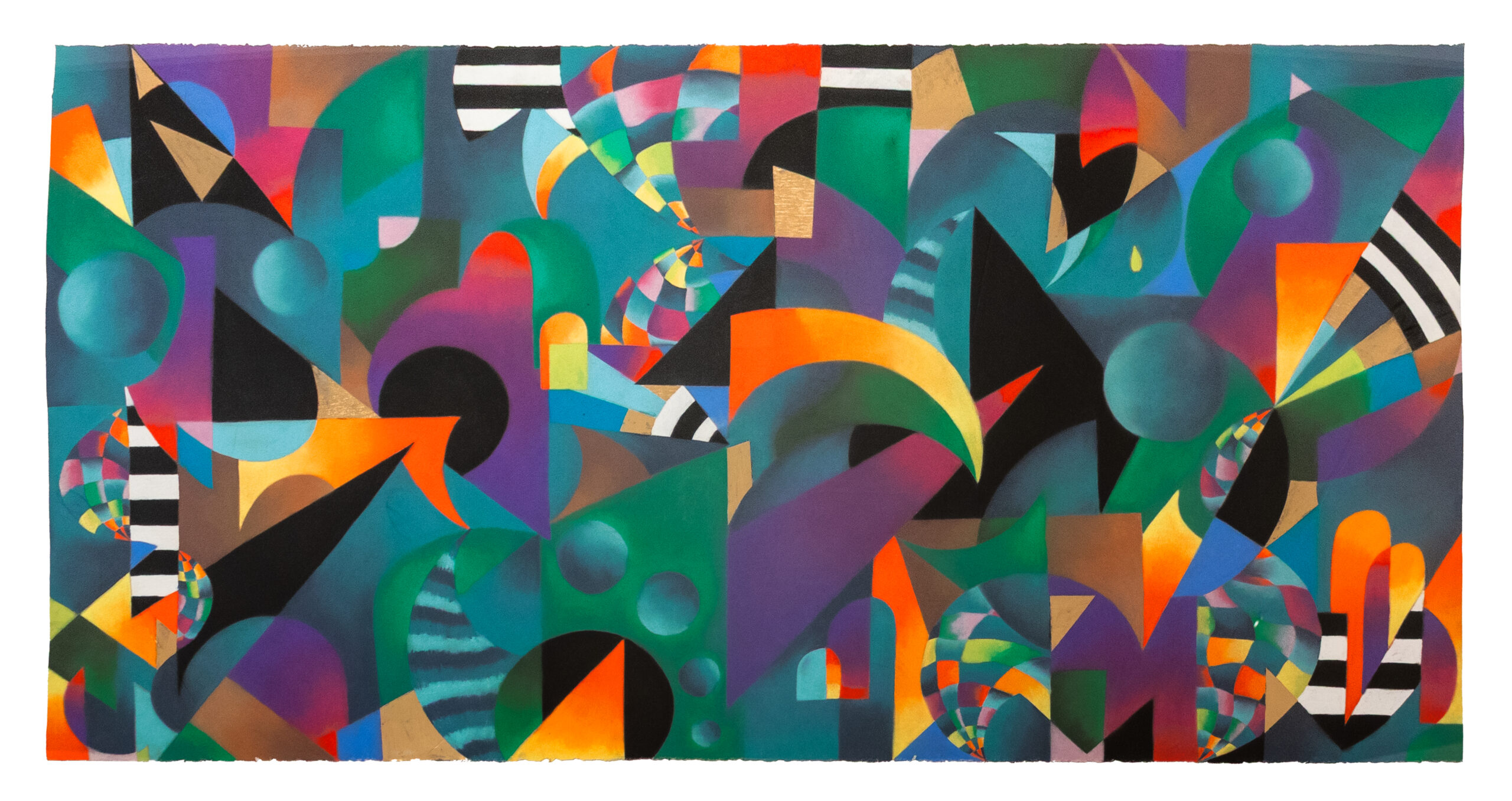
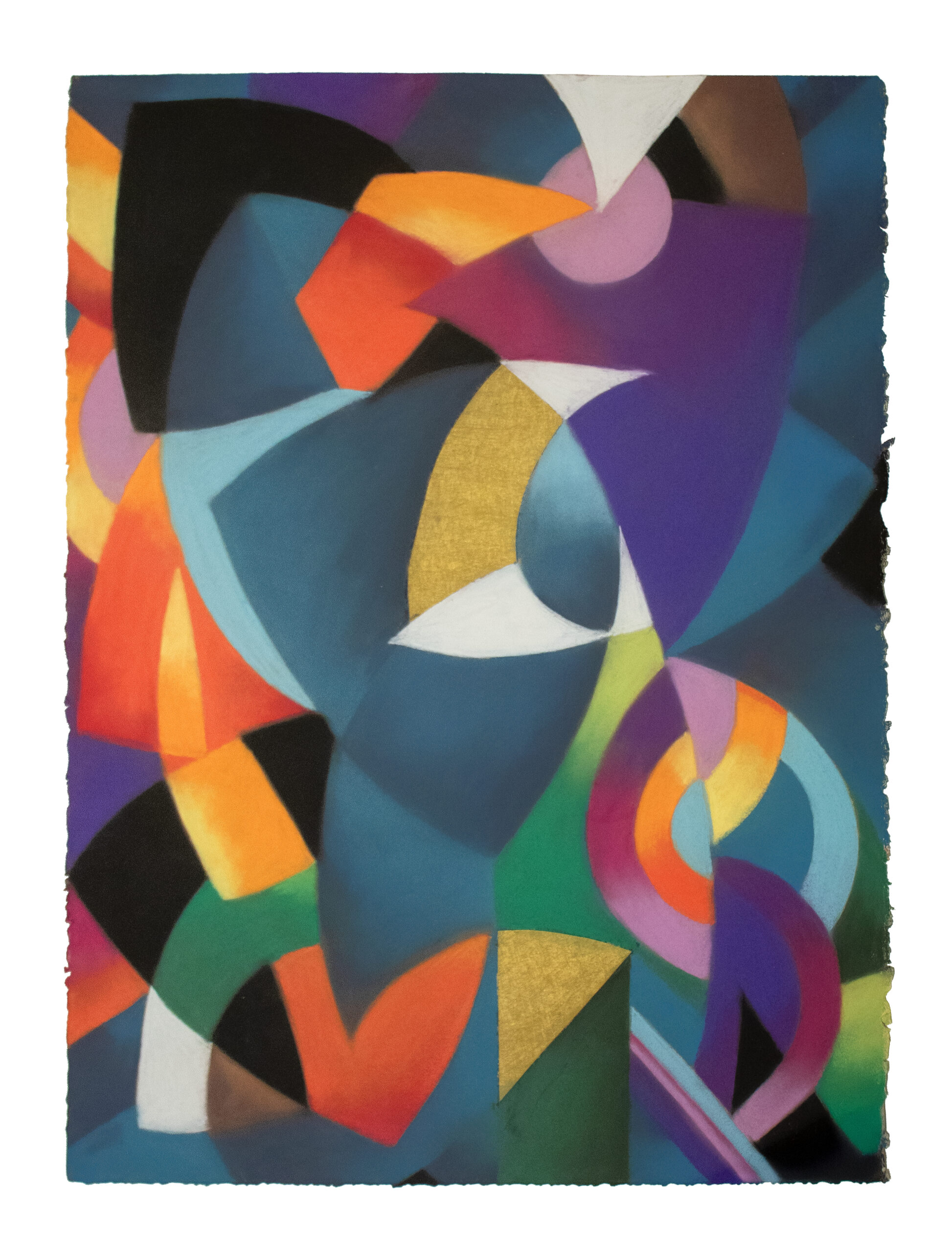
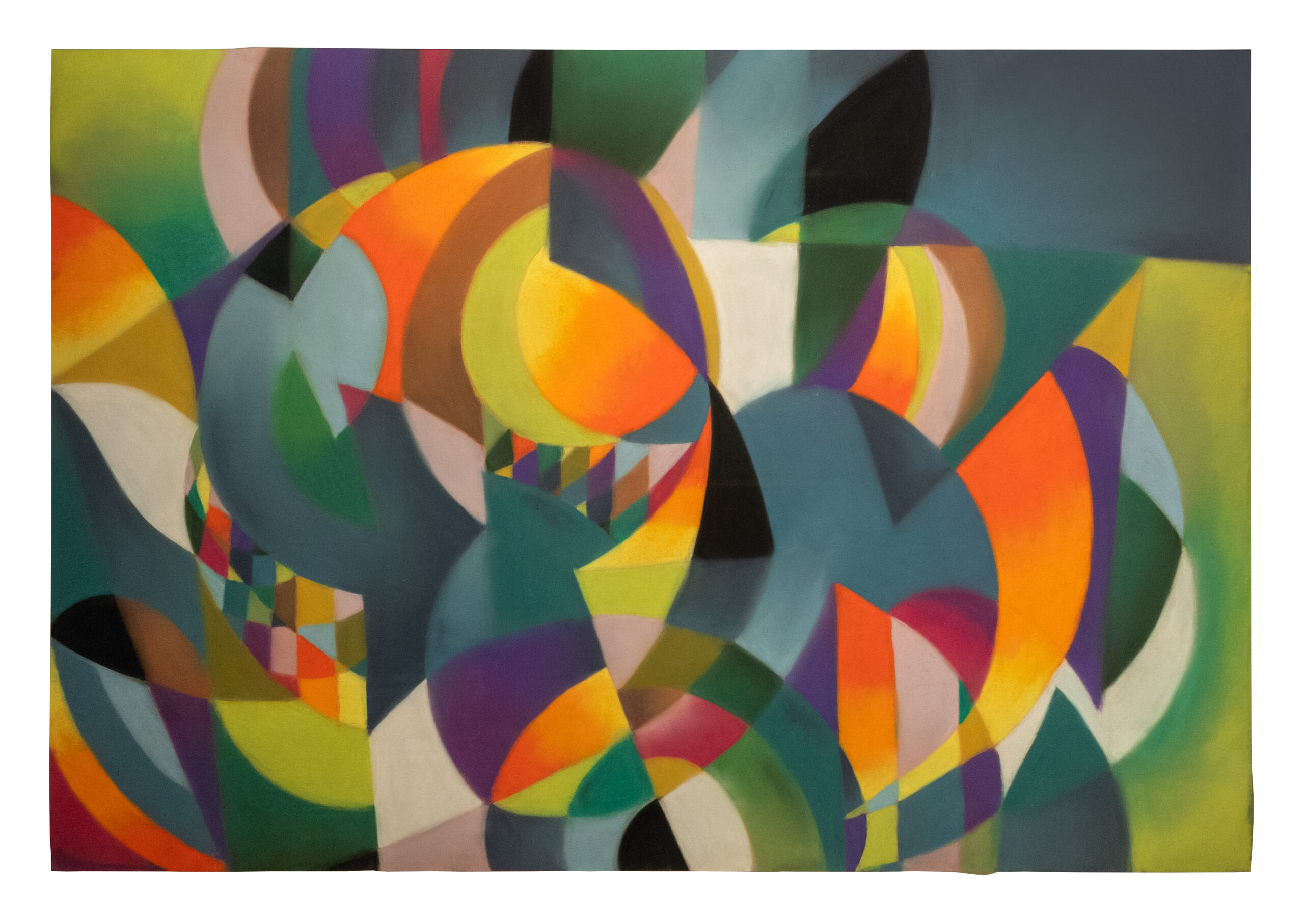
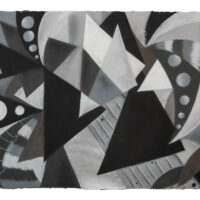
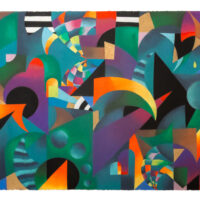
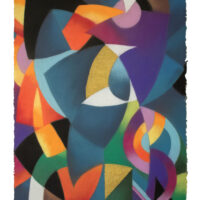
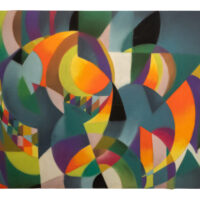
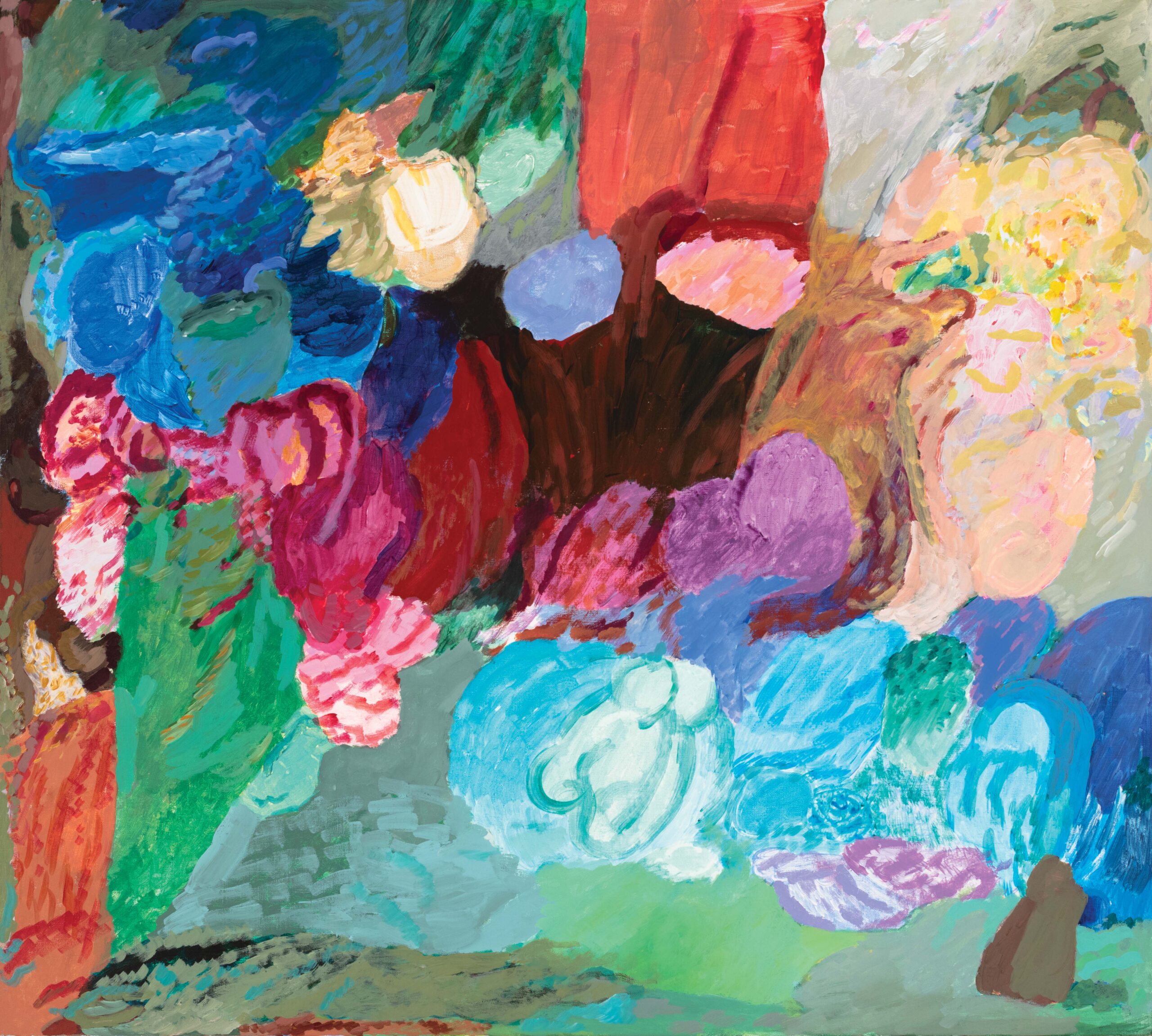
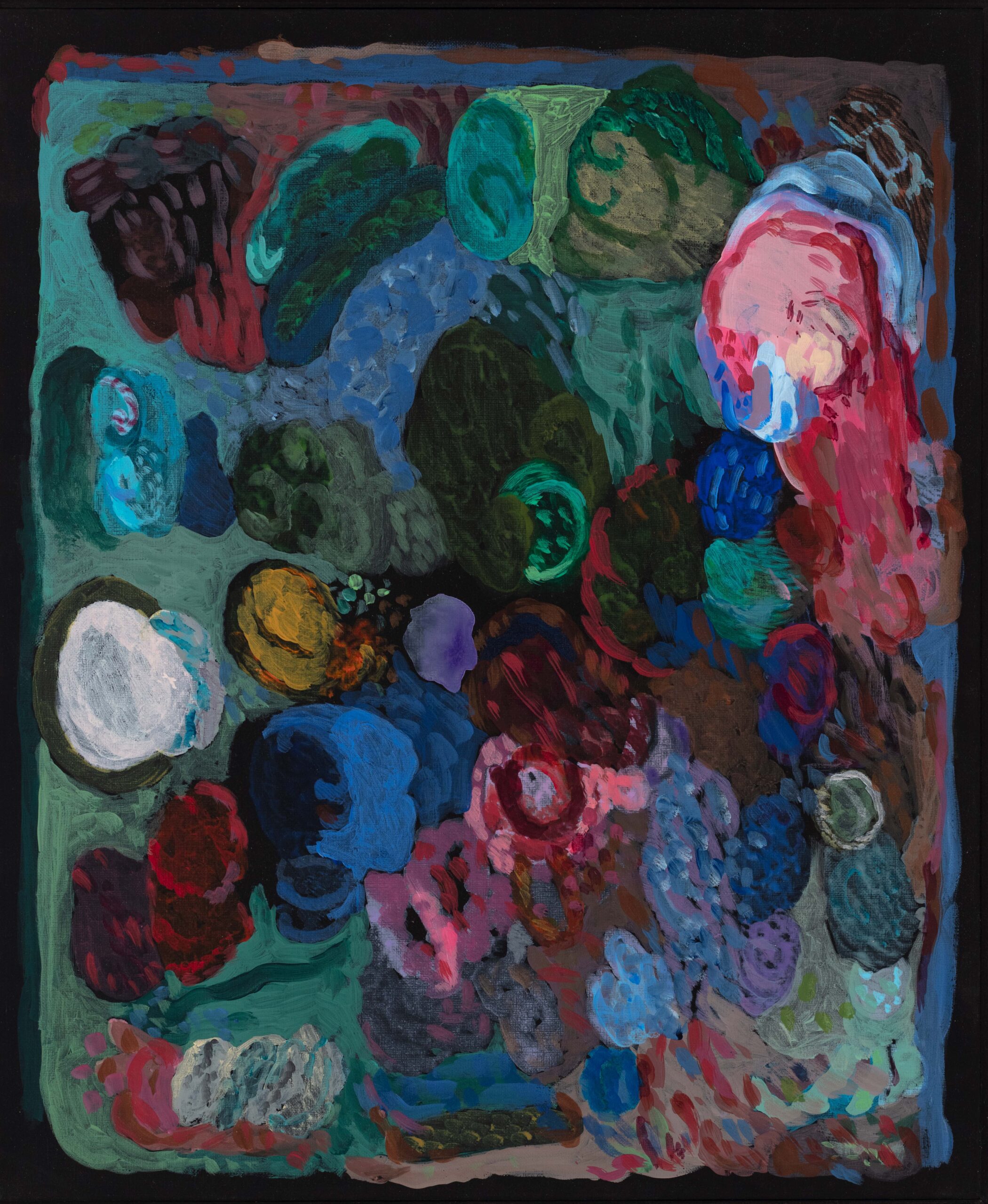
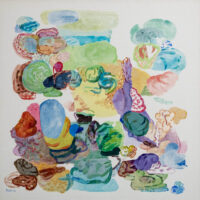
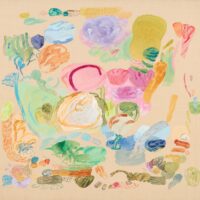
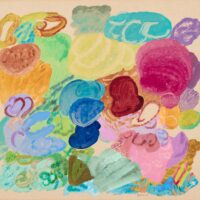
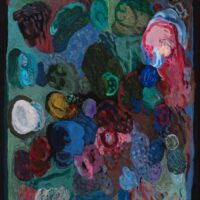
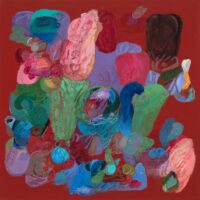
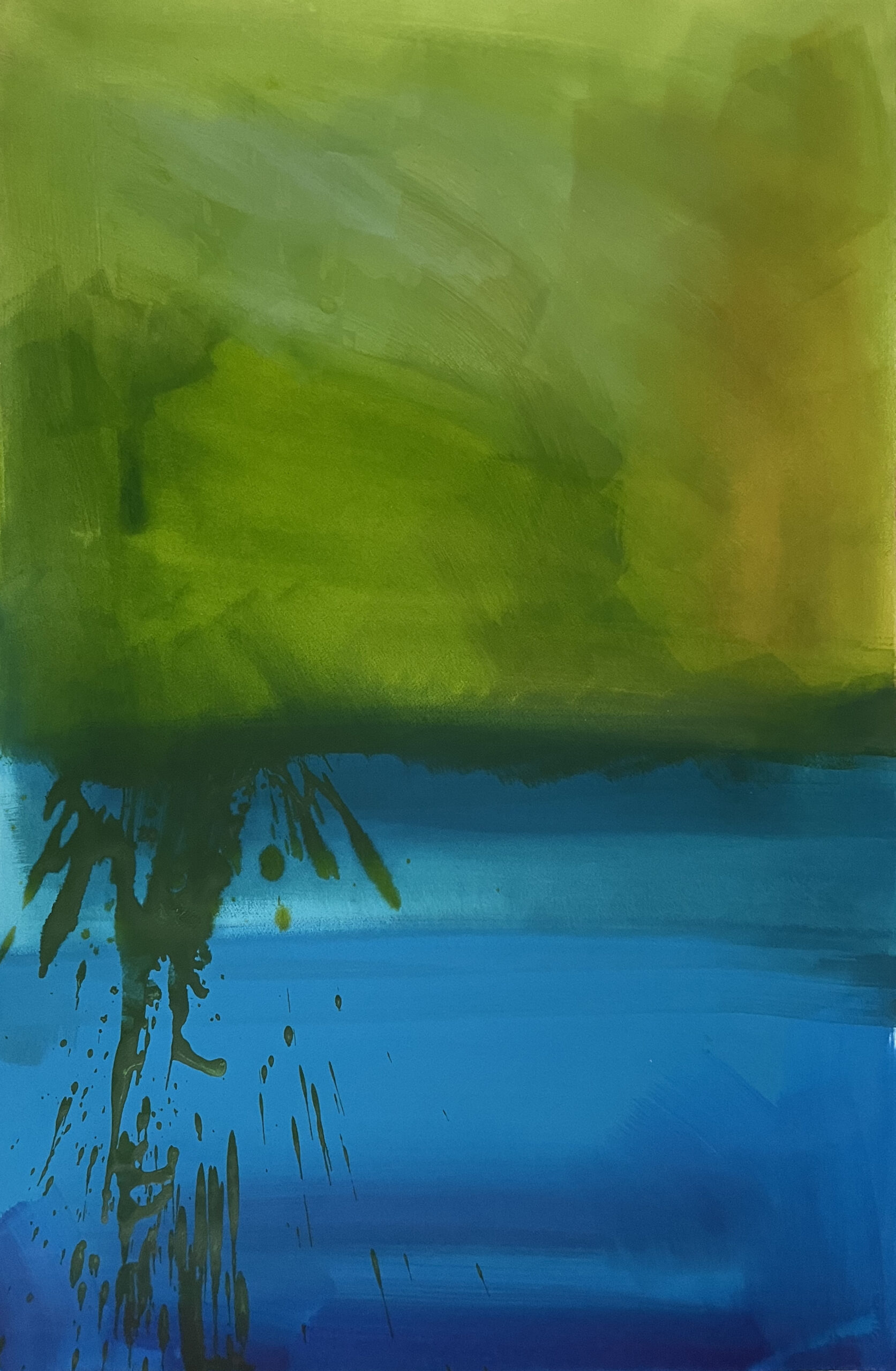
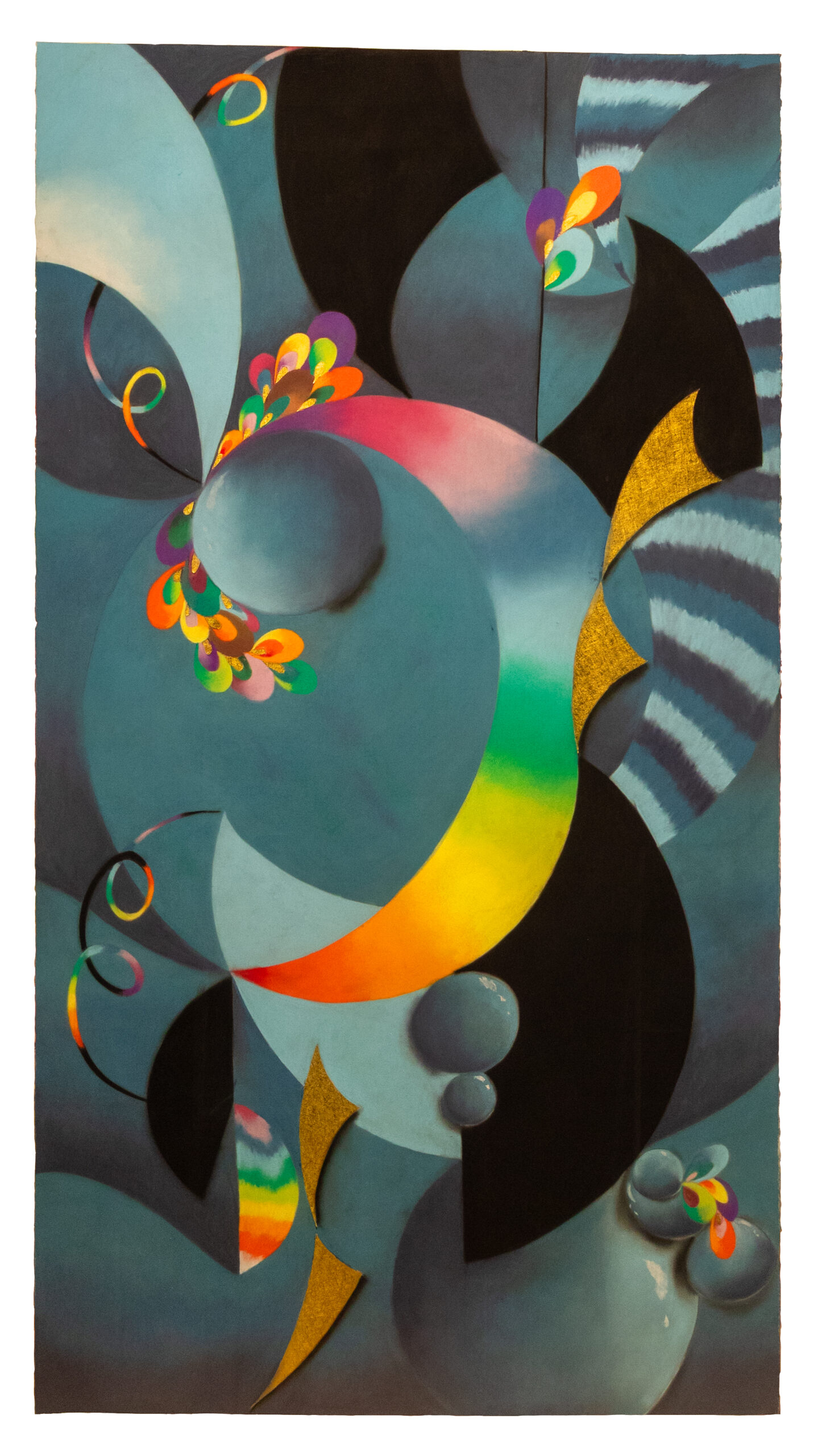
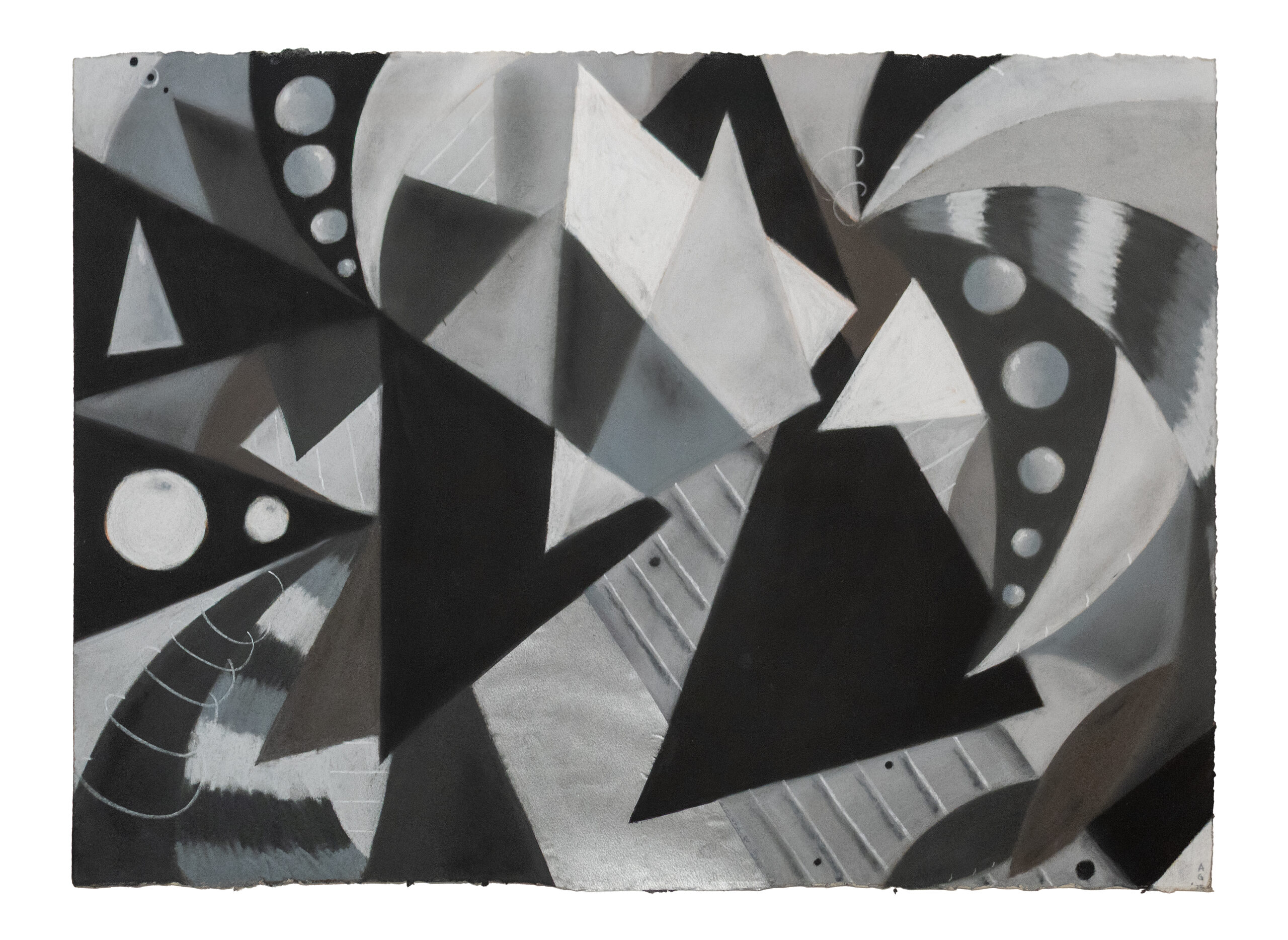
Amy Grantham is a visual artist based in New York City whose practice explores the intersection of sound, form, and color through layered abstraction. Originally from Tallahassee, Florida, Grantham works across a range of media, including acrylic, gouache, watercolor, collage, and photography, though her recent focus has centered on pastel—a medium through which she achieves a remarkable depth and saturation of color.

Deeply influenced by music, Grantham’s work often draws from classical compositions as conceptual frameworks. Her long-term engagement with Johann Sebastian Bach’s Goldberg Variations, particularly as interpreted by pianist Glenn Gould, serves as the foundation for a recent body of work in which she translates contrapuntal musical structures into harmonies of color, line, and shape. While not strictly synesthetic, her compositions evoke a vivid sensory dialogue between sound and image, where musical architecture unfolds visually.

Grantham’s visual language resonates with the spirit of early abstract movements such as Orphism and Synchromism, and her work reflects the spiritual and formal investigations of pioneers like Wassily Kandinsky. Her approach, however, is distinctly contemporary—infusing historical abstraction with personal interpretation and material experimentation.

In addition to her work on paper and canvas, Grantham has established practice in photography. Her photographic self-portrait is included in the permanent collection of the National Portrait Gallery in London.
 

James MuldoonAmy Grantham

Amy Magee

Amy Magee

(b.1997)

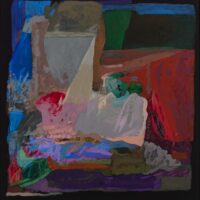
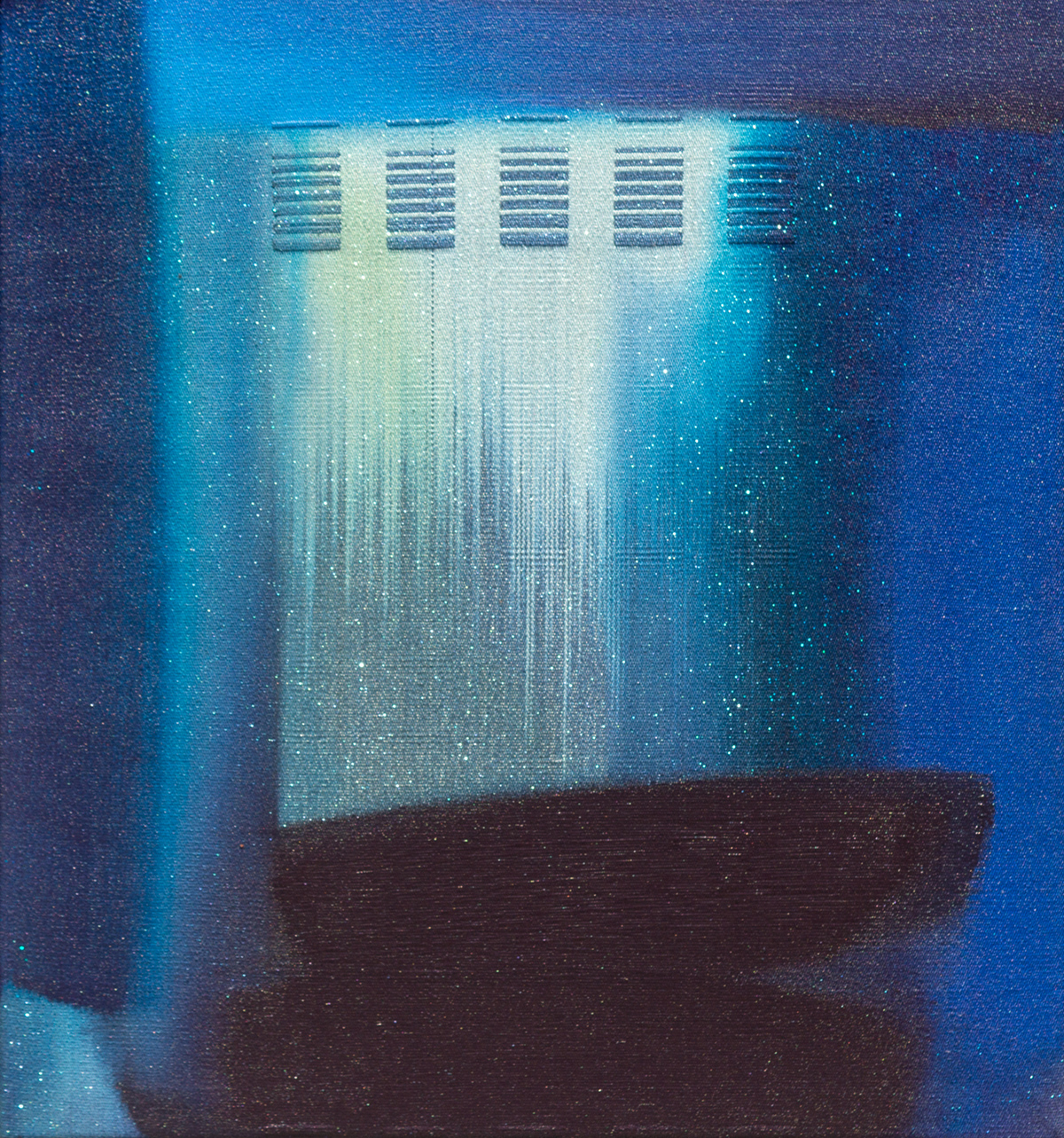
Amy Magee (b. 1997) is a British painter whose practice lives at the intersection of intuition and art-historical memory. Magee draws on the landscapes and artistic heritage of Southern of France, while reinterpreting classical principles of composition and light, reworking them through the lens of contemporary abstraction. By bringing these two distinct influences into conversation, her work creates a dialogue between place, tradition, and expression.

Before relocating to the South of France, she lived in a dense urban environment shaped by the grit and immediacy of street art, which informed the textural urgency of her early work. Immersion in the South’s light, beauty, and historical stillness brought a profound shift: the Provençal landscape infused her palette with breath and luminosity. She began to explore trompe l’œil — “to deceive the eye” — a tradition woven into European visual culture, by reimagining the elements of landscape (pigment, gesture and perspective) within the language of contemporary abstraction.

Her process begins with sourcing references from classical paintings, approached under intentional time constraints so that light, pigment, and rhythm are absorbed fleetingly, then recalled purely through intuition. From these impressions she constructs canvases of broad contrasts, spatial rhythms, and soaring moments that guide the eye across the surface. Some passages are rendered in detail, others left raw, preserving tactility of the painting process. What emerges are works that operate as visual memories: fleeting experiences slowed into paint, where petal-like forms, atmospheric veils, and gestural flourishes drift across imagined terrains. The compositions envelop the viewer in an environment that is both deeply present and curiously placeless.

Magee earned a BSc in Psychology from the University of Exeter before completing a residency at the New York School of Visual Arts. Fascinated with the human mind and the ways we process visual information, Magee resonated with the ideology and process of the Abstract Expressionists; she treats painting as a site of unfiltered emotion and trace of presence. Her paintings are not narratives but experiences, inviting sensation over interpretation.

The work invites communion — a ‘place’ for shared vulnerability between myself and the viewer. Each brush mark says: Here is where I was. Here is how I moved for this moment — giving the viewer permission to be just as present. The paintings offer ambiguous spaces to dwell and feel, where one is not simply looking at something, but inside something.

To date, Magee has exhibited in London, New York, and Florence, and remains the best-selling artist at Battersea Art Fair. Her work now resides in private collections worldwide, and she continues to collaborate with both private collectors and commercial clients on commissioned projects. Recent exhibitions include SVA NYC Group Open Studio Exhibition (New York, 2025), Alexander Palace Art Fair (London, 2025), Battersea Affordable Art Fair, Spring (London, 2025), and Museo Bellini (Florence, 2023).

James MuldoonAmy Magee

Janet Mait

Janet Mait

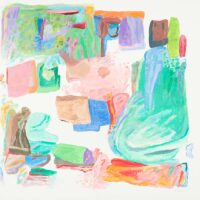
Janet Mait began her formal training at The New School, where she was a protégé of Chaim Gross. She also studied at the Art Students League, where she trained under Larry Poons and William Scharf. At the beginning of her artistic journey, she specialized in the human figure, and through years of dedicated practice, she attained mastery over form, weight, and balance. Mait began experimenting with various mediums as her artistic exploration evolved and ultimately transitioned to acrylic on canvas. This shift marked a significant liberation for the artist, as the freedom and rhythmic potential of the brush allowed her to move beyond representational forms into the realm of abstract expressionism.

Mait prioritizes fundamental elements such as space, color, and balance in her approach to the canvas. She endeavors to remain as unprepared and unpremeditated as possible at the outset of her creative process to preserve an authentic expression. In these moments of creation, she draws inspiration from a rich internal landscape synthesis of visions, dreams, and emotions characterized by spontaneity and executed with meticulous balance. The vibrancy of her color palette resonates with the sense of optimism that she aims to convey through her work. Equally significant is her strategic use of white; the spatial presence it occupies is essential in defining her overall composition.

Exhibitions:

2025 Findlay Galleries, Palm Beach, Florida
2019 K&P Group Show
2017- 2018 Phyllis Harriman- Group Show
2016 Context Art Miami, Miami, Florida
2016 National Arts Club-Group Show
2016 ‘High Wire’ solo exhibition- Lawerence Fine Art
2015 Art Miami Project, Miami, Florida
2015 New Voices, July 2015, Lawerence Fine Art, East Hampton, NY
2015 Art Southampton, Lawerence Fine Art, Southampton, NY
2015 Art Hamptons, Lawerence Fine Art, Hamptons, NY
2013 Gerald Bland Inc: Madison Avenue, New York, NY
2012 Squire Sanders: Rockefeller Center, New York, NY
2011 Armonk Art Juried Show
2011 Spazio 522 Gallery (Chelsea): Solo Show, New York, NY
2011 New York Spaces Magazine Event
2011 Exhibition at Ligne Roset. Park Avenue, New York, NY
2009-2012 Art Students League Gallery
1995 White Plains Juried Show
1990-1996 Mamaroneck Artist Guild concurrent Shows and Exhibitions
1982 Larchmont Library- Solo Show

James MuldoonJanet Mait

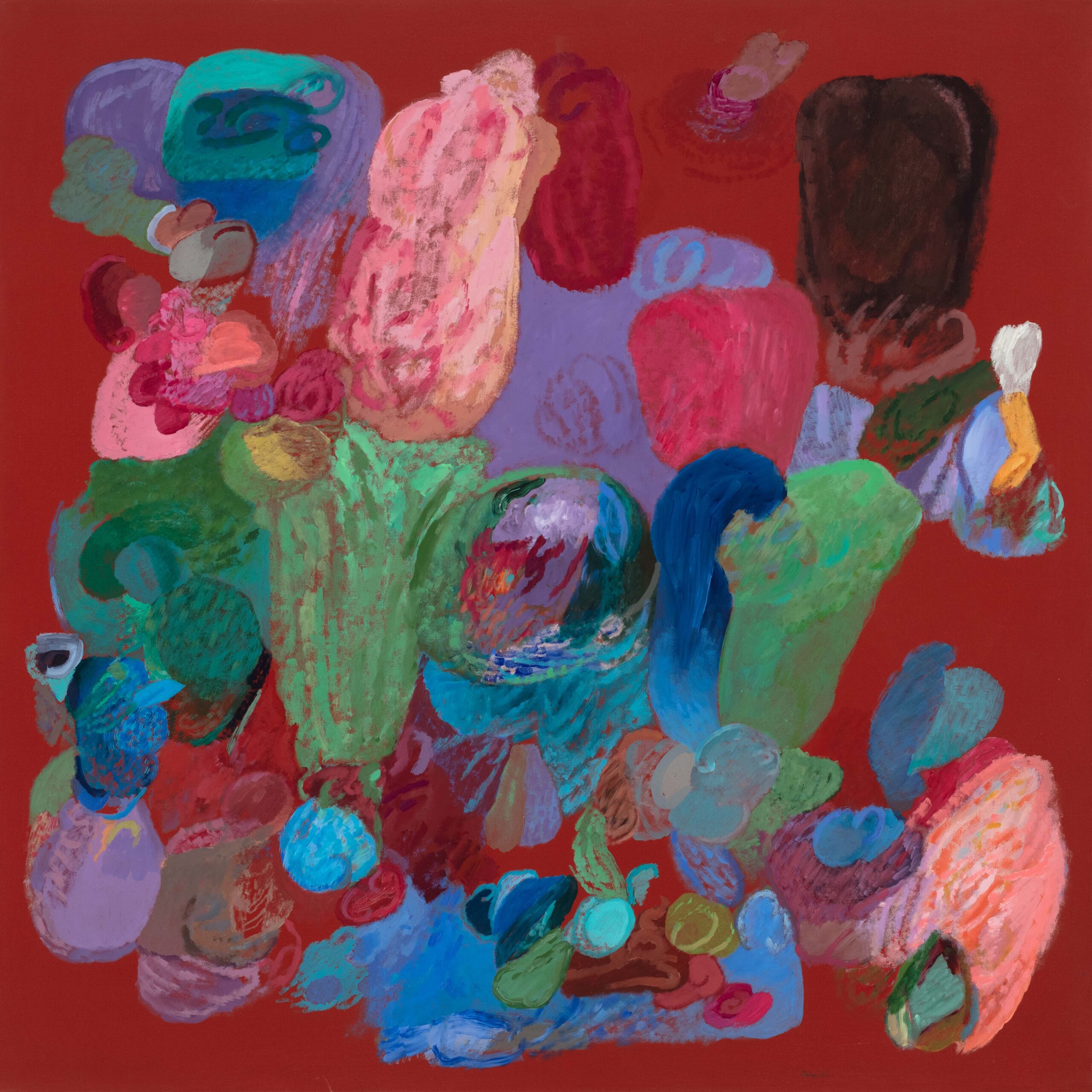
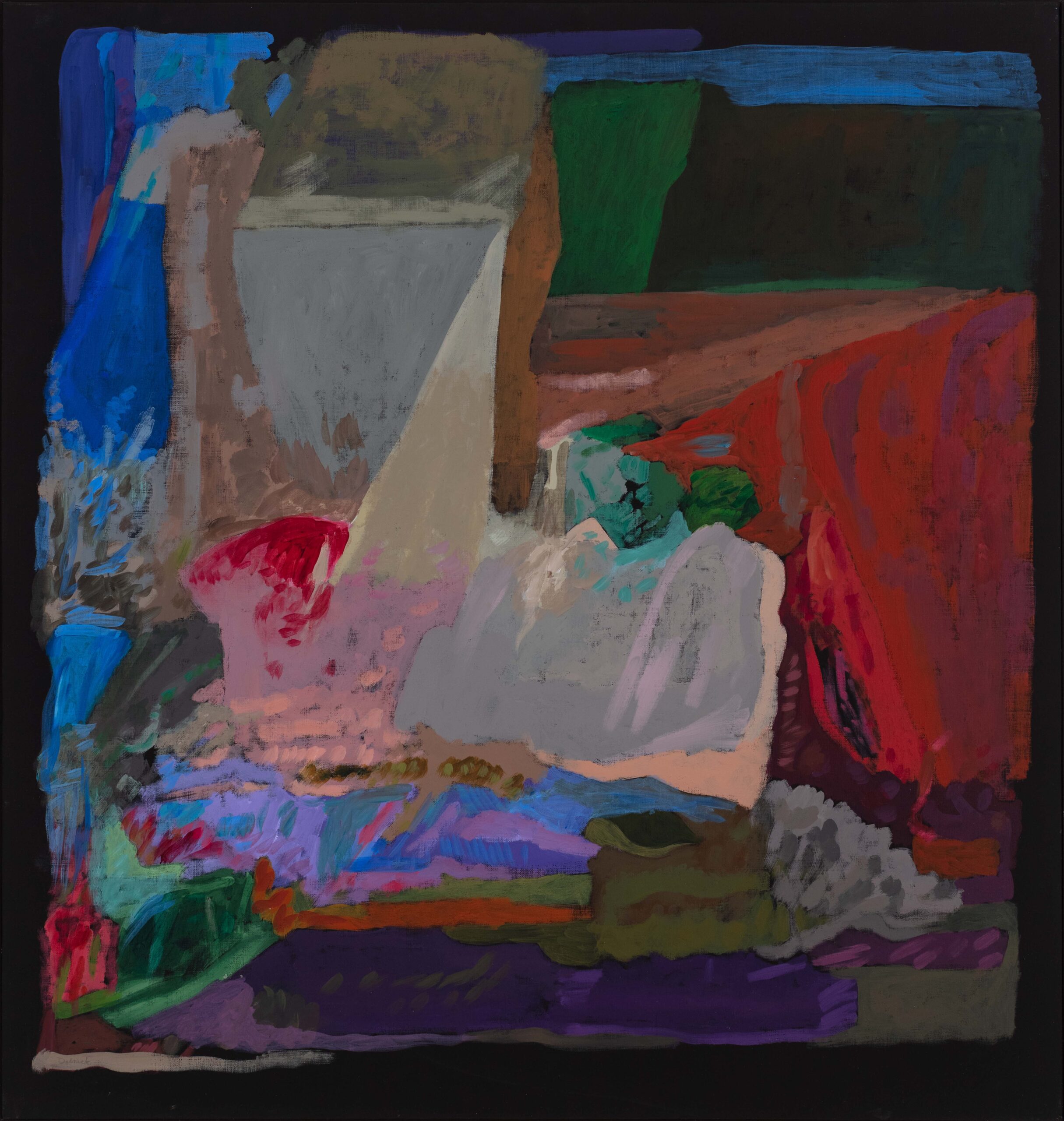
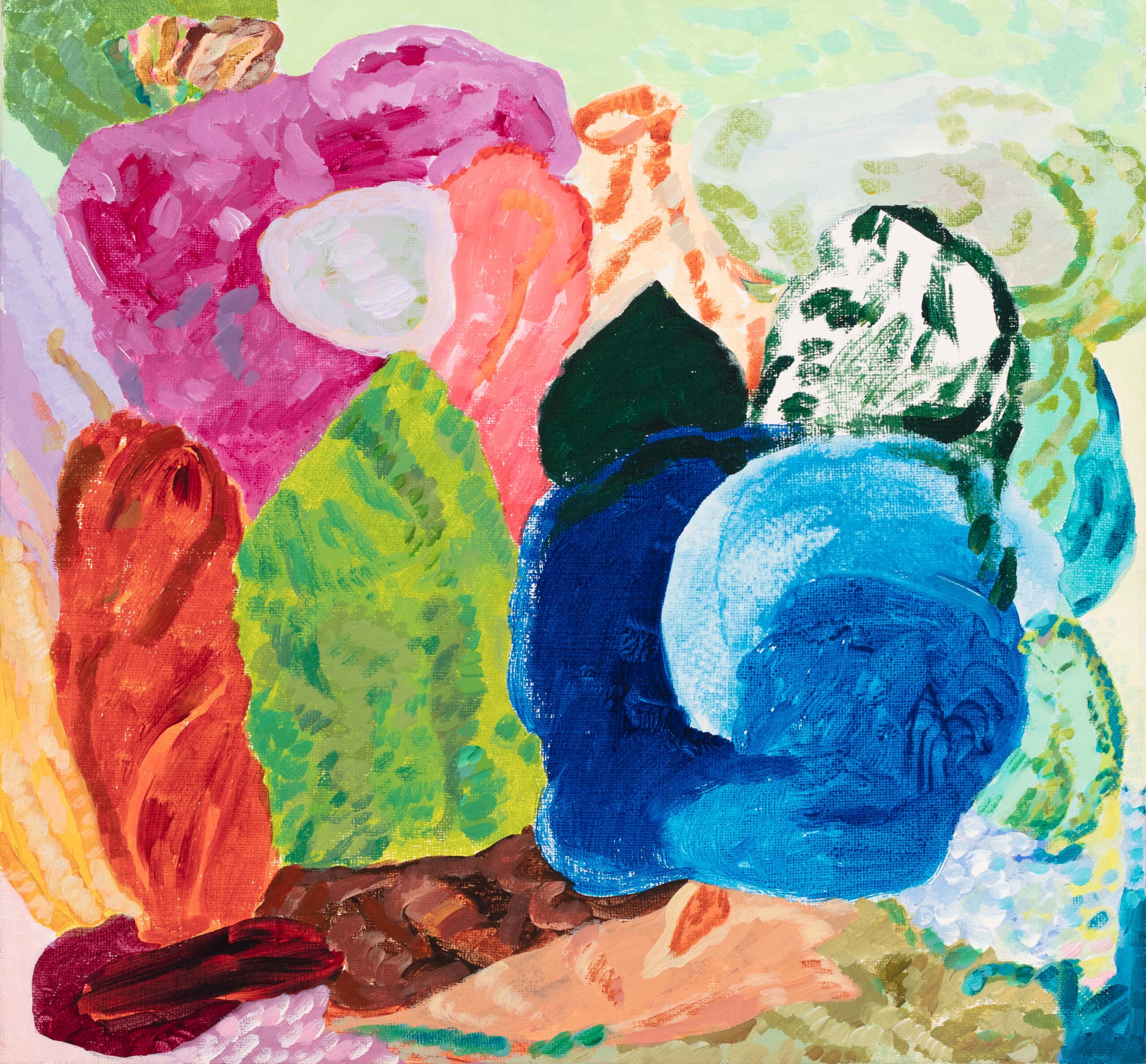
Judith Dolnick

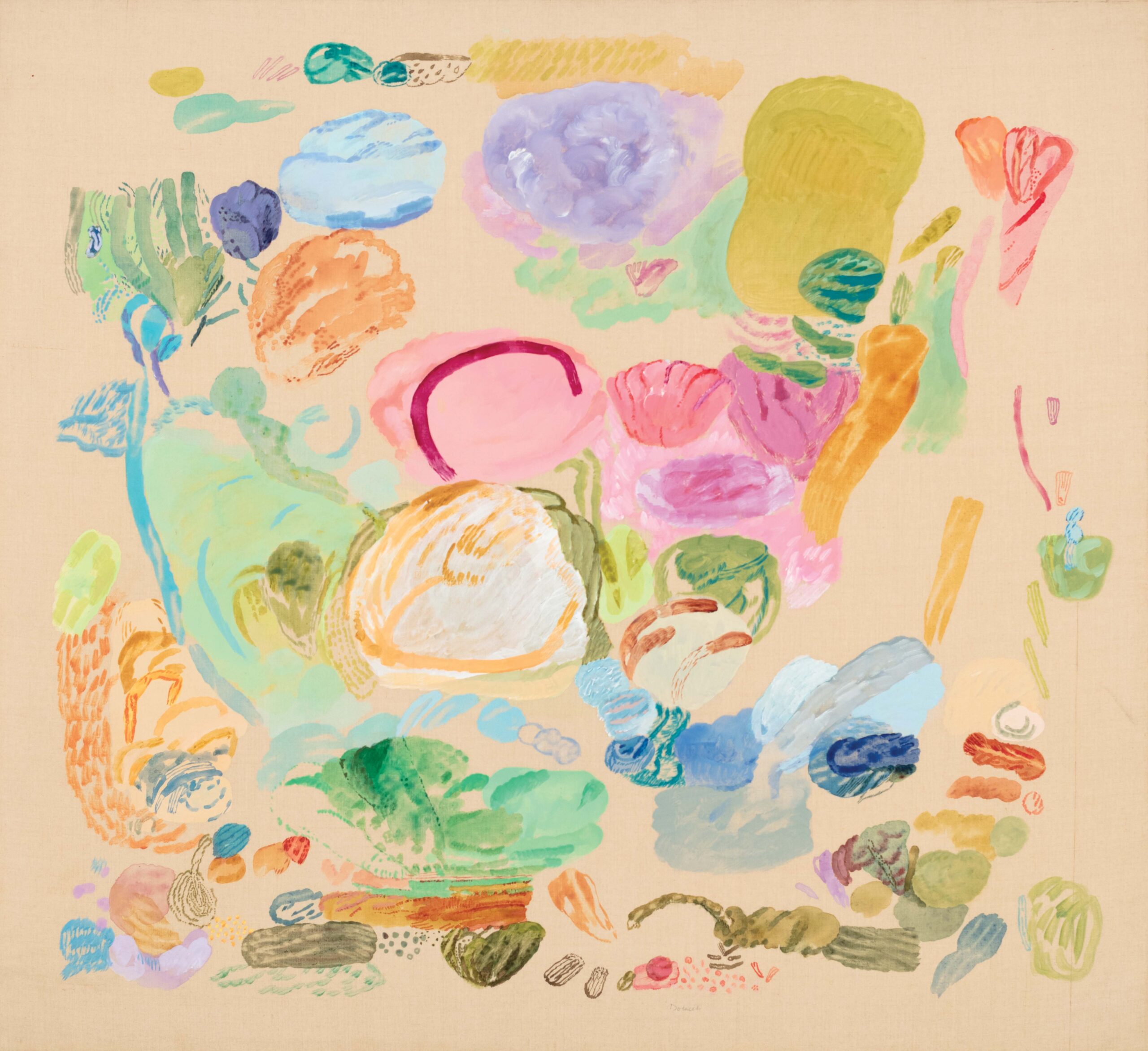
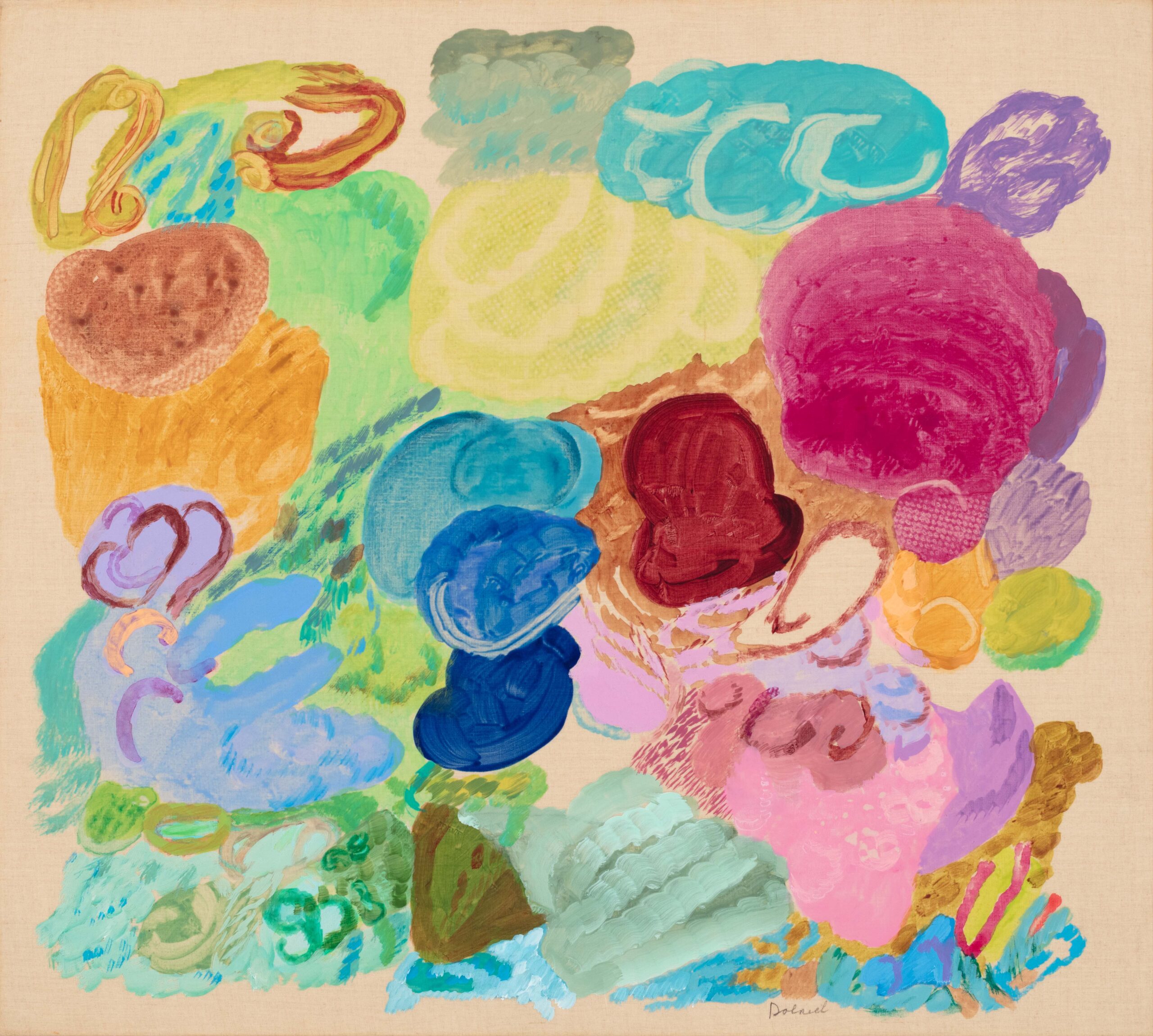
Born in Chicago, painter Judy Dolnick has been creating colorful and vivid abstract paintings since the 1950s. She received her BA from Stanford University in 1955 and attended The Illinois Institute of Technology, Chicago, in 1957. Along with her husband, the painter Robert Natkin, and fellow artists Gerald van de Wiele and Ann Mattingly, Dolnick opened the Wells Street Gallery in Chicago to address the lack of exhibition opportunities for abstract expressionists in the area. Among the many artists successfully shown at Wells Street Gallery were the photographer Aaron Siskind and the sculptor John Chamberlain.

In 1959, Dolnick and Natkin moved to New York City. In the late 1960s, she exhibited at the Poindexter Gallery, followed by exhibitions at Gimpel and Weitzenhoffer, Outlet Gallery, and the Edward Hopper House Museum. Dolnick’s work is part of many permanent collections, including The Hirshhorn Museum and Sculpture Garden, The Spencer Museum of Art, The Mint Museum of Art, and The Palmer Museum of Art.

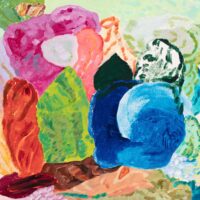
Dolnick’s art is influenced by various movements ranging from expressionism to abstraction. Her paintings pay homage to other masters, such as Van Gogh, Gauguin, Redon, Kandinsky and Guston. Dolnick’s works have energy and depth; they are odes to nature and space, expressed through light (color) and brought home by the rhythm of her brushwork. Rhythm and gesture play a critical role in her artistic process, which she has continued to develop for several decades. Her aesthetic accomplishments include a vision in which her forms are solid and significant yet detached from the weight of gravity.

Entering her ninth decade of life, Dolnick continues to paint almost daily in her Connecticut and New York studios, creating works in a light and flower-filled room. Findlay Galleries is honored to represent the artist exclusively, presenting works in varying media, from acrylic on canvas to watercolor on paper, highlighting the depth and richness of Dolnick’s oeuvre.

“I love the great art of the past and present. Painting has always been a most significant part of my life. I want my work to have an unabashed sensual beauty as well as a rigorous plastic order. I hope my work conveys a MAGIC—that which makes art alive—beyond its immediate attractiveness.”


2024 Judith Dolnick, Findlay Galleries, Palm Beach, FL
2015 Judith Dolnick, Recent Paintings, Outlet Fine Art, Brooklyn, NY
2013 Judith Dolnick: Paintings, Town Hall, Redding, CT
1989 Judith Dolnick, Klonaridies Gallery, Toronto, Canada
1987 Judith Dolnick, Gimple & Weitzenhoffer, New York, NY
1987 Judith Dolnick: Paintings I Jonathan Silver: Sculpture, University of Bridgeport, Bridgeport, CT
1986 Judith Dolnick, Klonardies Gallery, Toronto, Canada
1983 Watercolors and Painted Screens, Judith Dolnick, Gimple & Weitzenhoffer, New York, NY
1980 Recent Watercolors, Judith Dolnick, Tortue Gallery, Santa Monica, CA
1979 Judith Dolnick, Hoshour Gallery, Albuquerque, NM, Fall
1978 Judith Dolnick, Douglas Drake Gallery, Kansas City, KS
1976 Judith Dolnick, Poindexter Gallery, New York, NY
1973 Judith Dolnick, William Sawyer Gallery, San Francisco, CA
1960 Judith Dolnick, Devorah Sherman Gallery, Chicago IL
1959 Judith Dolnick Wells Street Gallery, Chicago, IL
1958 Judith Dolnick with Kenneth Burge, Wells Street Gallery, Chicago IL
1957 Judith Dolnick Wells Street Gallery, Chicago, IL


1999 Judith Dolnick, Bruce Dorfman, Robert Natkin, Joel Perlman, Larry Poons, Axis Gallery, New York, NY
1998 Robert Natkin and Judith Dolnick: Selected Works, Thomas J Walsh Art Gallery, Quick Center for the Arts, Fairfield University, CT
1994 Three American Friends: Robert Natkin, Judith Dolnick, and Michael Dillon, England & Co., London, UK
1989 Painted Screens: Bolduc, Dolnick, Fournier, Natkin, Ramirez, Sloggett, Solomon, Klonaridis Inc., Toronto, Canada
1987

Connecticut Now: Judith Dolnick, Deborah Muirhead, Judith Steeter, New Britain Museum of American Art, New Britain, CT

1980 Harriet Ewing I Judith Dolnick, Woods Gallery, Providence, RI
1978 Connecticut Painting, Drawing and Sculpture, Carlson Art Gallery, University of Bridgeport, Bridgeport, CT
1975 Robert Natkin I Judith Dolnick, Pennsylvania State University, Philadelphia, PA
1973 Judith Dolnick and Richard Bogart, Poindexter Gallery, New York, NY
1972 Chicago Expatriates: E. Dieringer, R. Natkin, R. Slowinski, G. Van de Wiele
1970 Robert Natkin I Judith Dolnick, Quay Gallery, San Francisco, CA
1968 Robert Natkin I Judith Dolnick, Poindexter Gallery, New York, NY
1962 One Sculptor, Eight Painters, Fairweather- Hardin Gallery, Chicago, IL
1961

Group Show of Paintings: Ernest Dieringer, Judith Dolnick, Robert Natkin and others, Studio For Dance Gallery,New York, NY

1959 Artists of Chicago and Vicinity: 62nd Annual Exhibition, The Art Institute of Chicago, Chicago, IL
1958 The 1958 Chicago Artists Exhibition, North Exhibition Hall, Navy Pier, Chicago, IL
1957 Momentum Show, Juried by Philip Guston, Sam Hunter and Franz Kline, Hyde Park Art Center, Chicago, IL


James MuldoonJudith Dolnick

Belynda Henry

Belynda Henry

Dates

Biography

Belynda Henry is among a select group of Australian landscape painters to achieve international success. Her previous U.S. show in New York City was a sellout, and style arbiter and collector Christian Louboutin acquired more than half of the works. “Magnificent landscapes and the reflections on the water are oh so vibrant—sublime colors,” Louboutin related.

Henry first entered the ranks of leading and celebrated landscape painters in this country in 2000 after being a noted finalist in the Wynne Prize. Edmund Capon, the then-director of the Art Gallery of NSW, pointed out her work to Stuart Purves, director of the prestigious Australian Galleries. Purves noted that she brought “simplicity in her work… within a complicated world” and quickly pulled her into his artist stable. She is now a multiple finalist of both the Wynne and Archibald prizes, amongst other prestigious awards, and her work has been exhibited alongside some of Australia’s most prominent and influential Australian artists, including Fred Williams, Arthur Boyd, Jeffrey Smart, Lloyd Rees, Brett Whiteley, John Kelly, William Robinson, Garry Shead, John Wolseley, Inge King, George Baldessin, and John Coburn. She has held more than 30 solo shows over a prolific career. Henry lives and works deep within a long, lush valley along the wild escarpments north of Sydney. She is embedded in the landscape and exposed to its ways, witnessing the transitions of everchanging light, texture and soundscape. All of this she absorbs into her compositions of nature and the infinite fascination of the land. Henry’s works bring forth the internal meditative quality evoked by landscape, illuminating these impressions in wondrous, imaginative works. Her work has been regularly featured in media coverage, including Vogue magazine, and she was considered one of the “seven artists you should invest in now” by The Age.

Henry’s work has been acquired by private collections in the United States, Japan, Switzerland, Taiwan, New Zealand, Ireland, Hong Kong, Athens, Paris and London. Her work appeared in the acclaimed Thames & Hudson tome on Australian art, A Painted Landscape. Amongst those who have praised Henry’s work is fashion icon Akira Isogawa, with the designer describing her painting as “a pure form of the metaphysical landscape which almost crossed over Japanese calligraphy.” Henry’s work “somehow triggered my childhood memory of gardens in Kyoto,” Isogawa wrote. Henry’s previous New York gallerist, Tim Olsen, said, “Her sell-out exhibition in New York with us was a testament to her talent.” Quoted in a newspaper report on Henry’s international rise, Olsen said her work “seduces the eye.” “People who had never seen Australia felt enamored by the ethereal qualities of her work,” he said. “International collectors felt an intimacy and visual experience that extended beyond any axioms of a provincial experience. Her work is universal. Belynda Henry is a rare artist. Her interaction with landscape has a profound aesthetic and construct. She marries her incredible sensibility for the colors of her surrounding bushland with an underlying abstract structure,” Olsen said. In her work, Henry references the deep structure, shifting shapes and pure colors of the landscape through a meditative state rather than a literal one.

After experiencing the landscape during daylight, she returns to her studio with sketches, notes and a mind-space of imagery, allowing the works to form by night. For this series, Henry sequestered herself for an intense period to bring together her rich body of fieldwork. She says of this process that she must let the works “imagine themselves, like a dream sequence,” taking us to the precipice of total abstraction, yet masterfully holding the viewer with spare pieces of evidence caught within the work, keeping a footing in traditional genre and rendering her painting hypnotically relatable.

My work speaks to both the beauty and brutality of our landscape, a landscape that I have lived in my whole life.

Most artists have visited or embedded themselves in the landscape for a while, but I have been fortunate enough to live and paint within it. I have always lived within this unique and seductive landscape; it breathes and shakes with the wind and is in constant regeneration or decay. The sounds of birds – like sonar, bounce around my studio before they dissipate, keeping me on edge. Although I may be embedded in it – I am not entrapped by it. I’m free when I paint, liberated like most are tethered. And I am grateful – to paint is to love.

My landscapes both respond to place and, at times, express a more emotional rather than literal connection. It is my escape – using color and energy, I create calm. Color choice comes naturally and instinctively after painting for over twenty-five years. I have as many colors out and mixed as physically possible on my oversized painter’s table and color choice, and the process after that is automatic – based on a mix of memory and new discoveries. The works can be healing or confronting. I have realized when I go into the mode of painting, when in the moment, it may not be the landscape I am painting, at times, it can be an outpouring of dreams or fears.

Abstract painting comes from the subconscious mind, yet I aim to bring the viewer to the precipice of abstraction by leaving a small natural element in the work that brings the viewer back to more of a traditional landscape. I create these landscapes so I can be in them as well. So I hope someone who appreciates my work doesn’t choose it because they love it, more so because the work loves them back, as that is my intention.

– Belynda Henry

Solo Exhibitions

2024 Harvesting the Valley, Findlay Galleries, Palm Beach, FL, USA
2023 Nocturnal Compositions, Post Space, Exeter, NSW, AUS
2022 To Paint is to Love, Gruin Gallery, Los Angeles, CA, USA
2022 Further Afield, Edwina Corlette, Brisbane, QLD, AUS
2022 Works on Paper, Australian Galleries, Sydney, NSW, AUS
2021 To Paint is to Love, Australian Galleries, Sydney, NSW, AUS
2021 Woollahra Gallery at Redleaf, Double Bay, NSW, AUS
2020 The Space Between, Olsen Gruin, New York, USA
2019 Australian Galleries, Sydney, AUS
2019 Reflections, Flinders Lane Gallery, Melbourne, AUS
2018 Landscape Lines, Australian Galleries, Sydney, AUS
2017 Sydney Contemporary, For Australian Galleries, AUS
2017 The Wanderer, Flinders Lane Gallery, Melbourne, AUS
2017 The Design Files Open House, Melbourne, AUS
2016 Recent Landscape Paintings, Flinders Lane Gallery, Melbourne, AUS
2016 Living Colour, Recent Landscapes, Olsen Gallery, Sydney, AUS
2016 Design Files Collect, Melbourne, AUS
2016 Flinders Lane Gallery, Melbourne, AUS
2015 Higher, Koskela, Sydney, AUS
2014 Overgrown, Design Files Collect, Melbourne, AUS
2014 Jigsaw, Anthea Polson Art, QLD, AUS
2012 New Paintings, Richard Martin Art, Sydney, AUS
2010 Overview, Opened By Lisa Thomas, Vogue Living, Richard Martin Art, Sydney, AUS
2008 The Four Seasons, Richard Martin Art, Sydney, AUS
2007 Shimmer, Greenhill Galleries, Perth, AUS
2007 Shadows Of Nature, Richard Martin Art, Sydney, AUS
2006 Recent Paintings, Libby Edwards Galleries, Brisbane, AUS
2005 Life And Paddocks, Richard Martin Art, Sydney, AUS
2005 New Paintings, Gallery 460, Kincumber
2005 Driving, Libby Edwards Galleries, Sydney, AUS
2004 Still Life Paintings, Libby Edwards Galleries, Melbourne, AUS
2004 New Paintings, Greenhill Galleries, Adelaide, AUS
2004 New Paintings, Greenhill Galleries, Perth, AUS
2003 Libby Edwards Galleries, Sydney, AUS
2002 Libby Edwards Galleries, Melbourne, AUS
2002 Paddock Lines, Greenhill Galleries, Adelaide, AUS
2001 Floating Over Paddocks, Von Bertouchs Galleries, Newcastle, AUS
2001 Light And Paddocks, Avoca Fine Arts Gallery, Avoca, AUS
1999 Love, Light And Paddocks, Avoca Fine Arts Gallery, NSW, AUS
1996 And Anywhere Is, Avoca Fine Arts Gallery, NSW, AUS
1994 Playing In The Secret Garden, Avoca Fine Arts Gallery, NSW, AUS

Awards

2004 Highly Commended, Open Section, Wyong Art Show
2003 First Place, Open Award, Wyong Art Show, Adjudicated By Nick Mitzovich, Director, Newcastle Regional Art Gallery
2002 First Place, Artscrawl, Landscape Award, Pokolbin, Adjudicated By Ken Done
2000 Highly Commended, Sculpture Section, Wyong Festival Of The Arts


I love a sunburnt country, a land of sweeping plains, of ragged mountain ranges, of drought and flooding rains, I love her far horizons, I love her jewel sea, her beauty and her terror – the wide brown land for me.

– Dorothea Mackellar


James MuldoonBelynda Henry

Magi Puig

Magí Puig

b. 1966

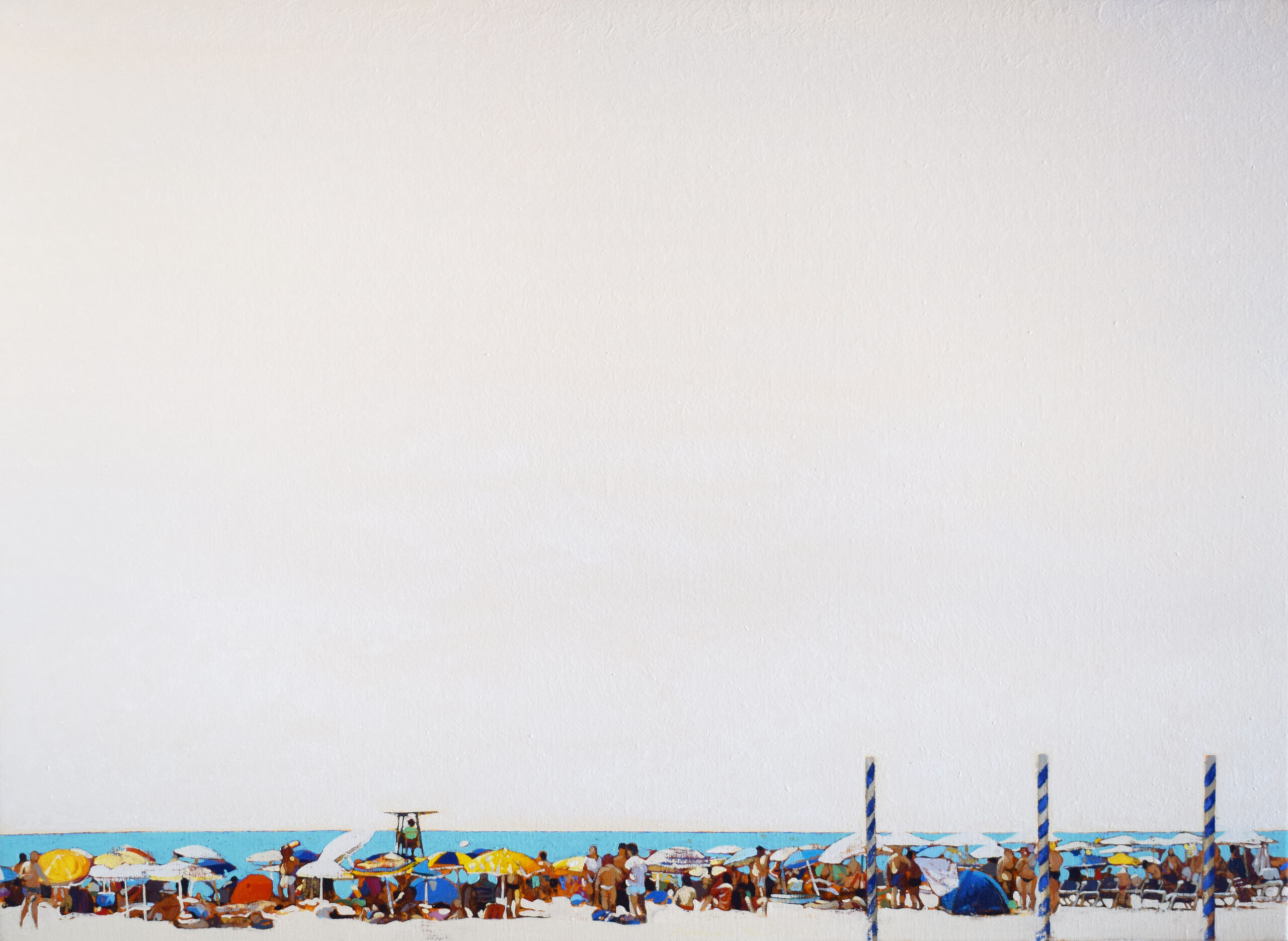
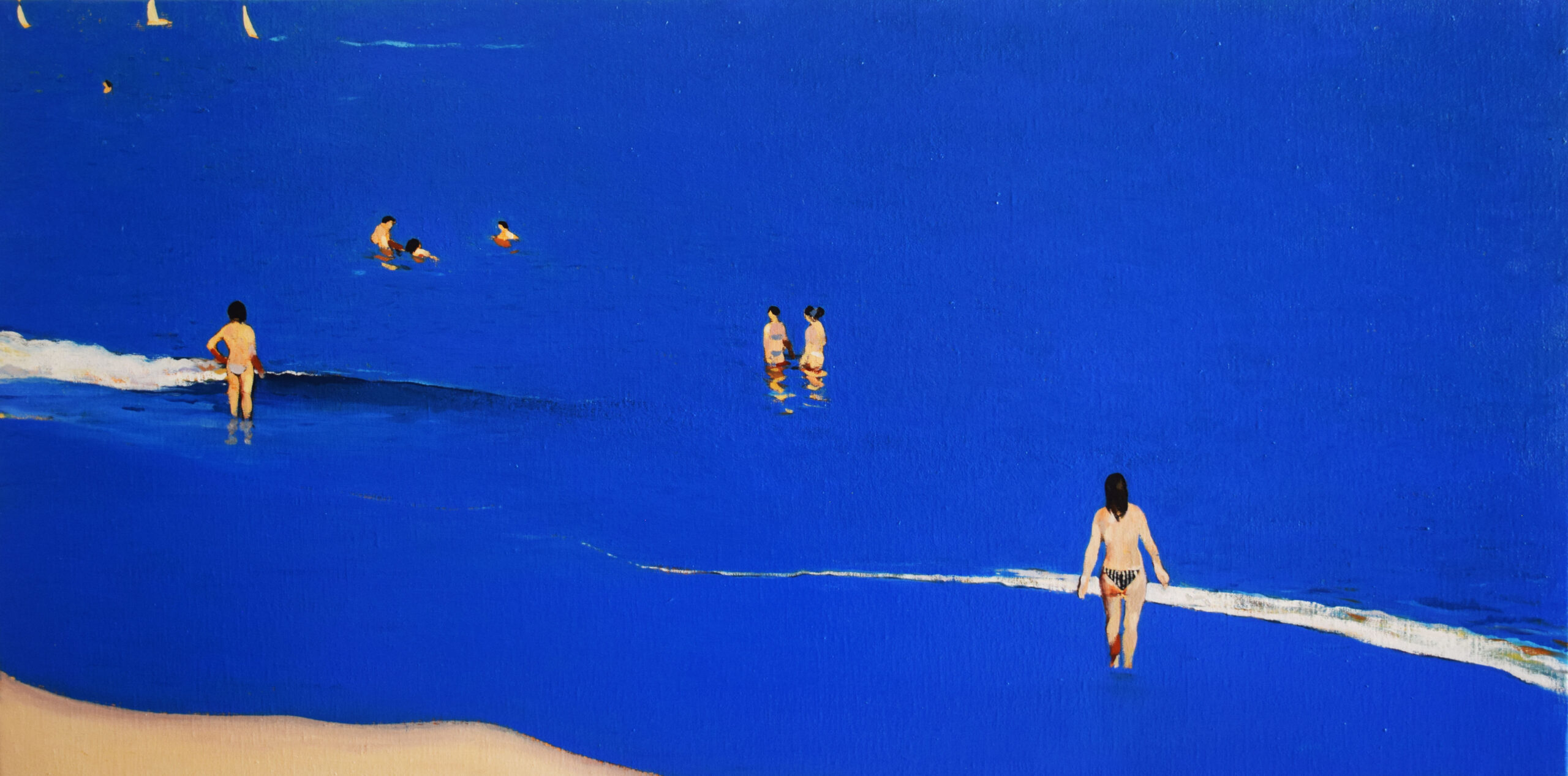
Magi Puig was born in 1966, in Palou, a small 50 inhabitant village in Catalonia and studied art at the Sant-jordi University in Barcelona. He likes not only group scenes, mostly families on Spain’s sunny beaches, but also interiors and, above all, women’s portraits. Whatever the place, the seashore, the market, or even his studio, Magi PUIG aims at recreating an atmosphere, as personal and intimate as possible, and then fully integrating us in it. His art seeks sensuality through the models’ peaceful and languid attitudes and the sun’s heavy heat reflecting on the beach.

The work on the texture also is essential, as it strengthens the analogy with the smooth skin, the thin sand or the sweet and comfortable cloth on which Carme, his wife and muse, lies. Sensitive in general and visual in particular, Magi PUIG’, paintings genuinely evoke photography: air views, diving views, flat sweeping views, they all intrigue our eyes while they puzzle the perspective. They truly give life and movement to creations which invite us to joyful and dizzy escapades.

If there is something that defines Magí Puig’s painting, it is his treatment of light. His subjects, whether they are general shots of beaches and cities or individual characters, appear bathed in a dense and vibrant light, often with dazzling backlights that awaken powerful and penetrating colors. Great examples of this are his beaches, where sometimes we can only make out a few silhouettes cut out on a bright monochrome sand that merges with the sky and the sea.

Among his themes are those inspired by his travels, which take us to cities such as Paris, Venice or Havana; and countries such as Morocco, Vietnam or Senegal. His urban landscapes and skylines are some of his most singular works. In these he usually omits any human presence ─or leaves it in the background─ to focus on the architectures and alleys, and how the light falls on them. His Moroccan streets and markets create images that can evoke the courtyards of Fabrés or the oriental fantasies of Fortuny.

James MuldoonMagi Puig

Ptolemy Mann

Ptolemy Mann

b. 1972

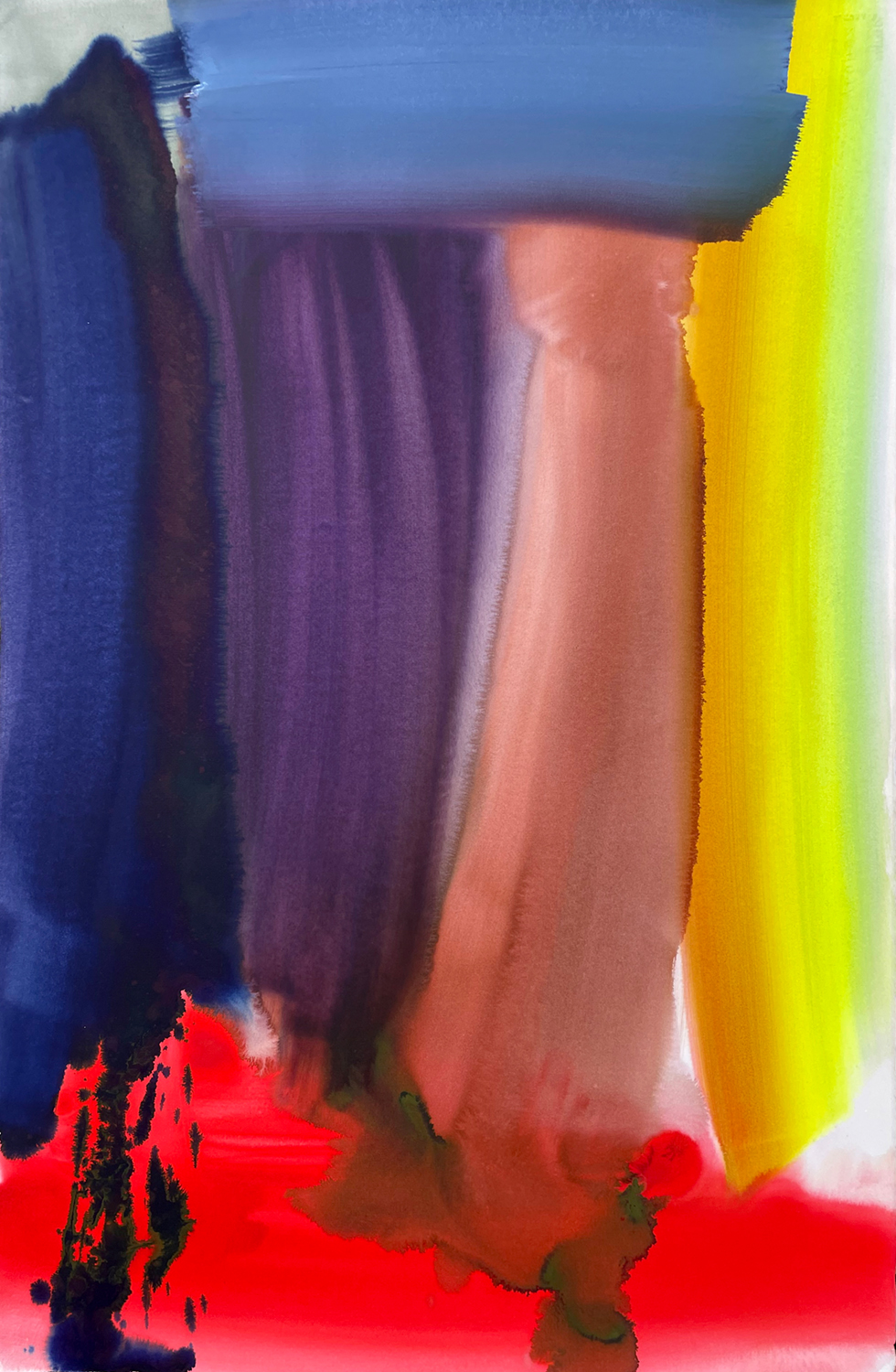
Ptolemy Mann practices a unique approach to hand-dyed and woven artworks that have become the basis for a modern-day Bauhaus philosophy of art-making underpinned with intelligent color theory. Her time-consuming and unique approach has evolved over a twenty-five-year period. Exquisite dynamics of color move across their fine surface, creating a painterly sweep. Mann is heavily influenced by Abstract Expressionism and architecture and the term ‘Chromatic Minimalism’ has been applied to her work.

Mann makes large-scale, emotional works that express a deep sense of craftsmanship and precision through an abstract narrative. She has completed many site-specific art installations and has exhibited worldwide. She regularly lectures throughout the UK and abroad, writes for the magazine Selvedge, curates, and has received three grants from the Arts Council of England. Findlay Galleries is pleased to represent Ptolemy Mann exclusively throughout the USA.

2023 Unconscious Color, Findlay Galleries, Palm Beach, USA
2022 Thresholds II, Findlay Galleries, New York, USA
2022 Thresholds, Findlay Galleries, Palm Beach, USA
2019 Circadian Rhythm Commissioned triptych, Tate Modern Gallery, London, UK
2019 Bauhaus Handwerk, Gallery Lau, Munich, Germany
2019 Albedo Old Street Gallery, London, UK
2011 The Architecture of Cloth Colour and Space, UK


2021 Odd and Even A Collection Presented by Taste Contemporary, Maison Louis Carré, Paris, France
2020 Art Genève Art Fair with Taste Contemporary, Geneva, Switzerland
2019 Miart Art Fair with Taste Contemporary, Milan, Italy
2018 The Most Real Thing New Art Centre, Roche Court, Salisbury, UK
2014 Crafted At The Royal Academy, London, UK
2013 Modern Makers presented by Sotheby’s, Chatsworth House, Derbyshire, UK
2010 Inspired By The Legacy Of Anni Albers’, Ruthin, Wales
2009 Significant Colour The Aram Gallery, London, UK
2007 Hue Line and Form Curated By Peter Ting, Contemporary Applied Arts, London, UK
2006 The London Art Fair 2005/6 and 2007 with Adrian Sassoon, London, UK
2005 The London Art Fair 2005/6 and 2007 with Adrian Sassoon, London, UK
2004 Collect Art Fair for Contemporary Objects, V&A Museum, London, UK
2003 Ptolemy Mann-Textiles & Bob Crooks-Glass, Contemporary Applied Arts, London, UK
1999 Design Resolutions, Royal Festival Hall, London, UK
1998 Decorative Arts Today, Bonhams – London, UK
James MuldoonPtolemy Mann

Mia Fonssagrives Solow

Mia Fonssagrives Solow

Mia Fonssagrives Solow is an American contemporary artist based in New York and Paris. She is internationally renowned for her refined and whimsical aesthetic in both figurative and abstract forms in a range of mediums, from polished bronze to gilded wood to sleek enamel over fiberglass. Solow’s uplifting work focuses on simplicity of form and color, exploring scale and movement as the curving surfaces of each piece draw the eye from one exquisite line to the next. Fonssagrives Solow has exhibited work throughout the U.S., Paris, London and Shanghai, and has graced the pages of lauded publications, such as the Financial Times, Artnet, Vogue, Vanity Fair, Artsy, Tatler, and Harper’s Bazaar. Her sculpture and jewelry can currently be found in locations around the world, including, NYC, East Hampton, London, Paris, and now in Palm Beach at Findlay Galleries.

As the daughter of renowned photographer Fernand Fonssagrives and iconic super model Lisa Fonssagrives, as well as the step-daughter of fashion photographer Irving Penn, Mia was born into and molded by a world of art and design. Throughout her childhood she experienced life on both sides of the camera lens. This motif of reshaping perspective is ever present in her series of abstract forms, in which the negative space becomes as integral to the work as the positive.

“Negative space is very important to me,” says Solow. “I love seeing the world through these shapes—the city, the trees, the sky, even people. As a child I always looked through the lens of a camera or a telescope and envisioned the world beyond that. In a way, these forms are a continuation of that visual process.”

Natalee BruceMia Fonssagrives Solow

Lluis Ribas

Lluis Ribas

B. 1946

“Within the rich and varied subject of themes that Lluis Ribas has chosen, the most stimulating and captivating, without doubt, is that of the female. Only such a select spirit as his, only such a brush as his, soaked in delicacy, could confront the universal theme of the woman and emerge triumphant.”

                                                                                                                                                                                                                                             J.Mascaro Passarius

Lluis Ribas was born on December 28, 1949, in Masnou, Spain, a coastal town in the Maresme district near Barcelona. Ribas spent hours on the beach tracing his first drawings in the sand. His mother dreamed of a life for him that would be less difficult than that of a fisherman. At nine years of age, he began studying drawing and painting with Jose Maris Martinez. He entered the “Escuela Massana” in Barcelona when he was 13. In 1975, at the age of 25, Ribas held his first one-man exhibition which immediately earned him international acclaim. Since then, Ribas has continued to show his works in some of the most prestigious galleries in Europe and the United States. To date, five books have been published about his paintings.

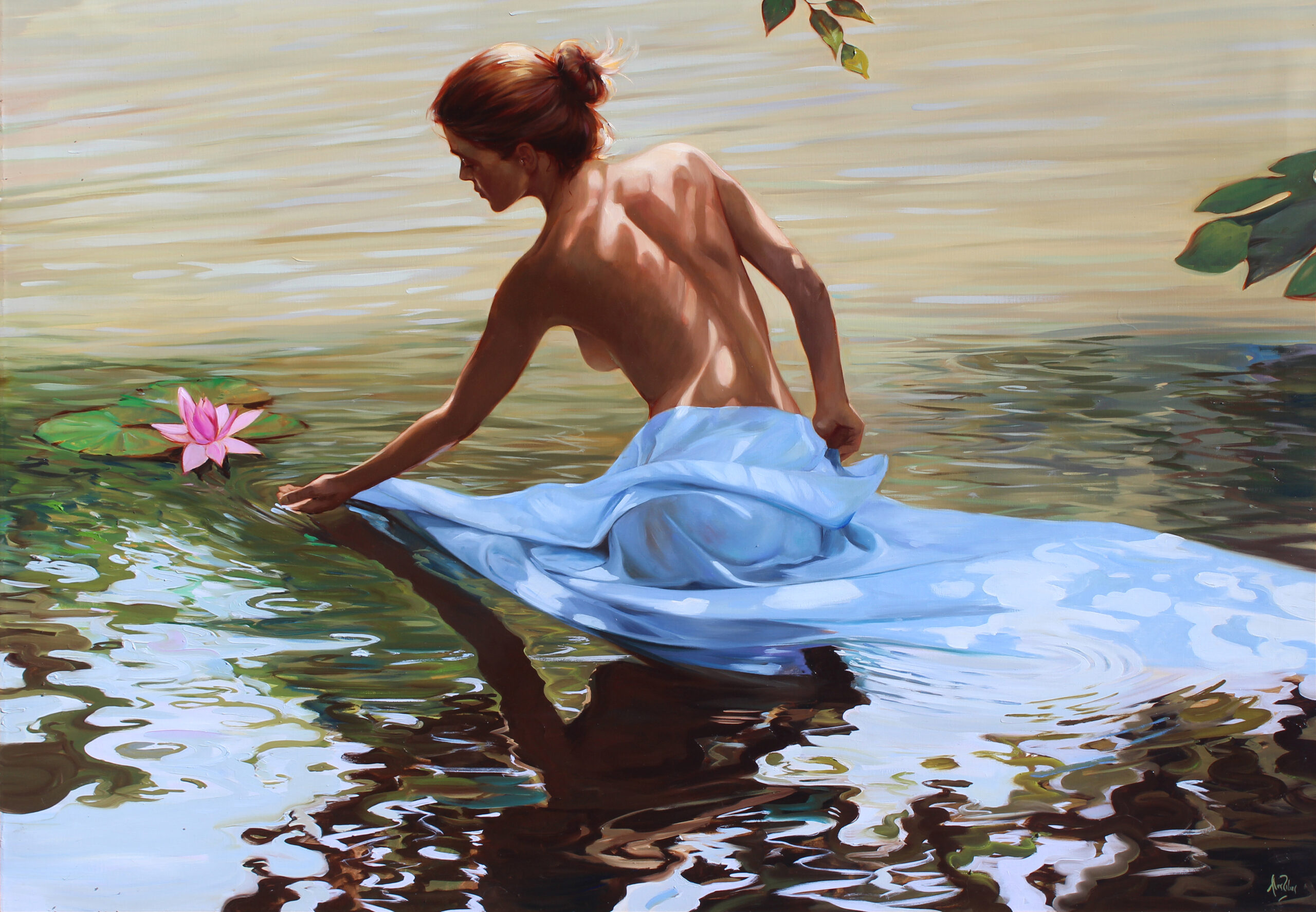
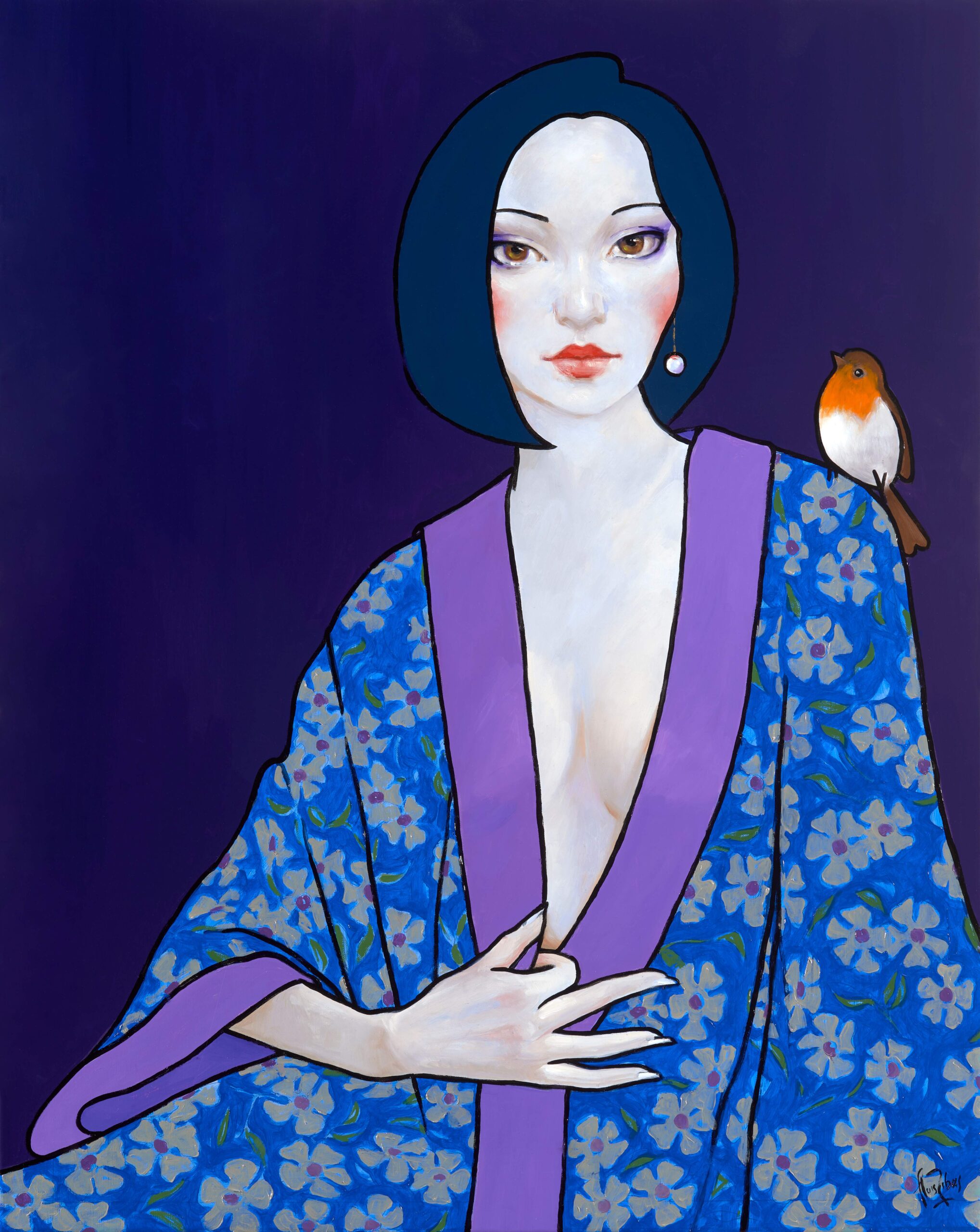
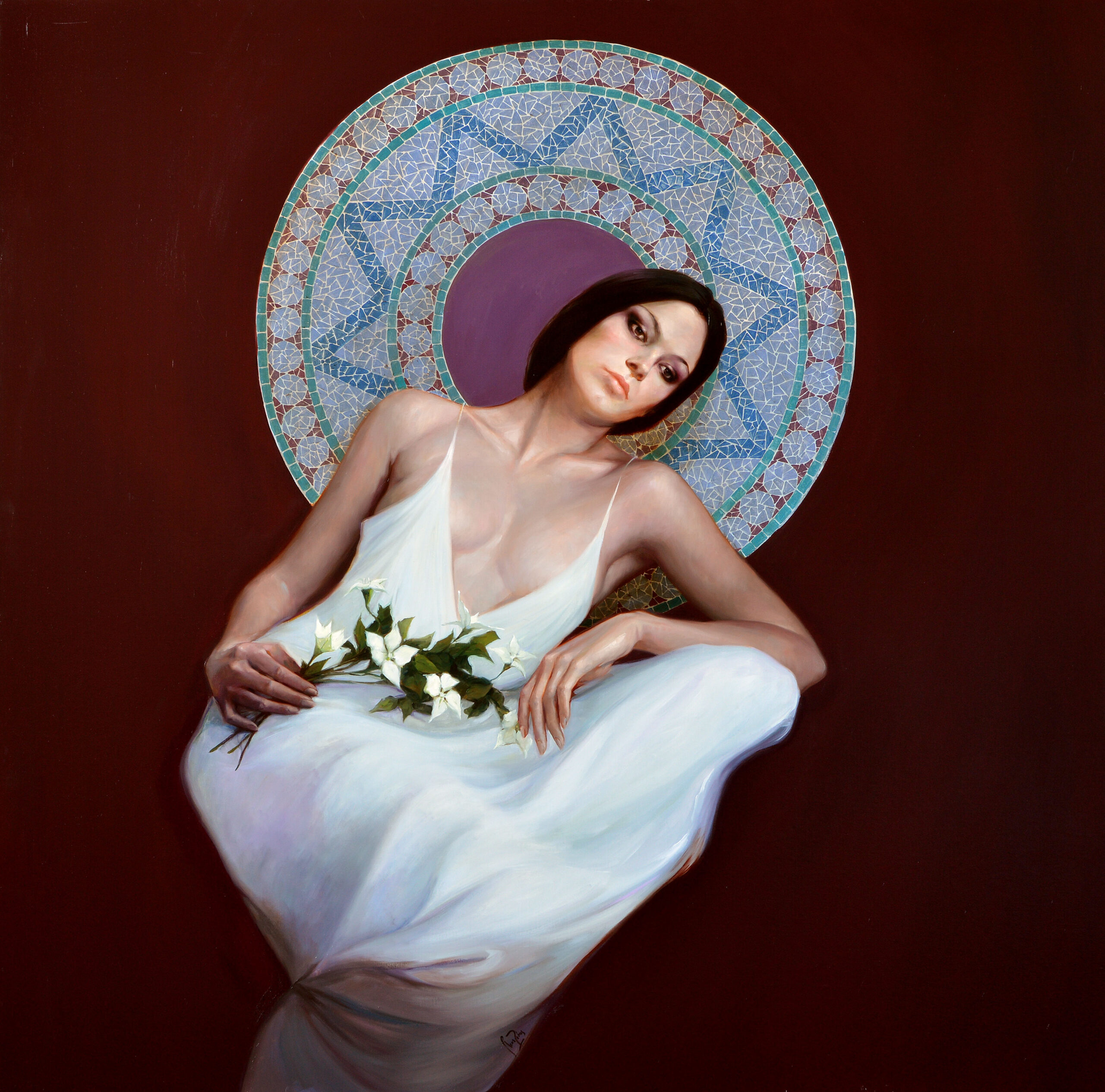
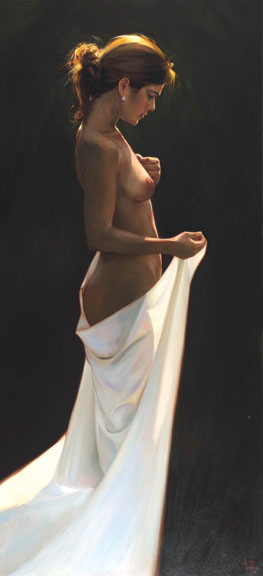
Ribas is one of the best-known luministas of contemporary Spanish art. His profound knowledge of the secrets of light, shade, and opaqueness are present throughout his work. His female forms are classics – brilliantly executed and exquisitely drawn. His palette contains a wide range of colors which give his paintings their great beauty.

The son of fishermen parents, Ribas learned the vicissitudes of a life dependent upon the sea at an early age. In spite of this, he always felt an affinity for the beach as it represented a point of departure for the horizon that marked the beginning of an adventure across the waters.

As a young artist, Ribas chose the sea, with its continuous harmonic movement as another favorite theme, which he translates to his canvas with an emotional precision few have mastered.

For Ribas, time is not important. He is an artist who prefers to work slowly – continuously defying his vision in a never-ending search for aesthetic. Although his successful career already spans more than twenty years, Ribas does not produce the quantity of paintings that others may, but each canvas is highly desired by galleries and collectors alike. Ribas is not a prolific painter. His disciplined manner of painting requires years of planning for an exhibition.


Ribas has shown his command of technique, his drawing capacity, and his great skill in a wide range of themes – especially the female figure, the touchstone par excellence for all painters. The figure of the woman, dressed in transparent clothes, facing the sea, caressed by the sun, leaves us in no doubt that he can take on any subject matter that he pleases. Only when you love something, when you feel it in your heart, can you translate it on to canvas the way Lluis Ribas does. And he converts each of his canvases into a study of light; blending the tone, working the material, capturing not only the reality, which is the guideline Ribas always maintains, but also the special atmosphere which pervades all of his paintings. His brushwork is insistent and carries out work that is almost that of a miniaturist, uninvolved with the passage of time. In each of his paintings, Ribas knows just how far to go, knows when just one more brushstroke could shatter the magic charm of the canvas. Reality immersed in atmosphere prevails in all of his paintings. Light penetrates the canvas and becomes a neutral fundamental element; it is the creator of transparency and reflected sunlight, ennobling all that is beautiful, founding and settling the deep human breath which beats in each and every canvas of Ribas.”

                                                                                                                                                                                                                                               Joan Llop

2018 Findlay Galleries, Palm Beach
2013 Wally Findlay Galleries, Palm Beach
2012 Wally Findlay Galleries, Palm Beach
2010 Wally Findlay Galleries, New York
2009 Wally Findlay Galleries, Los Angeles — Premier Exhibition of Lluis Ribas New Works, Els Colors del Blanc
2008 Wally Findlay Galleries, Palm Beach
2007 Wally Findlay Galleries, Palm Beach
2005 Wally Findlay Galleries, New York
2004 Wally Findlay Galleries, Palm Beach
2003 Wally Findlay Galleries, Palm Beach
2002 Wally Findlay Galleries, New York, Palm Beach, and East Hampton
2001 Galería Rainbow, Sitges; Reial Monestir, Sant Cugat
2000 Wally Findlay Galleries, New York and East Hampton
1999 Wally Findlay Galleries, Palm Beach; Galería Horrach Moyà, Palma de Mallorca
1998 Wally Findlay Galleries, New York; Artexpo, Barcelona
1993 Sala Vayreda, Olot
1990 Galería Terra Ferma, Lleida
1988 Galería Sokoa, Madrid
1986 Galería Pizzarro, València
1983 Galería Durán, Madrid
1982 Galería Febo, Sant Cugat; Galería Foz, Sitges
1981 Galería Dama, Calafell
1980 Galería Llotja d’Art, Barcelona
1978 Galería Jaime III, Palma de Mallorca
1977 Galería Grife y Escoda, Palma de Mallorca; Galería Dama, El Vendrell
1976 Galería d’Art Xarxa, Carlafell; Galería Epoca, Barcelona; Fundación Sensat Pagés, El Masnou


Natalee BruceLluis Ribas

Ronnie Landfield

Ronnie Landfield

b. 1947

The lyrical abstractions of Ronnie Landfield have become icons of the modernist Colorfield movement.   As a young boy, growing up in New York City, Landfield would visit the avant garde galleries of the time, taking in the abstract expressionists’ work such as Jackson Pollock, Ad Reinhardt and Willem de Kooning.  In a reaction to the all-over, process oriented abstraction of the midcentury, Landfield painted his abstractions from nature, incorporating an horizon as he used random effects of pouring and staining.

Lanfield studied at the Kansas City Art Institute, the San Francisco Art Institute and The Art Students League in New York.

In 1967, at the age of 20, The Whitney Museum of American Art invited Landfield to exhibit.  He was also included in the Whitney’s biennials of 1969 and 1973.  In 1969 he began showing with David Whitney Gallery in Soho. Also that year, architect Philip Johnson donated his important canvas “Diamond Lake” to the Museum of Modern Art.

Landfield’s work is in the Metropolitan Museum of Art, the Museum of Modern Art, the Whitney Museum of American Art, the Art Institute of Chicago and other important public institutions

South Florida Web AdvisorsRonnie Landfield