

Featured Works
Selected works by Tadashi Asoma.
Click any image to view larger.
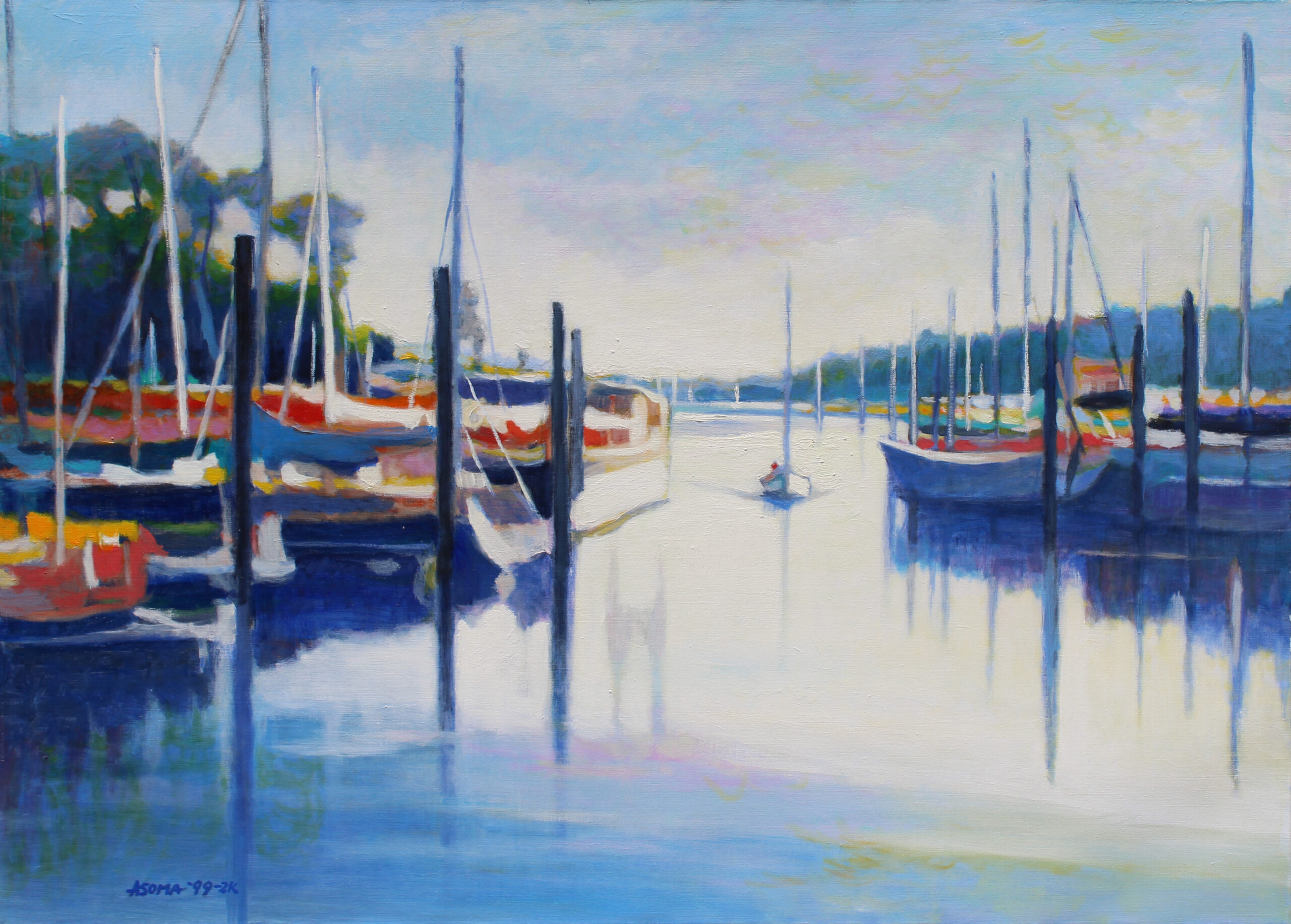
Incoming Boat, 1999-2000
oil on canvas
25 ¾ x 35 7/8 in. | FG©139661
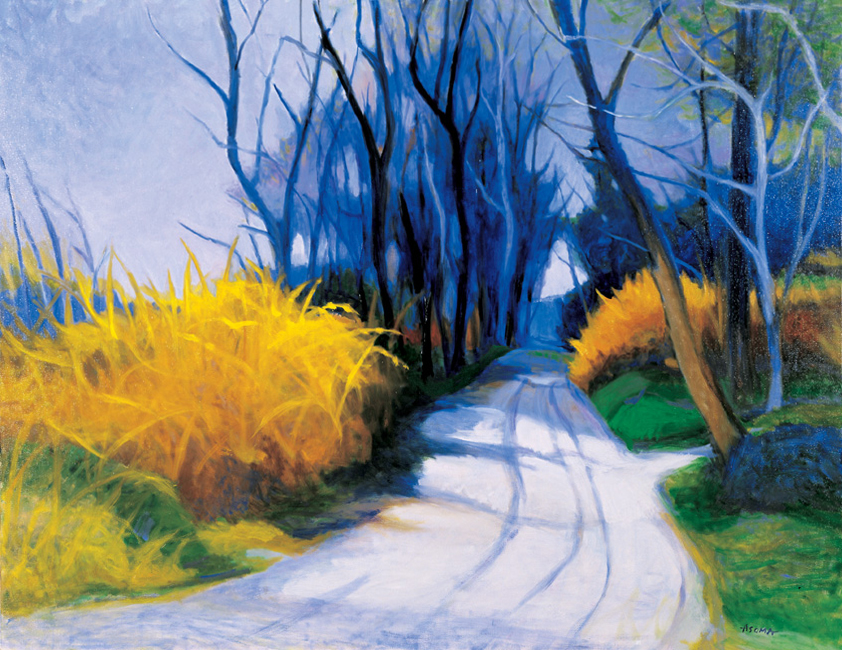
Indian Summer, 2002
oil on canvas
35 7/8 x 46 in. | FG©126684
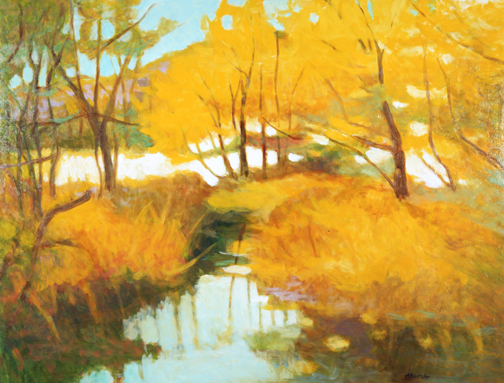
Yellow Rhapsody
oil on canvas
44 7/8 x 57 1/2 in. | FG©132994
View Additional WorksExplore additional available works by Tadashi Asoma.
Fall by the Lakeside, 1994
oil on canvas18 x 21 in.FG©140228
Glory of Autumn
oil on canvas50 1/8 x 60 1/8 in.FG©141133
The Autumn Afternoon, 1993
oil on canvas18 x 24 in.FG©140229
White Birches in Fall, 1977
oil on canvas39 1/2 x 39 1/2 in.FG©141986
White Kimono
oil on canvas41 x 51 in.FG©139183
Woman with Flower, 2007
oil on canvas51 3/16 x 38 3/16 in.FG©131290
Women and the Moon, 1970
oil on canvas24 ¼ x 25 7/8 in.FG©139664
Yellow Birch, 1993
oil on canvas58 1/4 x 72 1/4 in.FG©141366
Artist Biography
Tadashi Asoma
(1923–2017)
Tadashi Asoma (1923–2017) was a Japanese-born painter whose landscapes and figure paintings are distinguished by luminous color and a keen sense of pattern. In Garrison, New York, the changing seasons of the Hudson River Valley became a recurring subject, offering him a setting in which to explore the changing relationships between light, water, and foliage.
In Asoma’s landscapes, a stand of trees or a pond’s reflection can determine the arrangement of an entire canvas. His figure paintings show a related attention to silhouette, patterned fabric, and the space around a seated figure. Across both subjects, the placement of a single patch of color can alter the balance of the composition.
Read full biography
Early Life and Formation
Born in Japan in 1923, Asoma studied at Saitama Teachers College in Urawa and at Bijitsu Gakko in Tokyo. A Japanese government scholarship took him to Paris, where he studied painting at the Académie de la Grande Chaumière. He later continued his training at the Art Students League of New York.
Asoma was drawn to contemporary American painting and settled permanently in New York in 1961. During his early years in the city, he lived near the East Village, studying and painting by day and working in a restaurant at night to support his family. Findlay Galleries records his first U.S. exhibitions in 1961 through the Japan Society in New York and San Francisco.
New York and the Hudson River Valley
In the 1970s, Asoma moved with his family to Garrison, on the east side of the Hudson River. The surrounding woodlands and waterways became subjects he could observe throughout the year. Changes in foliage, light, and reflection gave him occasion to reconsider familiar views from season to season.
Garrison broadened the role of landscape in a practice that already included figure painting. In works such as Hisayo on Beach (1965) and Woman in repose (1969), Asoma arranged figures and their surroundings in broad planes of color. That attention to the relationship between subject and setting also informs his later views of woods and water.
Color and Composition
Asoma often used strong, closely placed colors to establish the composition. In his figure paintings, the contour of a sleeve or the shape of a seated figure gives definition to the surrounding space. In his landscapes, foliage and reflected light form larger patterns that guide the eye across the canvas.
Findlay’s exhibition materials connect Asoma’s vivid palette with his understanding of Fauvism and his use of pattern and geometric forms with the School of Paris. His asymmetrical compositions and cropped views also reflect his Japanese heritage. These qualities are especially apparent when a branch enters from the edge of a painting or a reflection occupies much of the foreground.
Nature and the Changing Seasons
Willows, bamboo, and ponds recur throughout Asoma’s work. In Willow and Lily Pond (1979), the subject brings together the hanging foliage of the willow and the horizontal expanse of the pond. Later works such as Autumn of Lake Tiorati (1993) return to the relationship between seasonal foliage and water.
Asoma’s brushwork ranges from broad passages of saturated color to lightly feathered touches. These shifts are particularly suited to the landscape, where a soft edge can suggest foliage dissolving into light and a concentrated stroke can bring a branch or a cluster of leaves into focus.
Exhibitions and Recognition
Asoma exhibited in the United States, Japan, and Europe. The gallery’s biography records exhibitions at David Findlay Galleries in New York and Galerie Paul Vallotton in Lausanne. A surviving exhibition catalogue documents his 1990 solo presentation at Nihonbashi Mitsukoshi in Tokyo.
Findlay Galleries presented a retrospective of Asoma’s paintings and works on paper in Palm Beach in 2020. The catalogue brought together landscapes, figure paintings, floral subjects, and works on paper from across his career.
In 2023, Findlay Galleries presented Tadashi Asoma: Japanese American Master of Color in Palm Beach. The exhibition included early figure paintings such as Woman Seated (1965) and Women and the Moon (1970), alongside works such as Purple Reflections (lunette) (1971).
Legacy and Archives
Asoma died in 2017, leaving a body of work that spans figure painting, landscape, floral subjects, and works on paper. The Smithsonian Libraries maintain an artist reference file on Asoma at the Smithsonian American Art Museum and National Portrait Gallery Library.
Findlay Galleries represented Asoma during his lifetime and continues to present his work. Its exhibition catalogues make it possible to follow the development of his painting from the broad planes of his early New York figures to the varied brushwork of his Hudson River Valley landscapes.
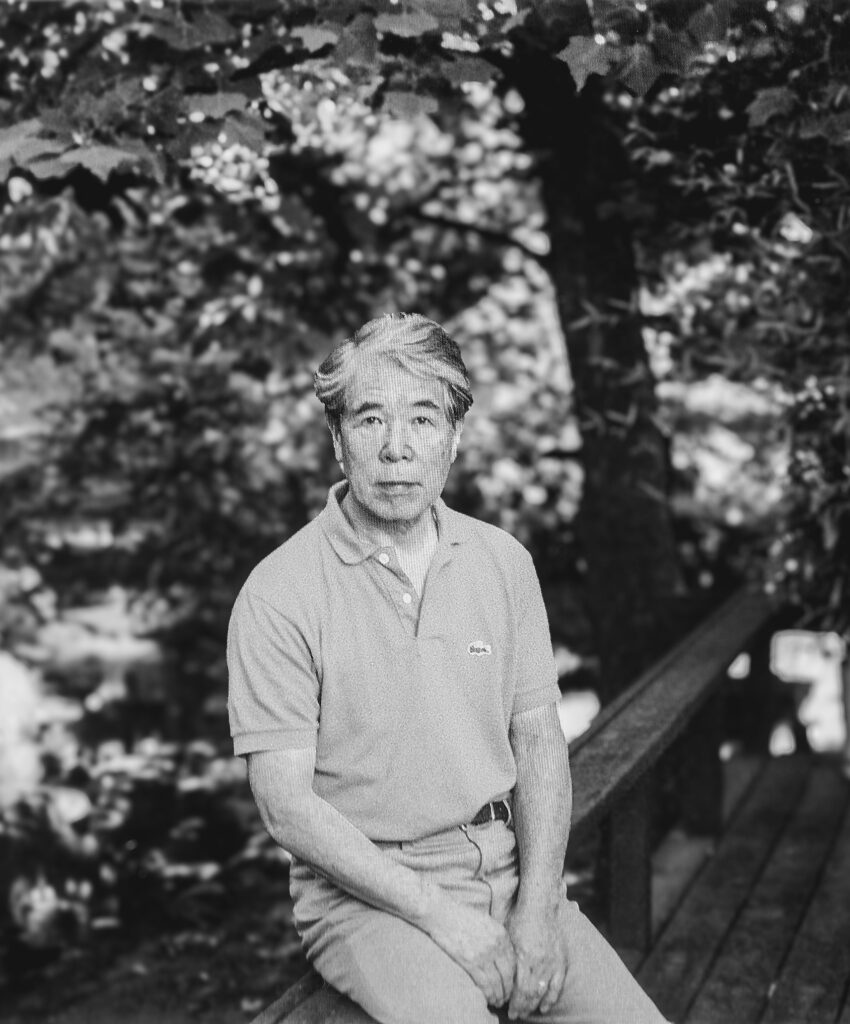
“I want to keep painting as long as I live.”
— Tadashi Asoma, Autobiography (2010, translated from Japanese)
Exhibitions
Selected Exhibitions
Selected exhibitions of Tadashi Asoma’s work in the United States, Japan, and Europe, including solo exhibitions and Findlay Galleries’ 2020 retrospective in Palm Beach.
Tadashi Asoma
Solo exhibition, Findlay Galleries, New York, NY.
Tadashi Asoma: Japanese American Master of Color
Findlay Galleries, Palm Beach, FL.
Tadashi Asoma: 2020 Retrospective
Findlay Galleries, Palm Beach, FL.
Tadashi Asoma: Homecoming Exhibition
The Museum of Modern Art, Saitama, Japan.
View full exhibition archive
- 2025 Luminous Horizons, group exhibition, Findlay Galleries.
- 2024 Tadashi Asoma, solo exhibition, Findlay Galleries, New York, NY.
- 2023 Tadashi Asoma: Japanese American Master of Color, Findlay Galleries, Palm Beach, FL.
- 2022 Timeless Composition: Traditional + Contemporary, group exhibition, Findlay Galleries.
- 2020 Tadashi Asoma: 2020 Retrospective, Findlay Galleries, Palm Beach, FL.
- 2014 Asian Masters, group exhibition, Wally Findlay Galleries, New York, NY.
- 2010 Virtuoso, Wally Findlay Galleries, Palm Beach, FL.
- 2009 Solo exhibition, Nihonbashi Mitsukoshi, Tokyo, Japan.
- 2008 Splendid Brilliance, Wally Findlay Galleries, Palm Beach, FL.
- 2007 A Century of Landscapes, Wally Findlay Galleries, New York, NY.
- 2007 Allure of the East, Wally Findlay Galleries, New York, NY.
- 2006 Exhibition, Wally Findlay Galleries, Palm Beach, FL.
- 2001 Exhibition marking 50 years of painting, Tokyo International Forum Lobby Gallery, Tokyo, Japan.
- 2001 Exhibition, Wally Findlay Galleries, Palm Beach, FL.
- 2000 Homecoming exhibition, The Museum of Modern Art, Saitama, Japan.
- 1996 Exhibition, Nihonbashi Mitsukoshi, Tokyo, Japan.
- 1995 Exhibition, Maruhiro Gallery, Kawagoe, Saitama, Japan.
- 1995 Exhibition, Sogo Gallery, Yokohama, Japan.
- 1994 Exhibition, Nihonbashi Mitsukoshi, Tokyo, Japan.
- 1993 Exhibition, Seibu Gallery, Utsunomiya, Japan.
- 1992 Exhibition, Tokyo Central Gallery, Tokyo, Japan.
- 1991 Exhibition, Galerie Paul Vallotton, Lausanne, Switzerland.
- 1990 Solo exhibition, Nihonbashi Mitsukoshi, Tokyo, Japan.
- 1988 Exhibition, Tokyo Central Gallery, Tokyo, Japan.
- 1988 Exhibition, Galerie Paul Vallotton, Lausanne, Switzerland.
- 1984 Exhibition, Tokyo Central Gallery, Tokyo, Japan.
- 1984 Exhibition, Dubins Gallery, Los Angeles, CA.
- 1981 Solo exhibition of oil paintings, Tokyo Central Annex, Tokyo, Japan.
- 1979 Exhibition, Dubins Gallery, Los Angeles, CA.
- 1978 Exhibition, Tokyo Central Museum Annex, Tokyo, Japan.
- 1976 Exhibition, Tokyo Central Museum Annex, Tokyo, Japan.
- 1976 Solo exhibition, Matsuya Ginza, Tokyo, Japan.
- 1972 Exhibition, River Oaks Gallery, Houston, TX.
- 1972 Exhibition, Elms Gallery, Midland, TX.
- 1970 Exhibition, Knott Gallery, San Francisco, CA.
- 1965–1997 Series of solo exhibitions, David Findlay Galleries, New York, NY.
- 1961 Early U.S. exhibitions in New York, NY, and San Francisco, CA, as recorded by Findlay Galleries.
Inquiries
Contact the Gallery
New York
32 East 57th Street, 2nd FloorNew York, NY 10022
(212) 421-5390