

Available Work
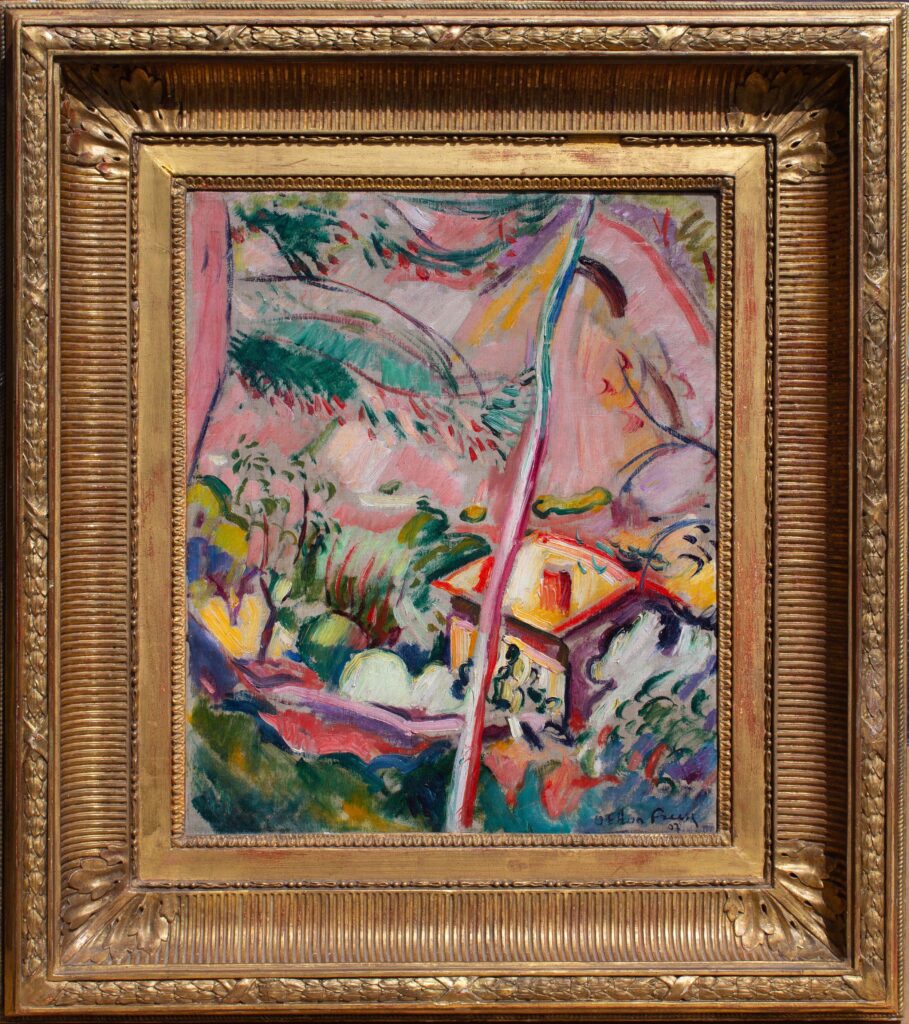
La Ciotat – Paysage
Othon Friesz
Date: 1907
Medium: Oil on canvas
Dimensions: 18.62 × 14.94 inches
Inventory no.: FG© 135784
Signed and dated “Othon Friesz 07” lower right.
Available Work
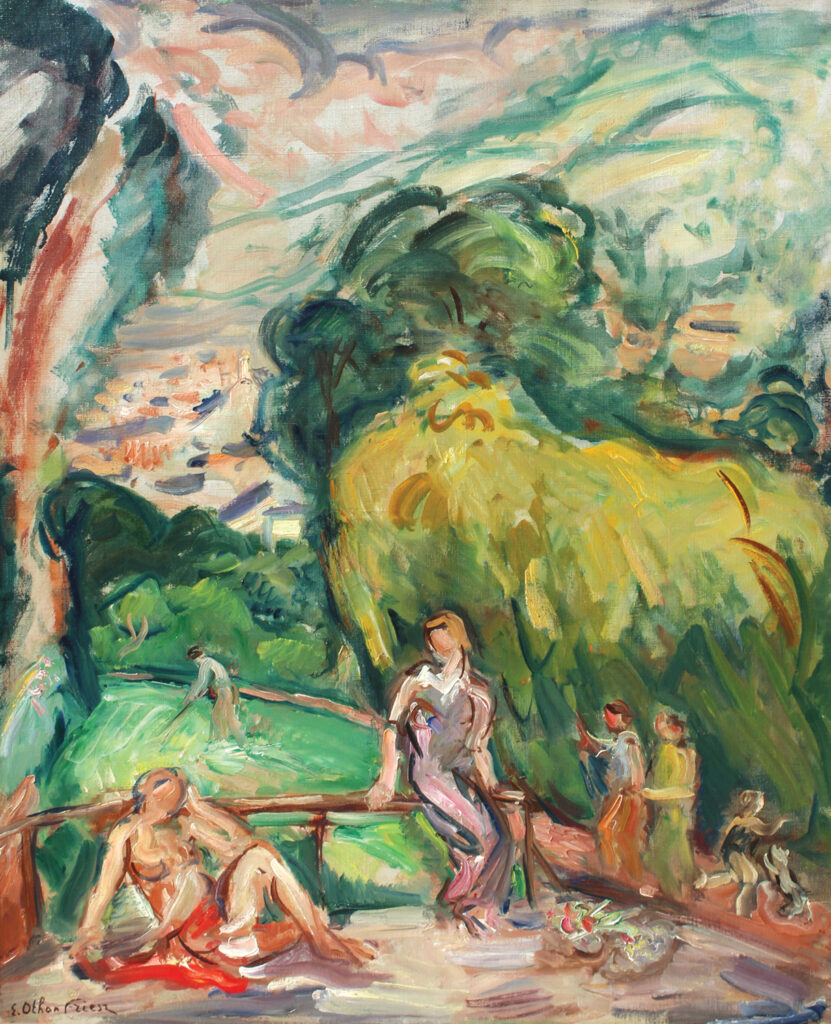
Après-midi d’été
Othon Friesz
Date: 1935
Medium: Oil on canvas
Dimensions: 28 3/4 × 23 5/8 inches
Inventory no.: FG© 133913
“I had returned to drawing instinctively, out of pictorial necessity.”
Othon Friesz
Quoted in Florent Fels, L’Art vivant, de 1900 à nos jours,
Geneva: Pierre Cailler, 1950.
English translation reproduced by
Galerie Alexis Pentcheff.
Biography
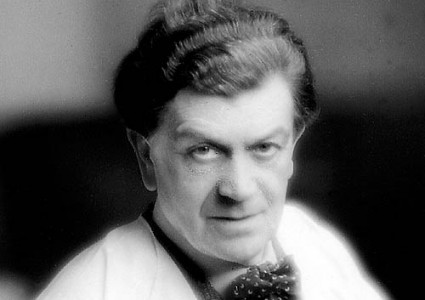
Othon Friesz
1879–1949
A French Fauvist and modernist whose landscapes and figure compositions unite expressive color with a sustained concern for drawing, rhythm and structure.
Othon Friesz (1879–1949) was a French painter associated with Fauvism and the development of modern French art. A close friend of Raoul Dufy and Georges Braque, he helped bring the artistic life of his native Le Havre into dialogue with the Parisian avant-garde. His paintings encompass harbors, Mediterranean landscapes, portraits, still lifes and ambitious figure compositions.
Friesz’s Fauvist paintings of 1906 and 1907 are distinguished by vivid color, fluid contours and an expressive treatment of landscape. His subsequent engagement with Paul Cézanne brought greater emphasis to pictorial structure, drawing and the solidity of form. Across these changes, he maintained an interest in the relationship between observed nature and the expressive possibilities of painting.
His career extended through international exhibitions, teaching and public commissions. Today, his work is represented in major museum collections in Europe and the United States, including the Centre Pompidou, Tate, the National Museum of Norway, the San Francisco Museum of Modern Art and the Museum of Fine Arts, Houston.
Read Full Biography
Le Havre and Paris
Born in Le Havre on February 6, 1879, Friesz began his artistic training at the city’s École des Beaux-Arts in 1892. Under Charles-Marie Lhullier, he developed a foundation in drawing and formed enduring friendships with Raoul Dufy and Georges Braque. The port city and the landscapes of Normandy remained important subjects throughout his life. In 1897, a scholarship enabled him to continue his studies in Paris, where he entered Léon Bonnat’s studio at the École des Beaux-Arts.
In Paris, Friesz encountered Henri Matisse, Albert Marquet, Henri Manguin and Charles Camoin. Alongside his formal studies, he examined paintings at the Louvre and discovered Impressionist works through the Parisian galleries. His early landscapes reflect the influence of Camille Pissarro and Armand Guillaumin, with an attention to changing light and the animated surface of the painting. He exhibited at the Salon des Artistes Français in 1900, participated in the Salon des Indépendants in 1903 and held his first solo exhibition at the Galerie des Collectionneurs in 1904.
Fauvism and the Coastal Landscape
In 1906, Friesz helped establish the Cercle de l’Art Moderne in Le Havre. Together with Dufy and Braque, he served on its painting committee, bringing progressive artists and local collectors together. That summer, Friesz and Braque worked side by side in Antwerp, painting its harbor, boats and city skyline. These views record his movement away from Impressionist observation toward a freer use of color, while retaining a carefully organized composition.
The following summer, Friesz and Braque painted at La Ciotat in southern France. The Mediterranean coast encouraged a more emphatic treatment of color and contour: trees, rocks and hills became interlocking forms, and the landscape took on a rhythmic, expressive character. These paintings belong to the most adventurous period of his career. Their lasting importance is reflected in museum holdings such as Paysage (Le Bec de l’Aigle, La Ciotat), 1907, in the San Francisco Museum of Modern Art.
Cézanne and Pictorial Structure
The Cézanne retrospective at the Salon d’Automne in 1907 helped redirect Friesz’s painting toward a more deliberate construction of form and space. His palette became more measured, and drawing assumed a greater role in organizing the composition. Although he shared Braque’s interest in Cézanne, Friesz pursued an independent course, maintaining recognizable subjects and a strong connection to the traditions of figure painting and landscape.
Large compositions such as Le Travail à l’automne, 1908, now in the National Museum of Norway, demonstrate the scale of his ambitions. Measuring approximately two meters high and two and a half meters wide, the painting extends his concerns beyond the intimate landscape toward a monumental treatment of the figure. His mature work continued to explore the balance between expressive movement and a clearly ordered pictorial structure.
International Recognition and Teaching
Friesz’s reputation expanded through exhibitions in France and abroad. He showed with the Galerie Druet in Paris, traveled to Portugal in 1911 and participated in the 1913 Armory Show in New York and Chicago. His work reached an international audience during a period of widespread debate about the direction of modern painting. Alongside his exhibition career, he taught at the Académie Moderne, the Académie Scandinave and the Académie de la Grande Chaumière, contributing to the training of younger artists in Paris.
War, Mature Painting and Public Commissions
Mobilized during the First World War, Friesz was wounded in 1915. During his convalescence in Paris, he painted La Guerre, a large allegorical composition now held at the Musée de Grenoble. Its crowded scenes bring together identifiable wartime events and symbolic representations of human experience. The painting reveals another dimension of his practice, applying his interest in figure composition to the violence and upheaval of contemporary history.
In the decades that followed, Friesz continued painting landscapes, harbor scenes, portraits, nudes, still lifes and flowers. His later work often uses a quieter palette and a more substantial treatment of form than his Fauvist canvases. Curving lines and an expressive handling of paint remained important, giving movement to compositions grounded in close observation. The range of these subjects reflects a sustained engagement with the established genres of French painting.
His practice also extended to decorative work and public commissions. In 1937, he and Raoul Dufy shared a commission for the Palais de Chaillot on the occasion of the Paris international exhibition. Their paintings followed the course of the Seine, with Friesz treating its passage from the source to Paris and Dufy continuing from Paris to the estuary. The project connected his lifelong interest in landscape with the demands of painting on an architectural scale.
Museum Recognition
Friesz died in Paris on January 10, 1949. His work subsequently appeared in major surveys of Fauvism, including Les Fauves at the Museum of Modern Art, New York, in 1952–1953 and The “Wild Beasts”: Fauvism and Its Affinities in 1976. The retrospective Othon Friesz: Le fauve baroque, presented in Roubaix, Céret and Le Havre in 2007–2008, examined the breadth of his career. Museum collections preserve both his early experiments in color and his later commitment to portraiture, landscape and figure composition.
Institutional Holdings
Selected Museum Collections
Representative paintings in public museum collections. Dates refer to the works.
1904
Tate, London
The Castle of Falaise (Evening)
1906
Musée d’art moderne André Malraux (MuMa), Le Havre
Yacht Basin at Sainte-Anne, Antwerp
1906
Museum of Fine Arts, Houston
The Regatta at Antwerp
1907
San Francisco Museum of Modern Art
Paysage (Le Bec de l’Aigle, La Ciotat)
1908
National Museum of Norway, Oslo
Le Travail à l’automne
1915
Statens Museum for Kunst, Copenhagen
Still Life with Apples
1915
Musée de Grenoble
La Guerre
1923
Centre Pompidou, Musée national d’art moderne, Paris
Portrait de Mme Othon Friesz
Inquiries
Contact the Gallery
New York
32 East 57th Street, 2nd FloorNew York, NY 10022
(212) 421-5390