

Featured Works
Selected works by Simeon Braguin.
Click any image to view larger.
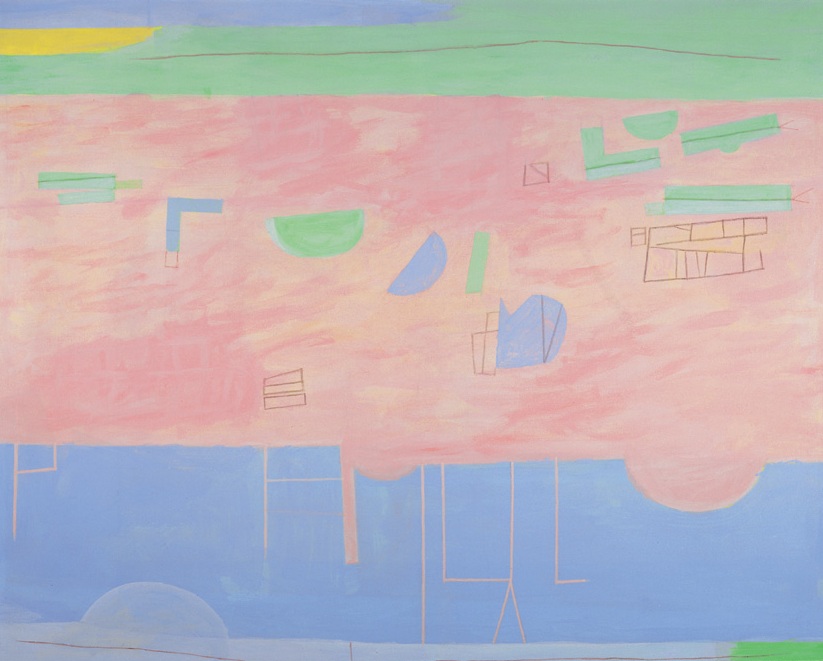
Abstraction #156
acrylic on canvas
50 x 40 in. | FG© 128138
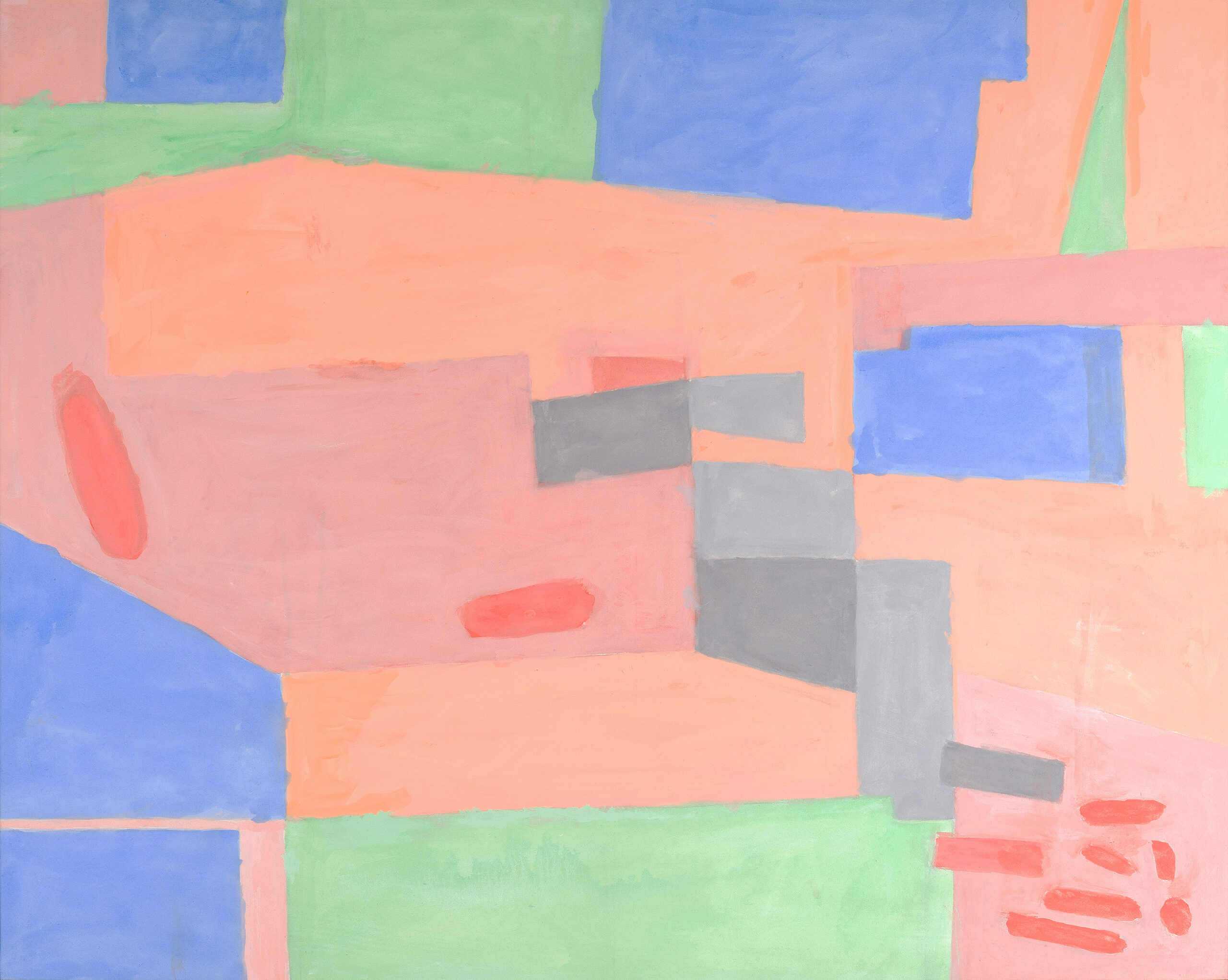
Abstraction 42, 1996
acrylic on canvas
48 1/4 x 60 1/8 in. | FG© 128141
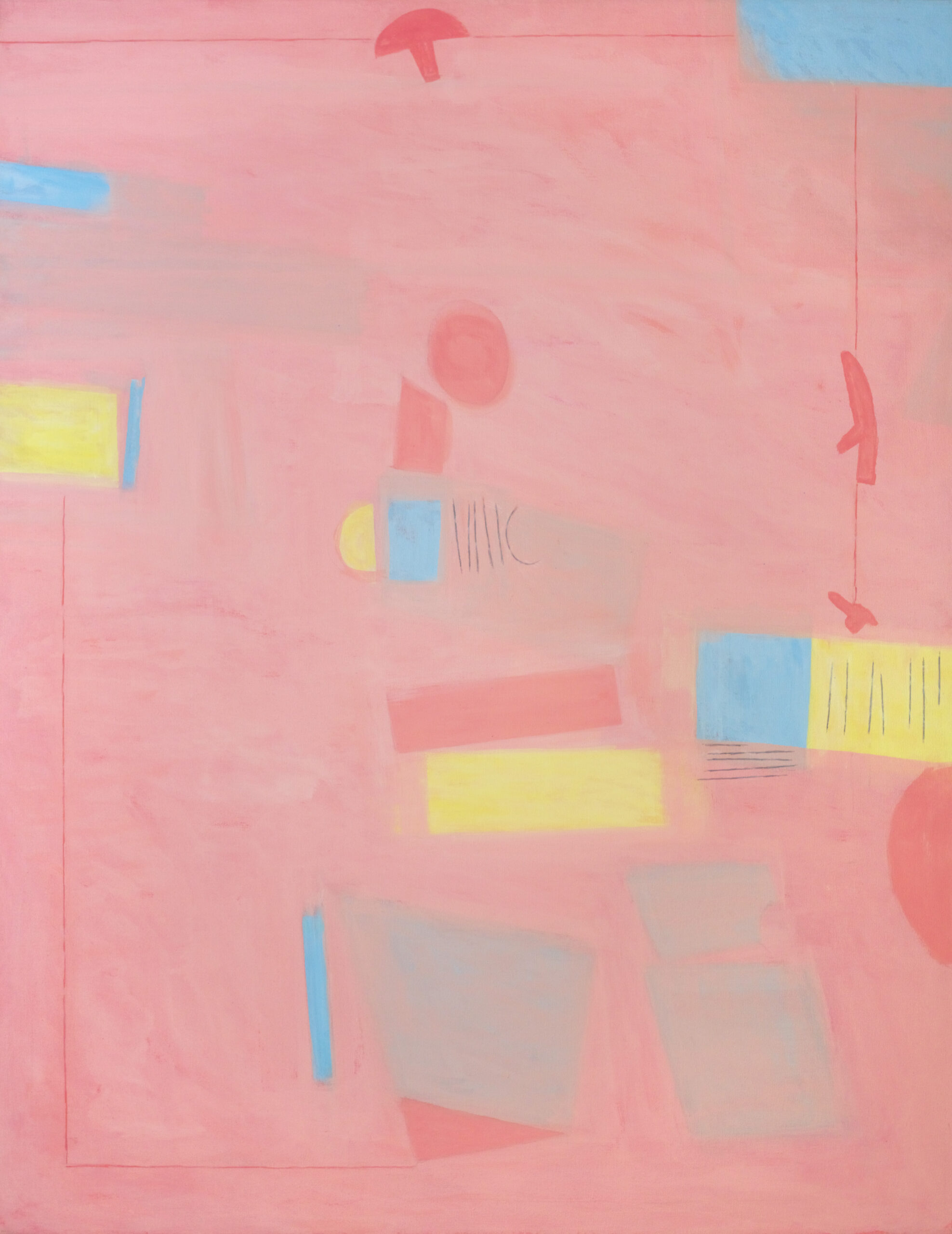
SB 199.23, 1990-91
acrylic on canvas
44 1/8 x 50 1/4 in. | FG© 134440
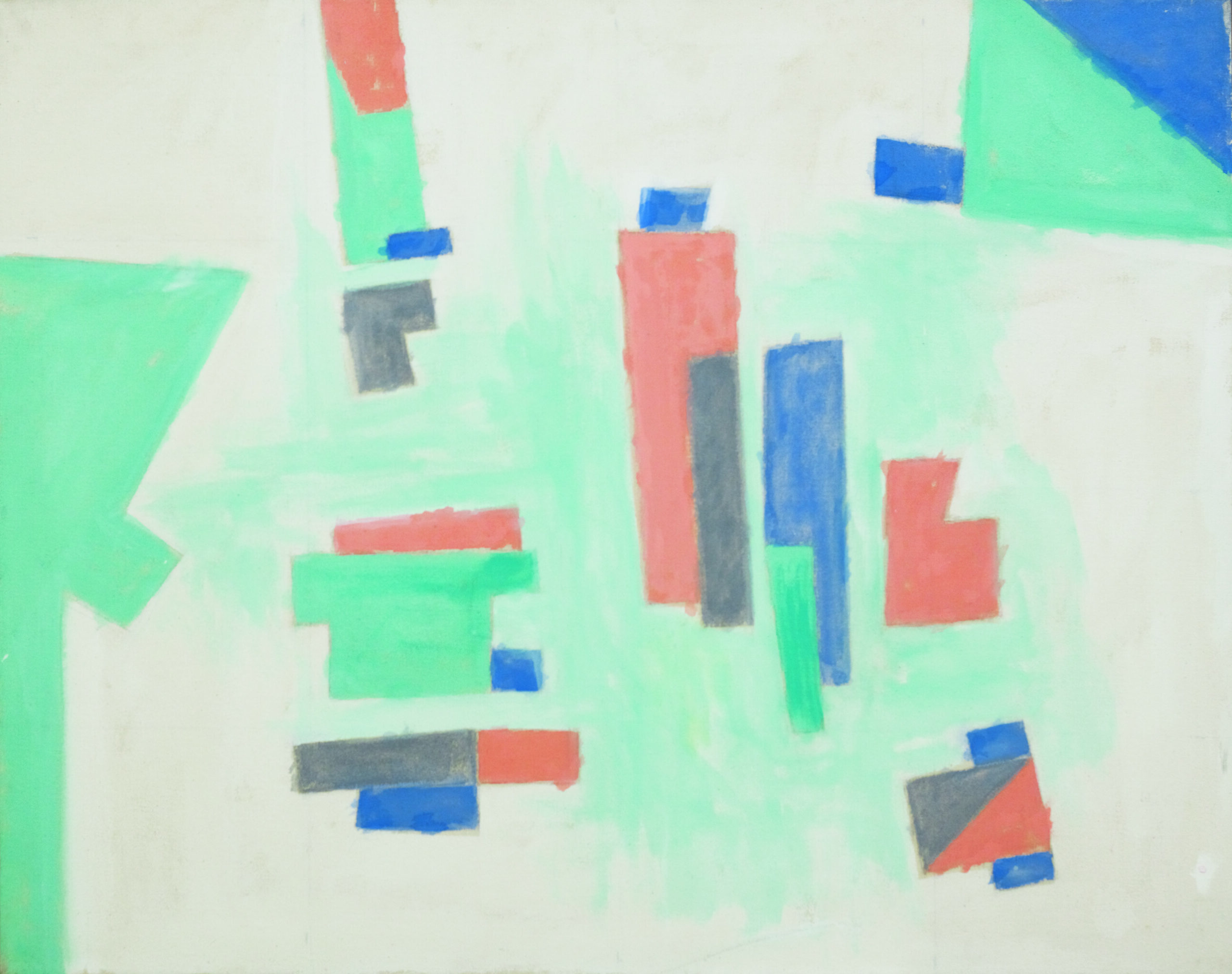
SB 1998.134
acrylic on canvas
30 x 38 in. | FG© 134412
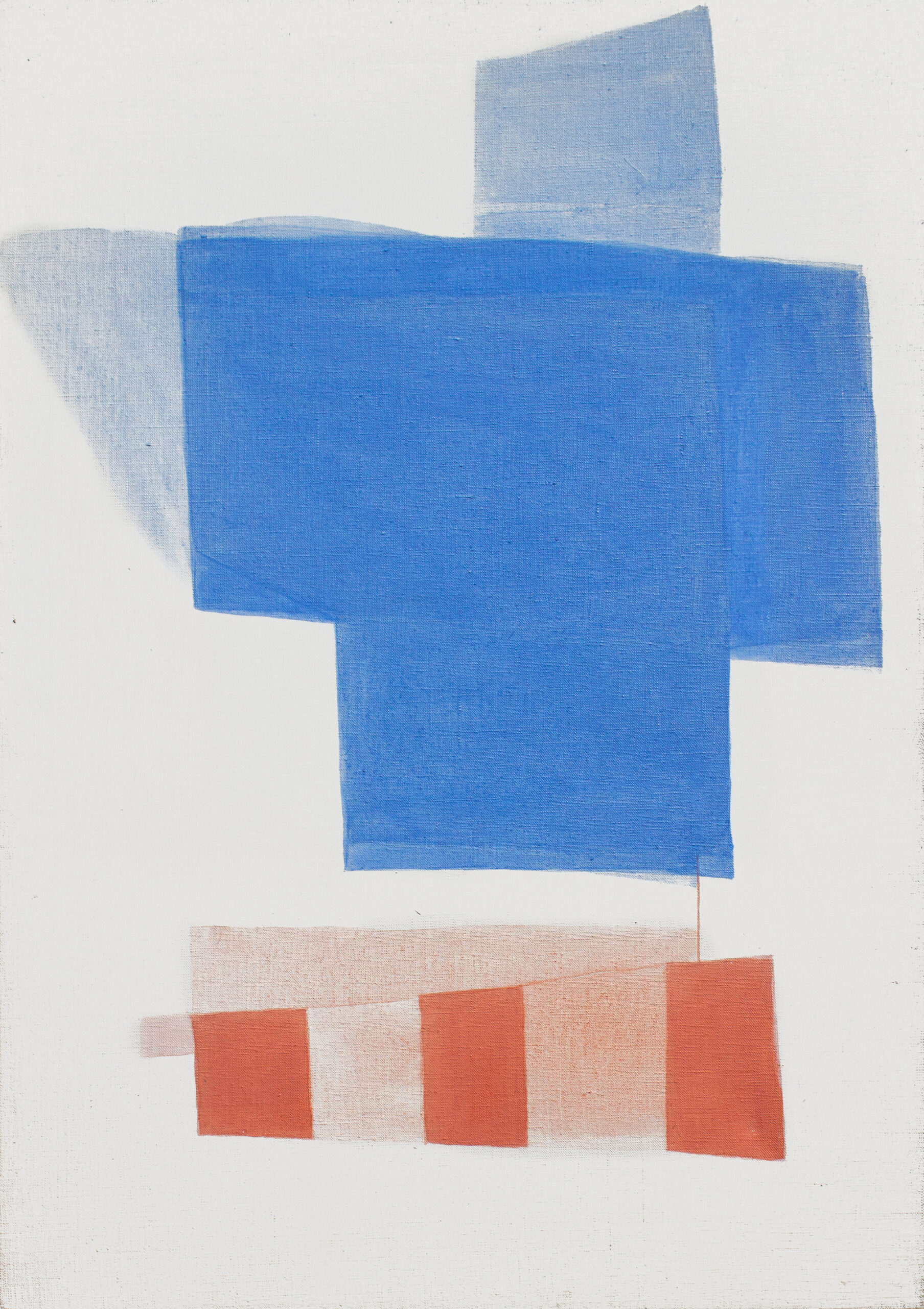
SB 1998.172
acrylic on canvas
28 x 20 1/8 in. | FG© 132895
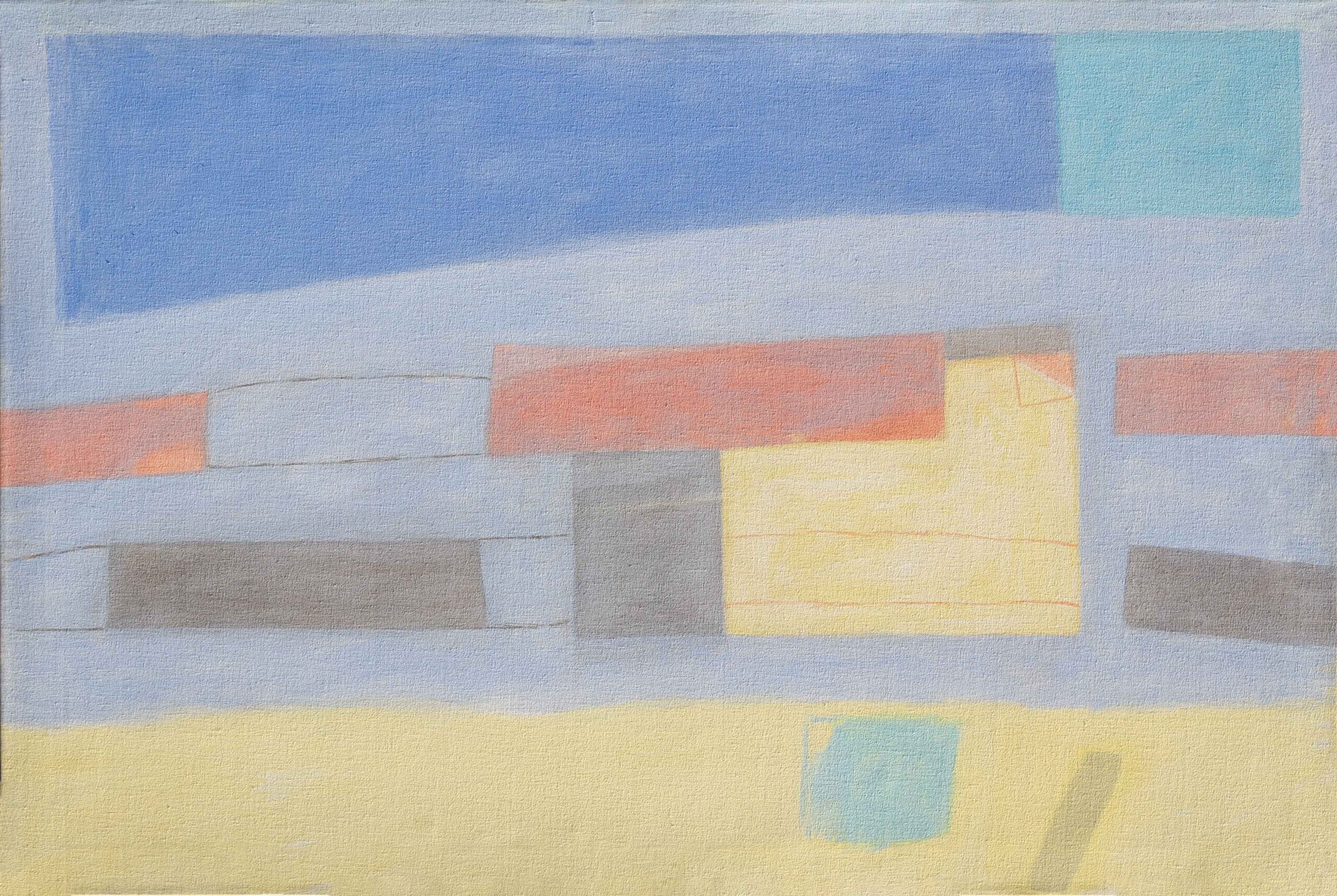
SB 1998.183
acrylic on canvas
30 x 45 in. | FG© 134414
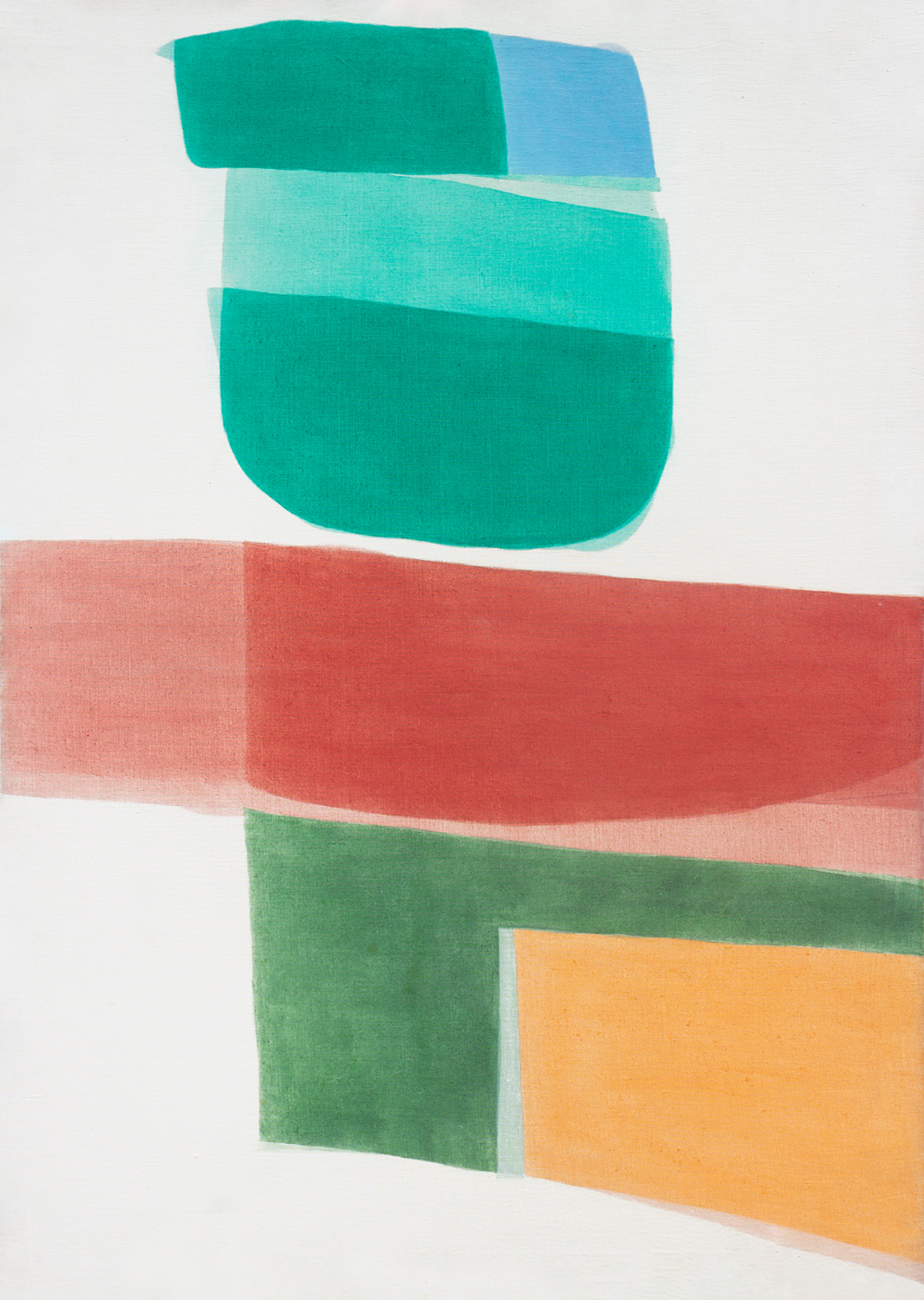
SB 1998.189, 1970
acrylic on canvas
30 x 42 in. | FG© 134378
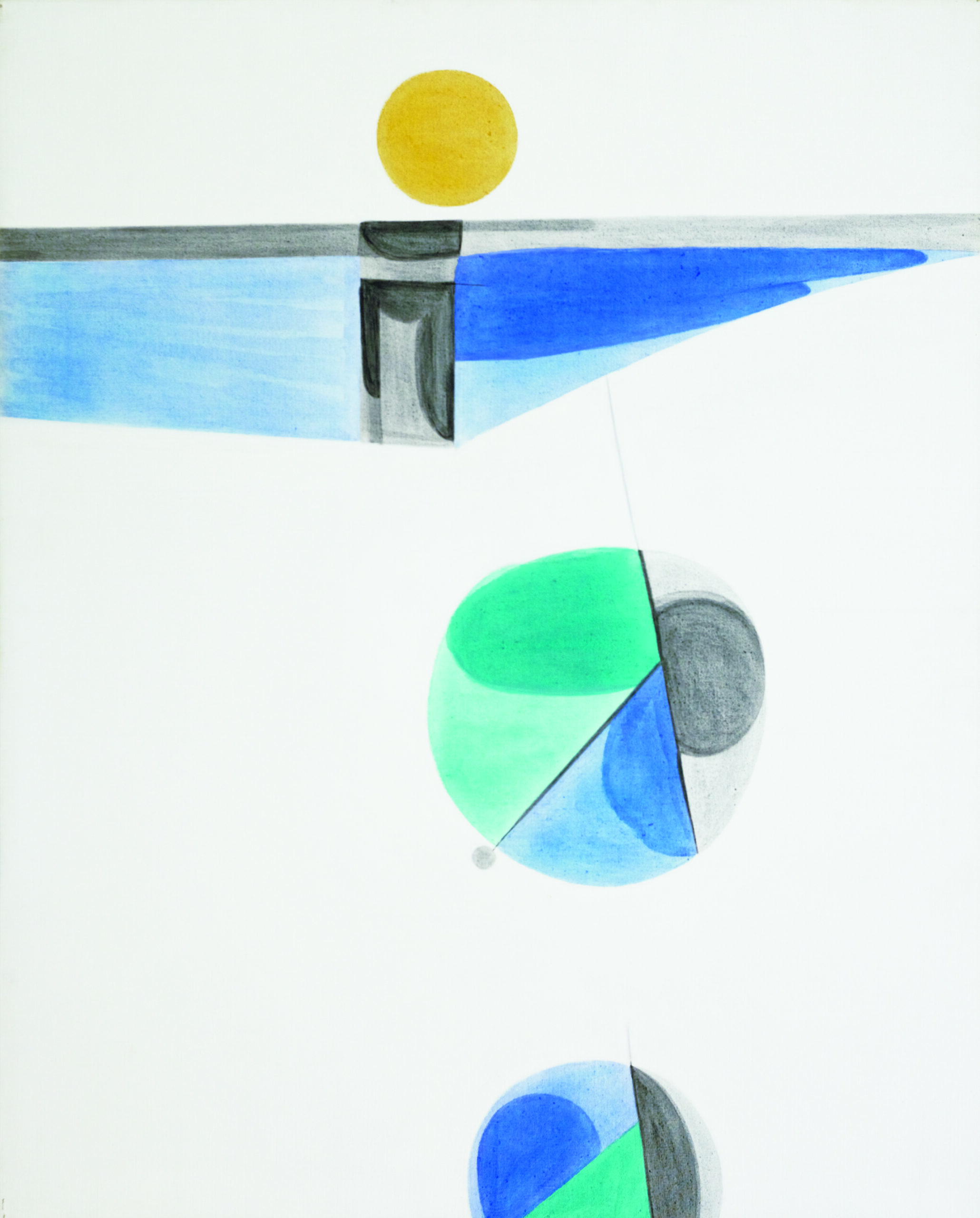
SB 1998.238
acrylic on canvas
34 x 42 in. | FG© 134397
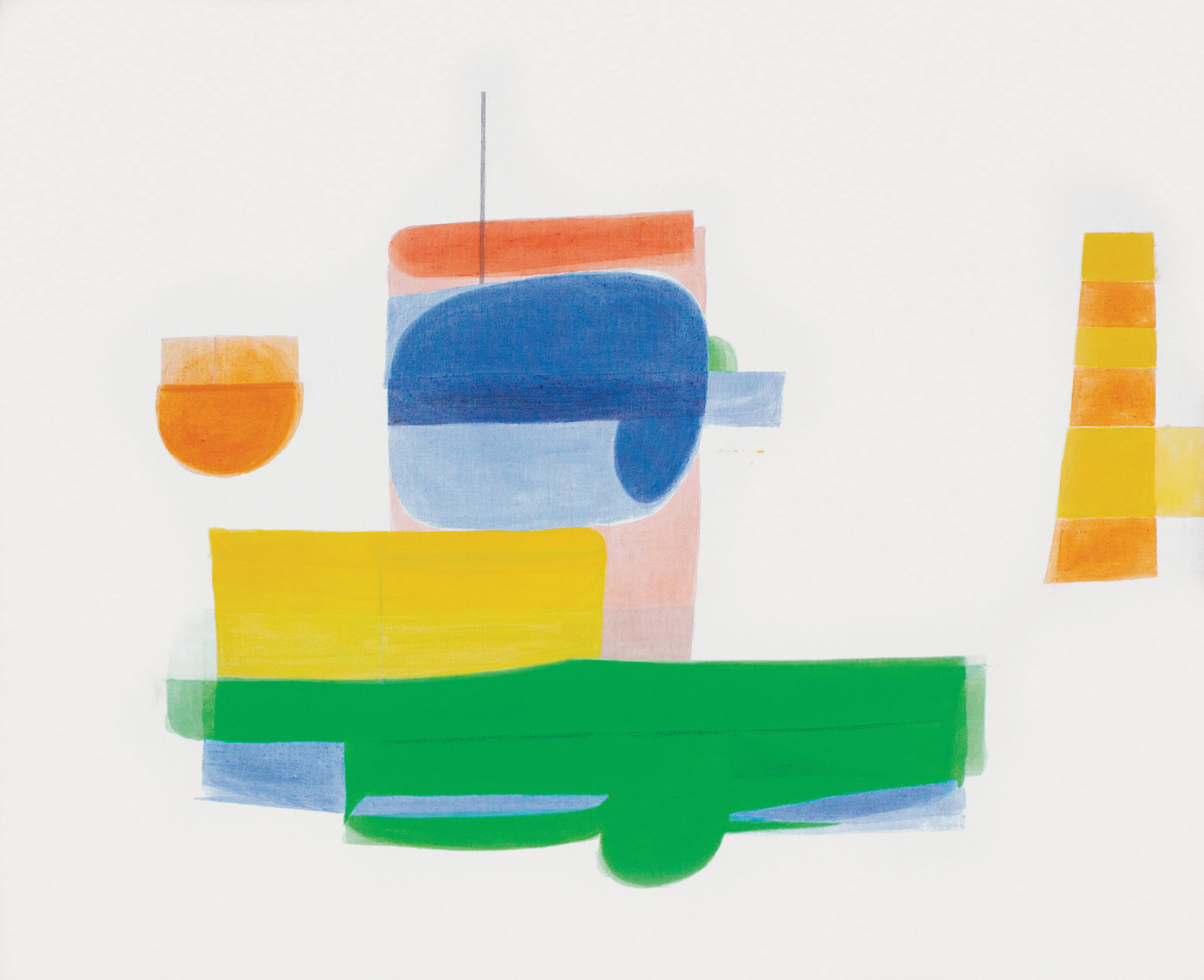
SB 1998.239
acrylic on linen
34 x 42 in. | FG© 134409
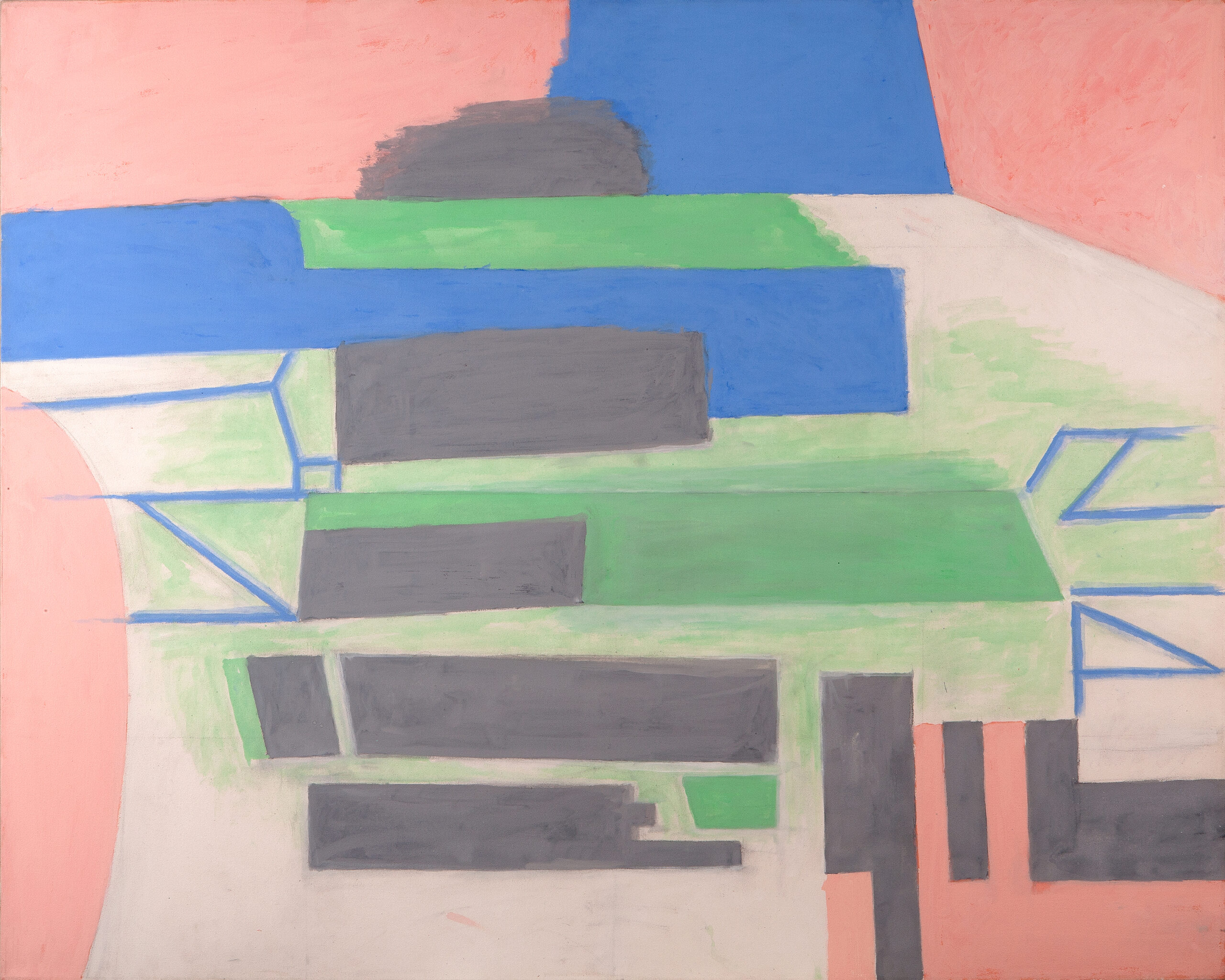
SB 1998.36
acrylic on canvas
60 x 48 in. | FG© 134337
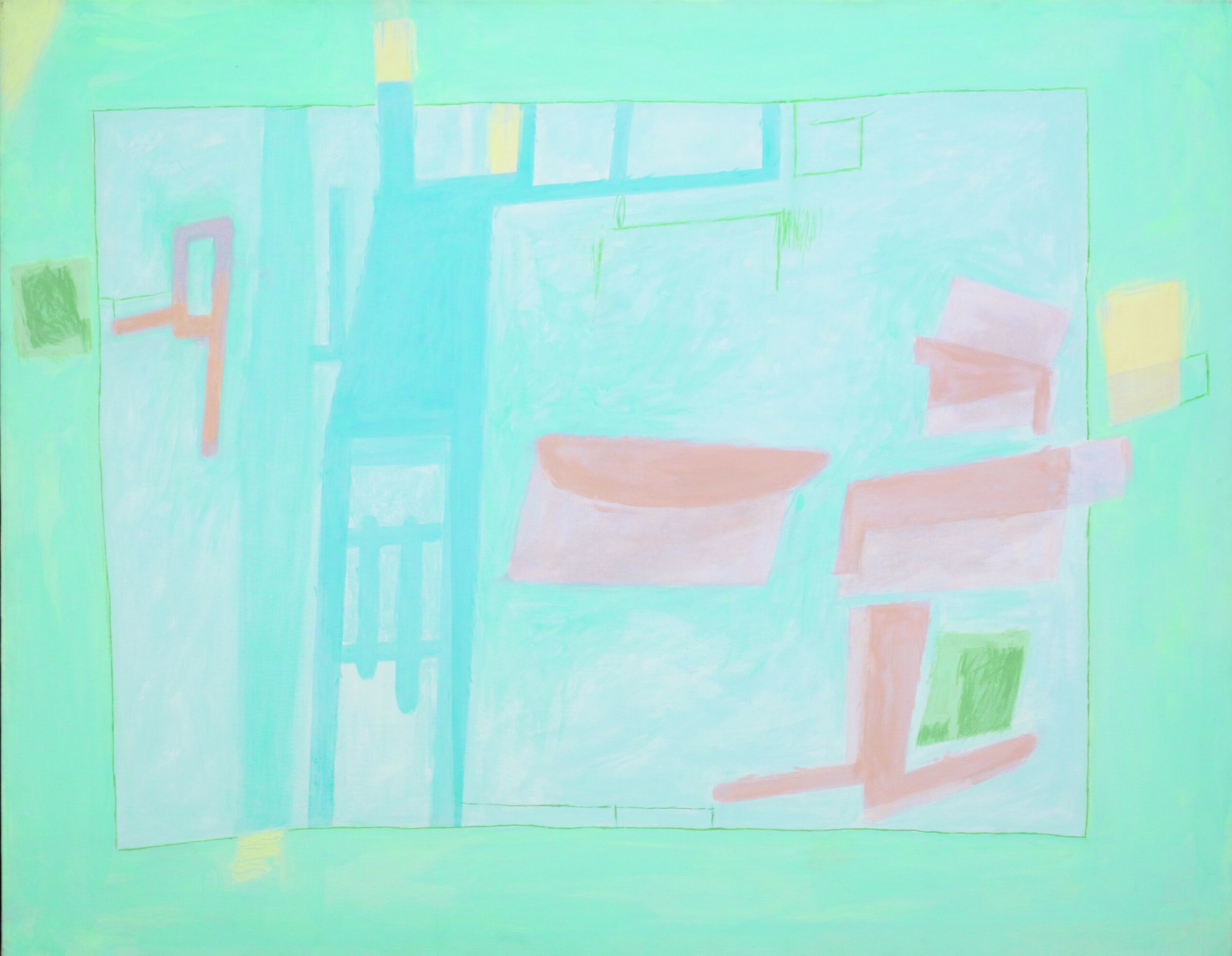
SB 1998.5
acrylic on canvas
50 x 65 in. | FG© 129346
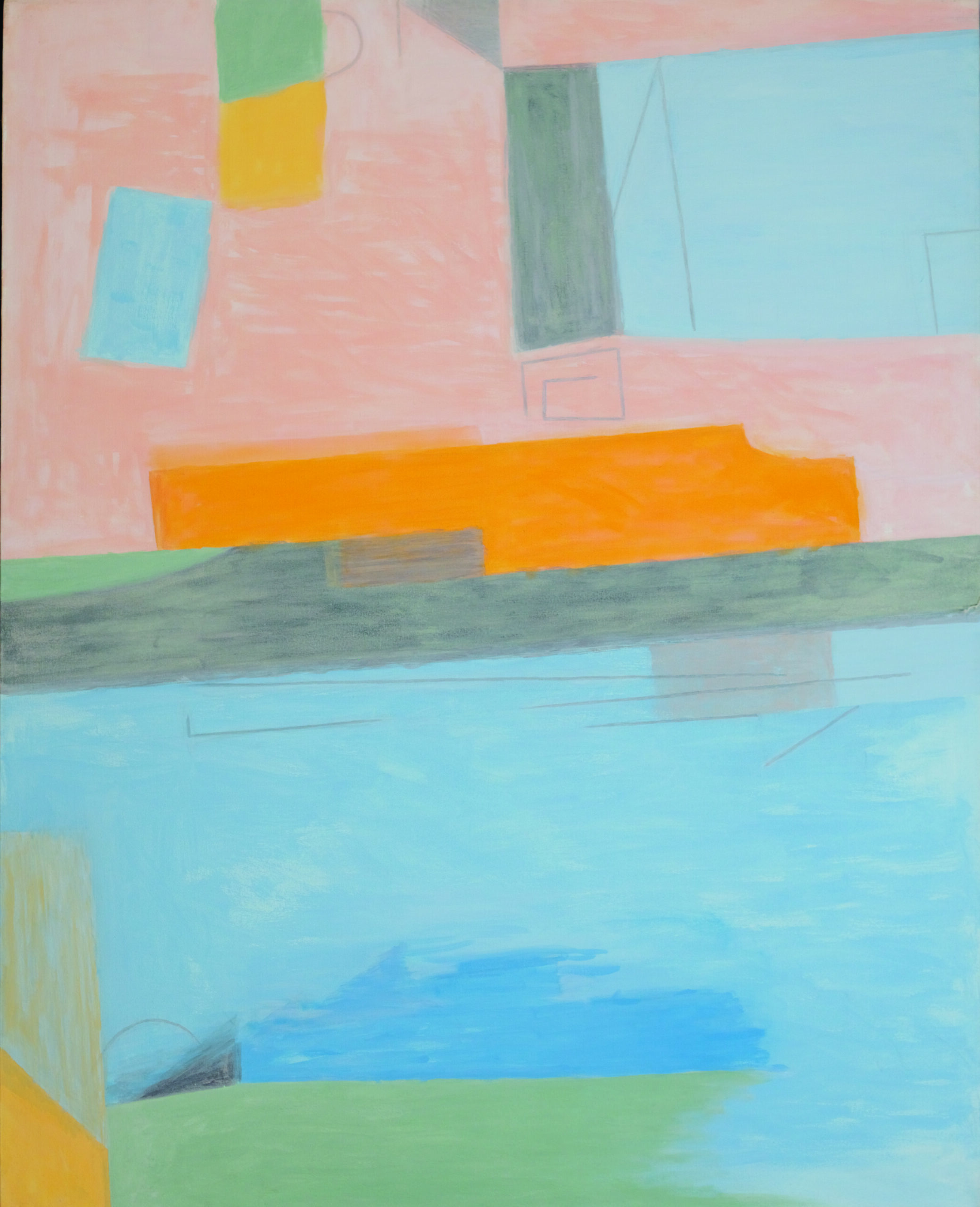
SB 1998.86
acrylic on canvas
48 x 60 in. | FG© 134428
View Additional WorksExplore additional available works by Simeon Braguin.
1998.1
acrylic on canvas50 x 64 in.FG© 132386
C106 1998.175
acrylic on canvas20 x 26 in.FG© 129355
Mooring at Pettipaug Club SB 1998.202
acrylic on linen34 x 42 in.FG© 134408
SB 1998.114
acrylic on canvas60 x 55 in.FG© 134462
SB 1998.192
acrylic on canvas34 x 42 in.FG© 134392
SB 1998.233
acrylic on linen34 x 42 in.FG© 134400
SB 1998.262
acrylic on canvas30 x 65 in.FG©134363
SB 1998.61
acrylic on canvas54 x 68 in.FG© 134488
SB 1998.93
acrylic on canvas64 x 50 in.FG© 134476
Artist Biography
Simeon Braguin
1907–1997
Simeon Braguin moved through some of the most dynamic circles of twentieth-century New York culture, yet painting remained the most private part of his life. His career encompassed fine art, fashion illustration, photography, wartime intelligence, and design, but the paintings he produced over decades were pursued with a striking independence from fashion or public expectation.
Born in Kharkov, Ukraine, in 1907, Braguin came to New York with his family in 1917. He studied at Columbia University and the Art Students League, entered the New York art world at an early age, and by the 1930s had established himself both as an exhibiting artist and as an important figure in fashion illustration.
Later, in Essex, Connecticut, sailing and painting became the enduring rhythms of his life. The harbor, water, changing light, and experience of movement were transformed into an abstract language of softened geometry, translucent color, and lyrical line that became unmistakably his own.
Read full biography
Early Life and New York
Simeon Braguin was born in Kharkov, Ukraine, on January 12, 1907, to Anna and Yalov Braguin. His family fled the upheaval of the Russian Revolution in 1917 and settled in New York, where his father supported the family as a merchant.
Music was part of Braguin’s early life. He played the violin and, as a young man, accompanied silent films before art became his principal pursuit. He attended classes at Columbia University and studied at the Art Students League under Boardman Robinson. There he met Lenna Glackens, daughter of the American painter William Glackens, and entered a circle that brought him into close contact with an earlier generation of American modernists.
Braguin was already exhibiting in New York by 1930, when his work appeared in a group exhibition at the Daniel Gallery. The following year he held his first solo exhibition at the Marie Harriman Gallery in Manhattan. Photography also became a serious pursuit during these years. In 1933, at only twenty-six, Braguin was included in the Whitney Museum of American Art’s First Biennial Exhibition of Contemporary American Sculpture, Watercolors and Prints.
Vogue and the World of Illustration
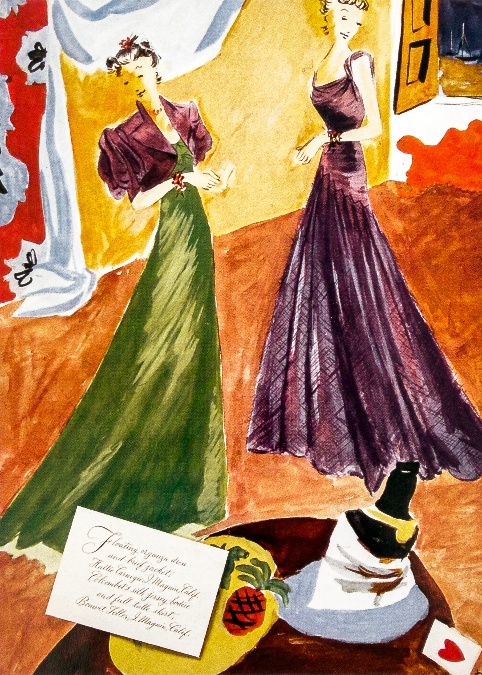
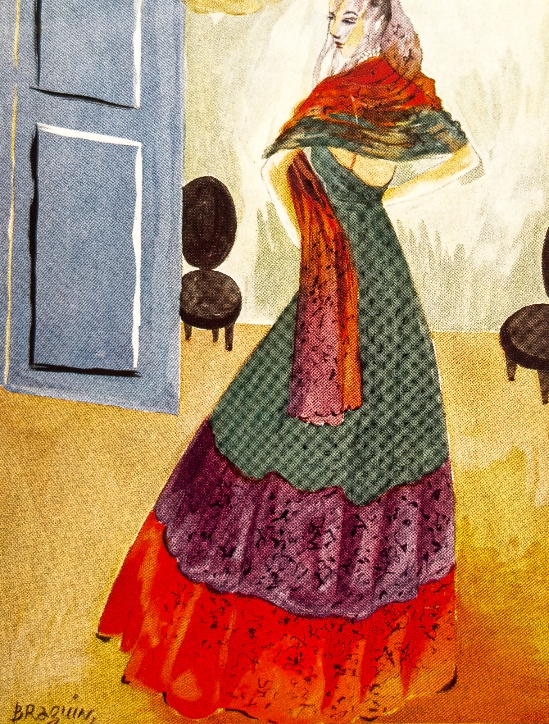
Like many artists working during the Depression, Braguin turned to illustration for a living. By 1932 he had joined Vogue as a staff illustrator, where his command of line, composition, and visual economy found an immediate purpose. His illustrations also appeared in Mademoiselle and The Saturday Evening Post, while his commercial work extended to prominent New York retailers including Saks Fifth Avenue, Bergdorf Goodman, and Bonwit Teller.
Braguin rose to become art director at Vogue, working within a visual culture shaped by photographers including Edward Steichen and Cecil Beaton. His work moved easily between illustration, set design, photography, and editorial direction. The elegance of line and sensitivity to balance developed during these years remained present in his painting long after he left the fashion world.
War and Return to New York
The Second World War interrupted Braguin’s career dramatically. He joined the Office of Strategic Services, where his abilities as a photographer and linguist were put to use in wartime intelligence. His reconnaissance photography supported Allied operations, and after completing a series of missions he retired from service with honors.
Braguin returned to New York and resumed his career in fashion and design. He married Janet Chatfield Taylor, a fashion editor at Vogue, and the couple became familiar figures within the city’s artistic community. Their friendships included Saul Steinberg and Fairfield Porter.
During the 1950s, Braguin also became an important early professional contact for Andy Warhol, who had arrived in New York in 1949. Warhol completed numerous assignments under Braguin’s commission and direction during the years in which he was establishing himself as a commercial illustrator.
Essex and a Return to Painting
For all the prominence of his professional career, painting continued on a more private course. During the 1960s, Braguin and Janet began spending increasing amounts of time in Essex, Connecticut, on the Connecticut River. In 1968 they acquired a modest cottage there, and Braguin returned to painting with renewed concentration.
He was an avid sailor and regularly raced his fourteen-foot Blue Jay at the Pettipaug Yacht Club. The harbor, boats, changing light, and movement of the water gradually became inseparable from his studio practice. Rather than depicting Essex literally, Braguin absorbed these experiences into relationships of color, line, and form. Much of the work that followed became known collectively as the Essex Harbor Series.
In 1971, Braguin returned to public view with a solo exhibition at the Poindexter Gallery in New York. A critic for Arts described the paintings as “powerful in their understatement and wonderful in their evocations.” A second Poindexter exhibition followed in 1975, where the Essex Harbor Series was introduced more fully. When the gallery later closed, Braguin showed little urgency to pursue another gallery relationship. Painting had become an end in itself rather than the foundation of a public career.
The Mature Paintings
By the early 1980s, Braguin had arrived at the visual language that defines his mature work. Geometric forms appear carefully placed but never rigid. Their edges remain softened and worked, allowing one area of color to pass quietly into another. Translucent layers reveal a process of repeated adjustment as Braguin built harmony across the canvas.
The discipline of his earlier life in illustration remains visible in the economy of his line, but it has been released from description. Linear passages move freely through fields of color, sometimes anchoring the composition and sometimes disturbing its balance. His palette can be delicate without becoming tentative, and the apparent simplicity of the paintings often conceals extensive revision beneath the surface.
Braguin admired Paul Klee, while the linear wit of Jean Cocteau and the chromatic freedom of Henri Matisse offer further points of comparison. Yet his paintings resist comfortable classification. Even the broad designation of the New York School never fully accounted for an artist whose abstraction remained intimate, idiosyncratic, and deliberately free of doctrine.
Braguin rarely explained what his paintings meant. To friends visiting his studio, he described them simply as creations to be enjoyed in the moment. His attitude toward their orientation was equally relaxed. He would tell visitors, “you can turn them any way you want.”
Yale and Legacy
Recognition came quietly. In 1991, the Yale University Art Gallery presented the solo exhibition Simeon Braguin Paints, an important institutional acknowledgment of an artist who had spent much of his mature career outside the conventional gallery system.
In 1994, Braguin suffered a stroke that severely affected his speech. He died in Essex on November 9, 1997, at the age of ninety.
His final act of patronage extended his commitment to art far beyond his own career. Braguin left more than eight million dollars to the Yale University Art Gallery, directing that the funds support the acquisition and display of works by American artists. The resulting Janet and Simeon Braguin Fund continues that legacy through the work of other artists.
Findlay Galleries has been the exclusive representative of the Simeon Braguin Estate since 2004, preserving and presenting the work of an artist whose remarkable public life was ultimately shaped by a deeply private devotion to painting.
Life & Career
A Life Devoted to Painting
From the illustrated pages of Vogue to the quiet of his studio in Essex, Simeon Braguin followed an independent course. These moments trace a remarkable public life and the private devotion to painting that gave it lasting form.
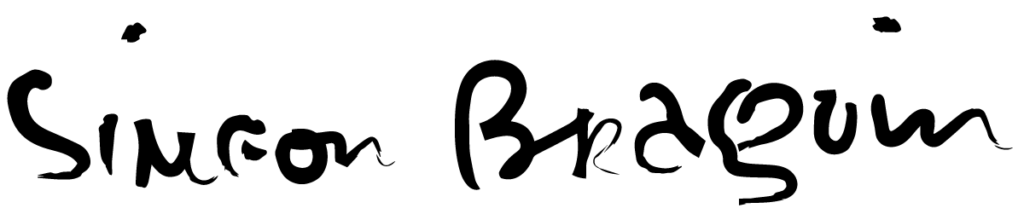
Scroll to change the yearSwipe or use the arrows to explore
1907
Born in Kharkov
Simeon Braguin was born in Kharkov, in present-day Ukraine, on January 12, 1907. His family settled in New York in 1917, bringing him into the city that would shape his early life as an artist.
“My paintings are creations to be enjoyed at that moment.”
Simeon Braguin
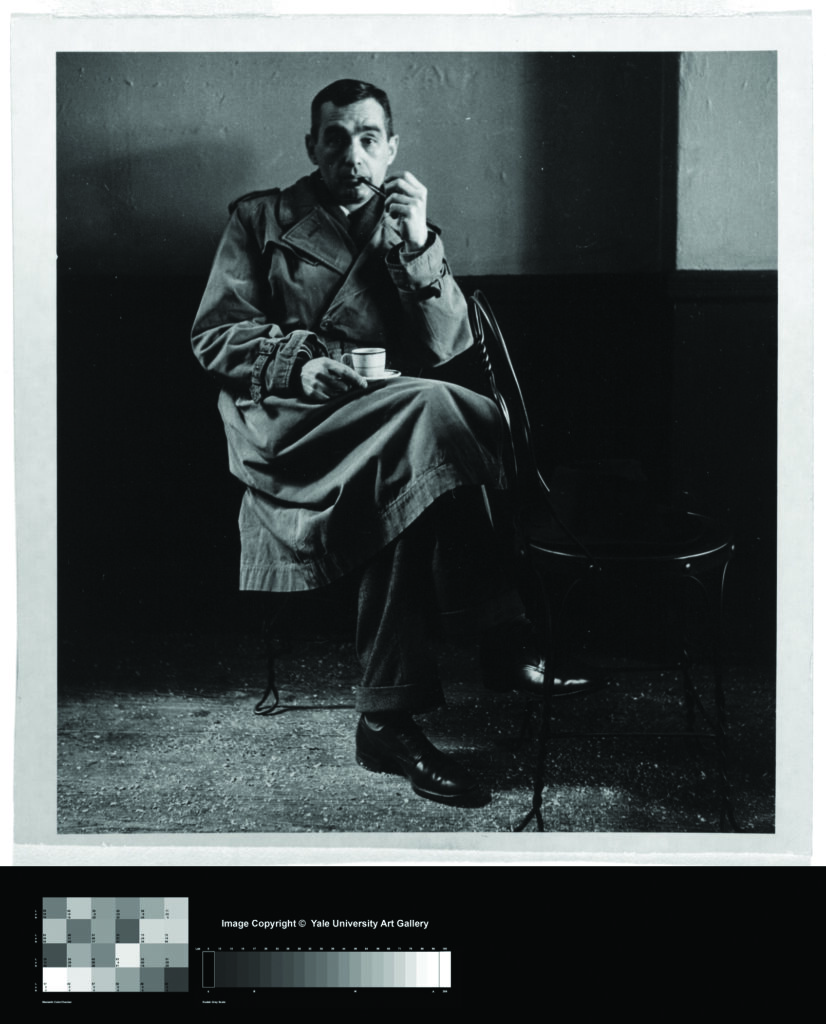
1930
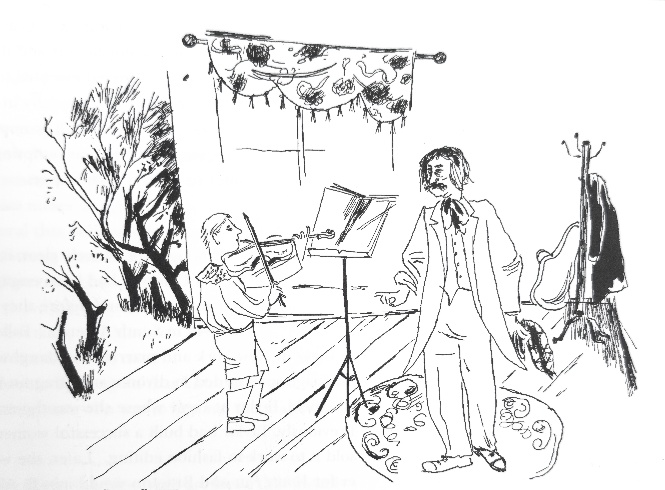
Early New York Years
Art classes at Columbia University and the Art Students League brought Braguin into the orbit of New York painting. His early drawings reveal an economy of line that would remain central to his work. His first solo exhibition followed at the Marie Harriman Gallery in 1931.
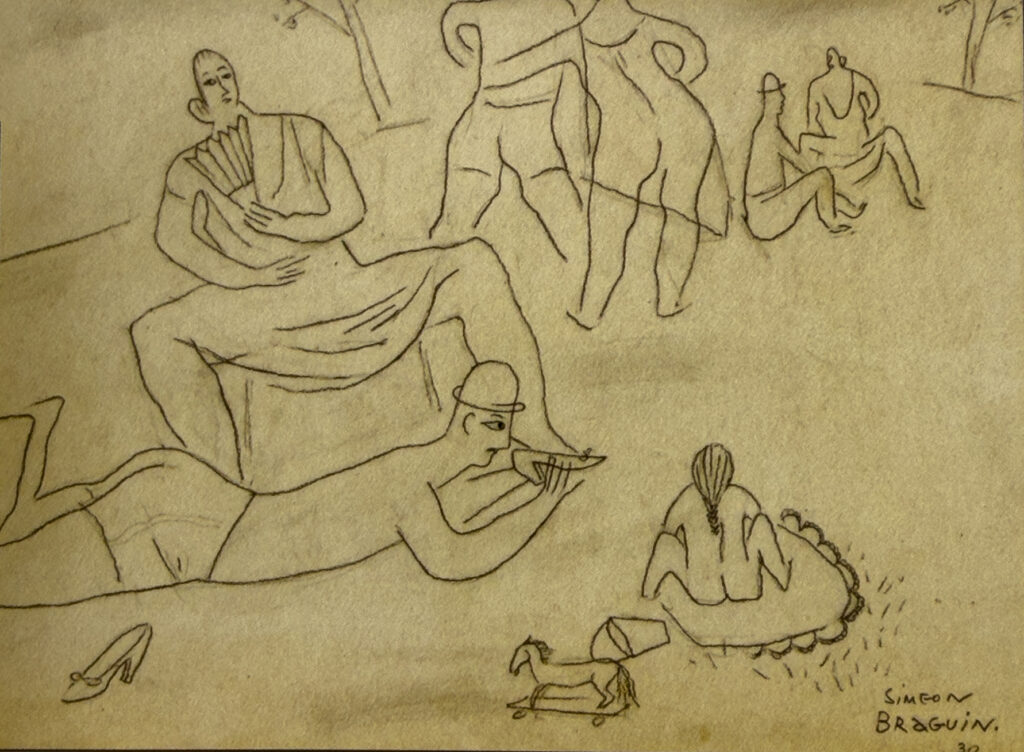
Pencil, 11 × 14 in. Findlay Galleries archive.
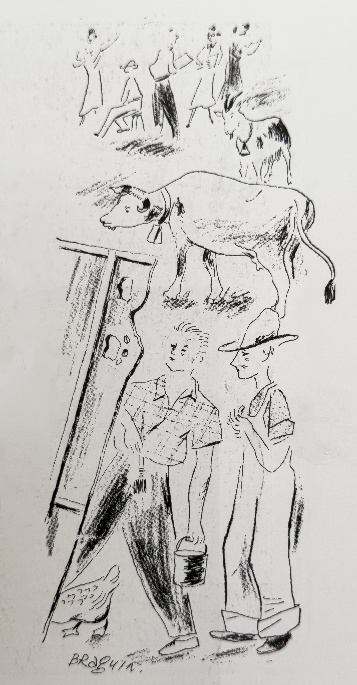
1932
Joins Vogue
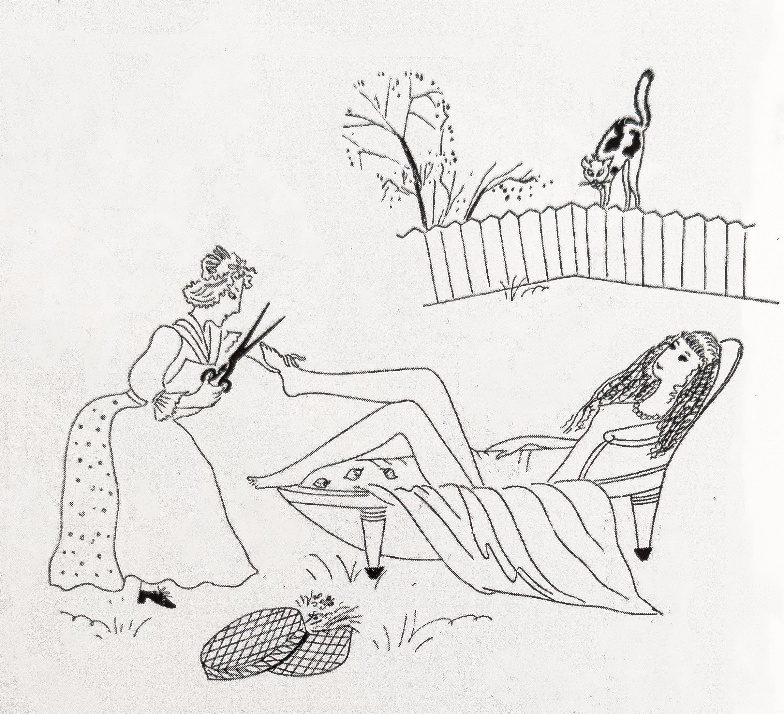
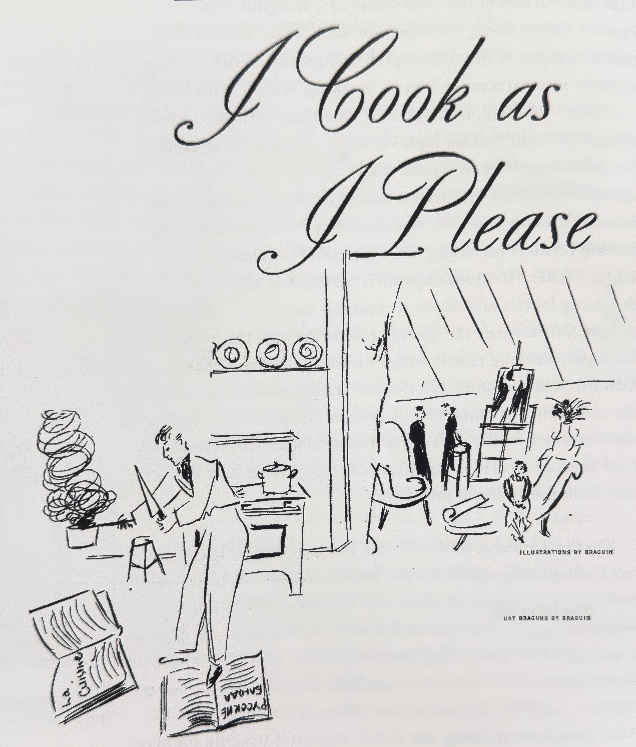
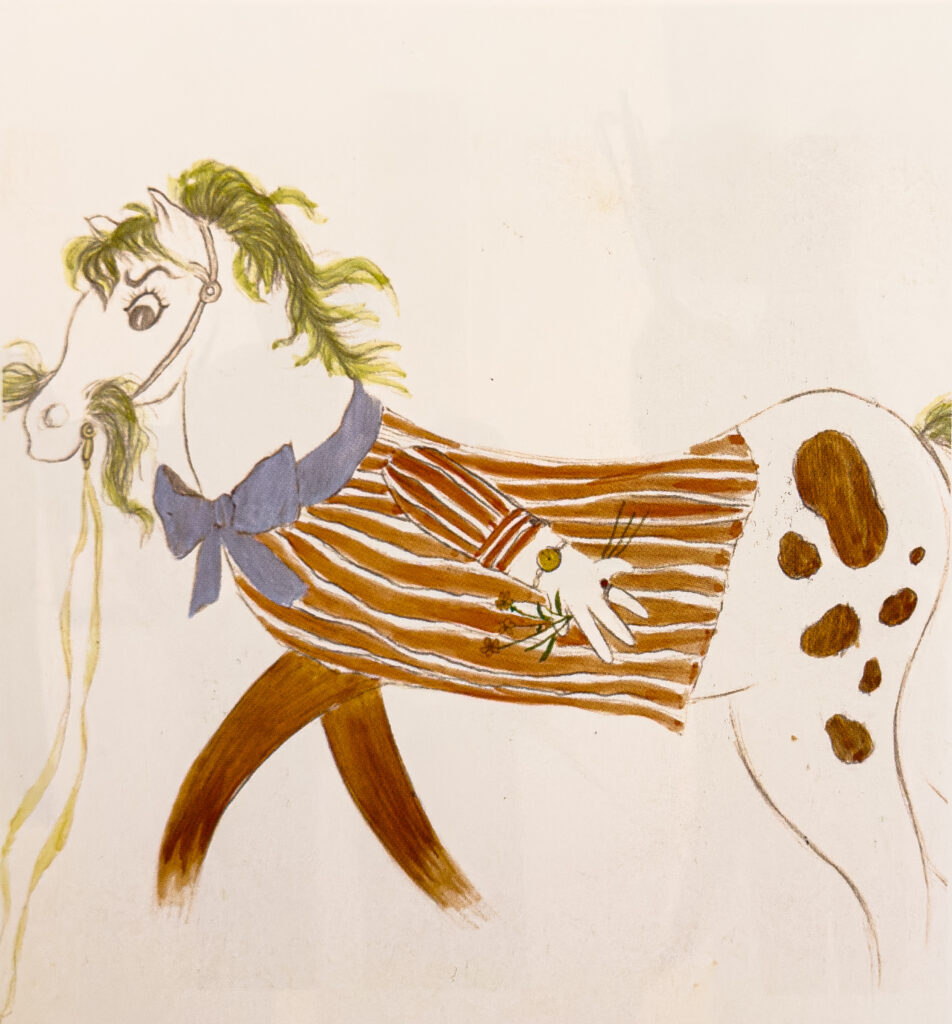
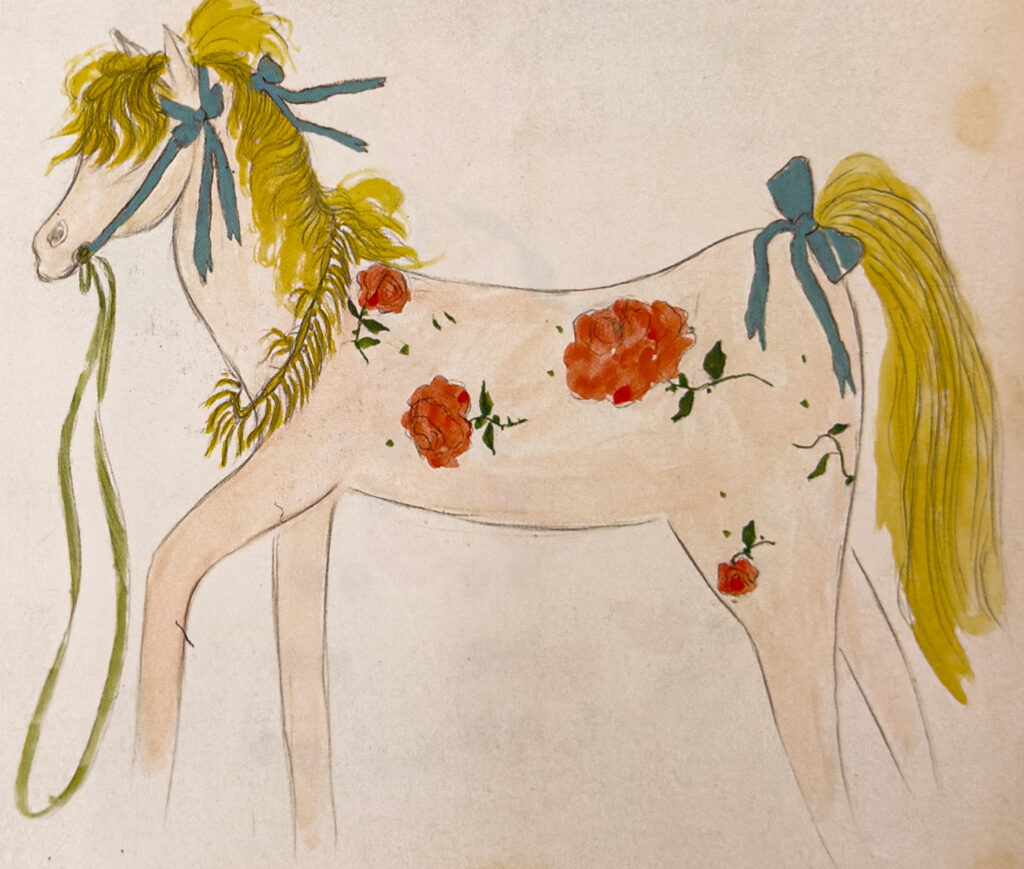
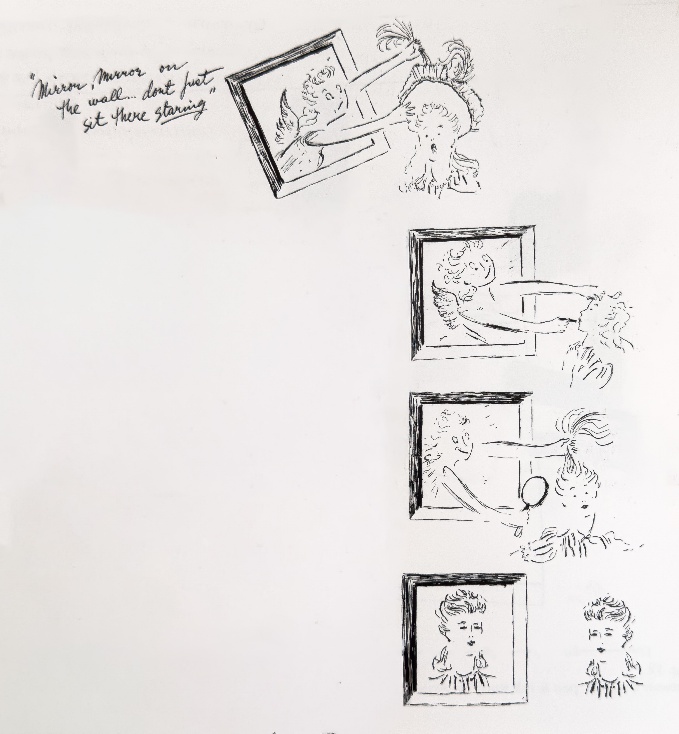
By 1932, Braguin was a staff illustrator at Vogue. The magazine gave his drawings a wide audience, while his line moved easily between fashion, interiors and the pleasures of everyday life. Scenes of entertaining and imaginative domestic settings reveal the humour that animated his commercial work.
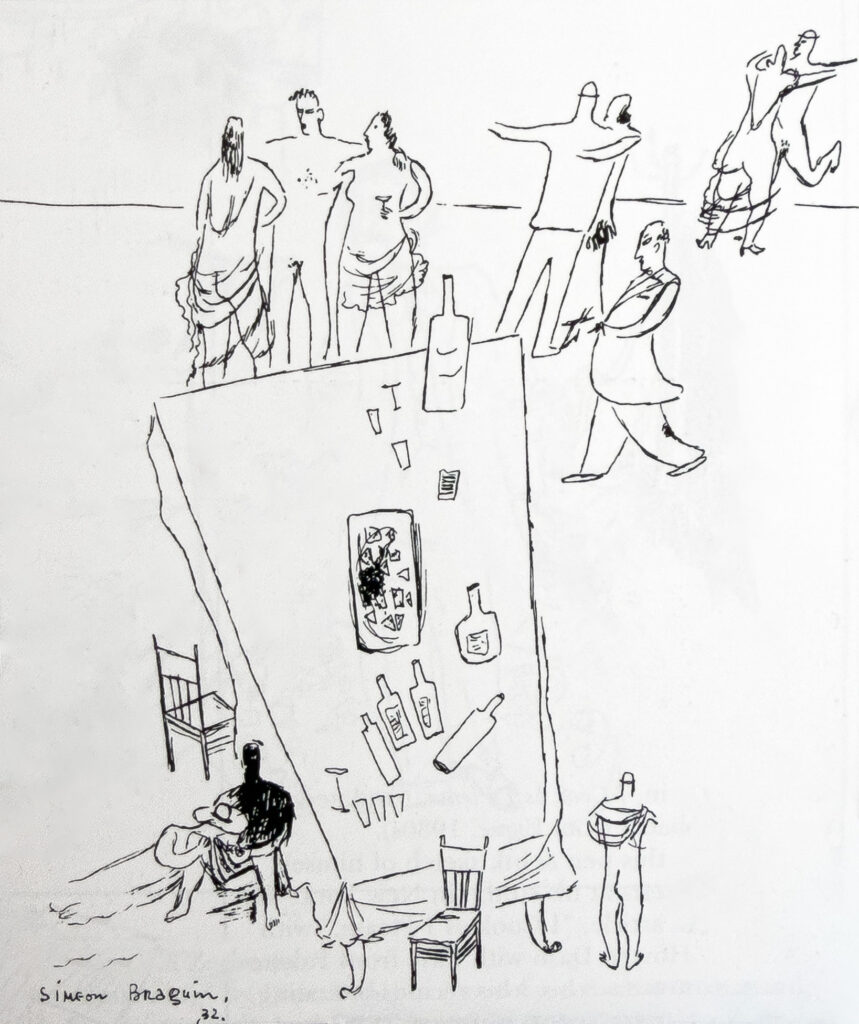
Pen and ink, 11 × 14 in. Findlay Galleries archive.
c. 1935
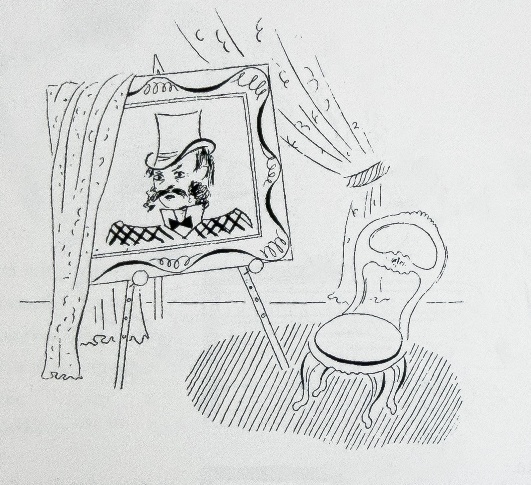
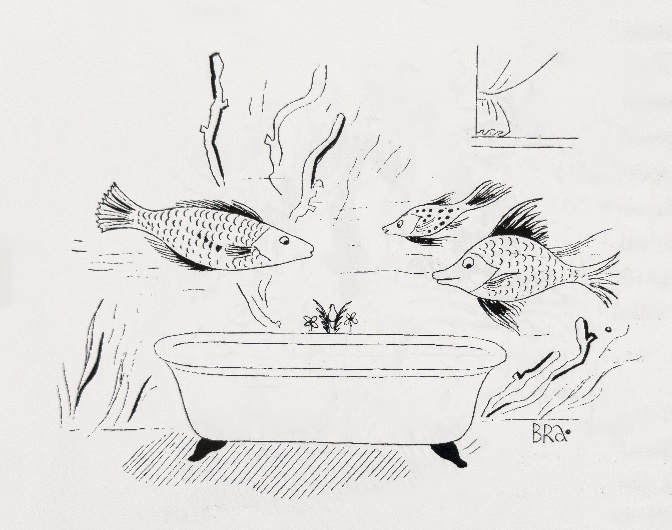
The Vogue Years
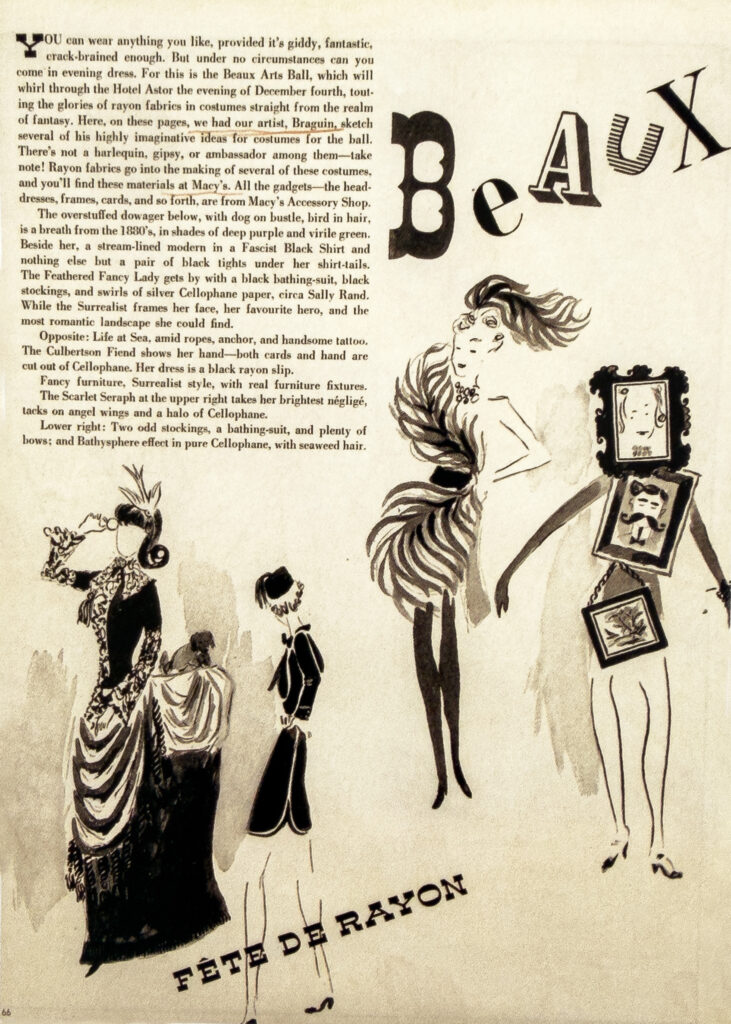
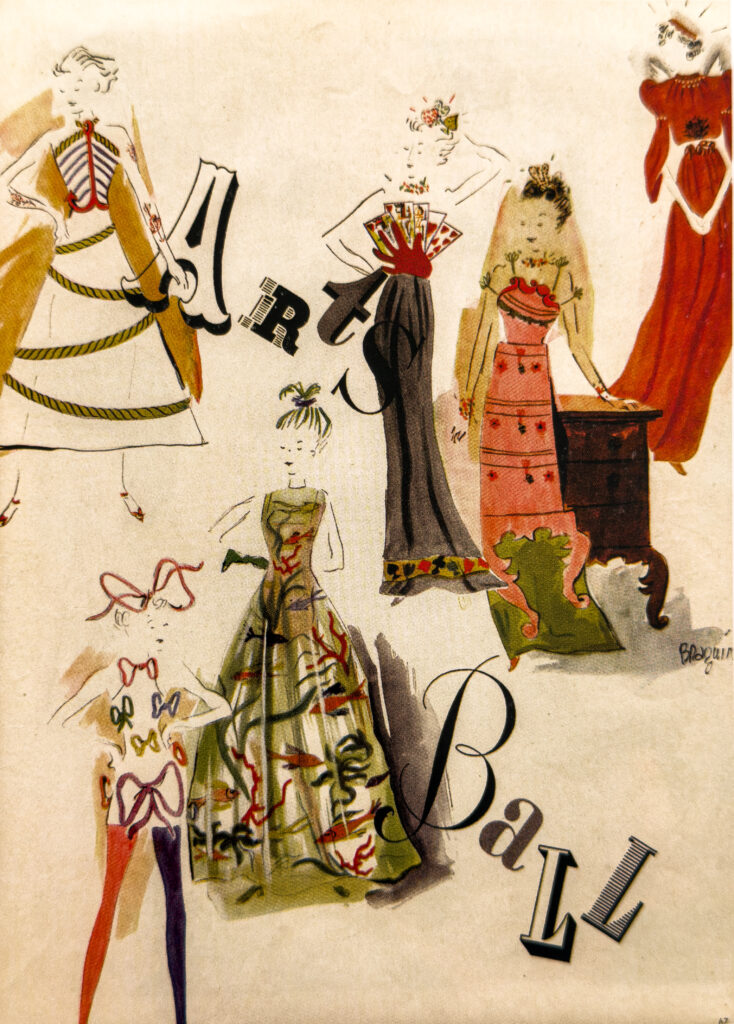
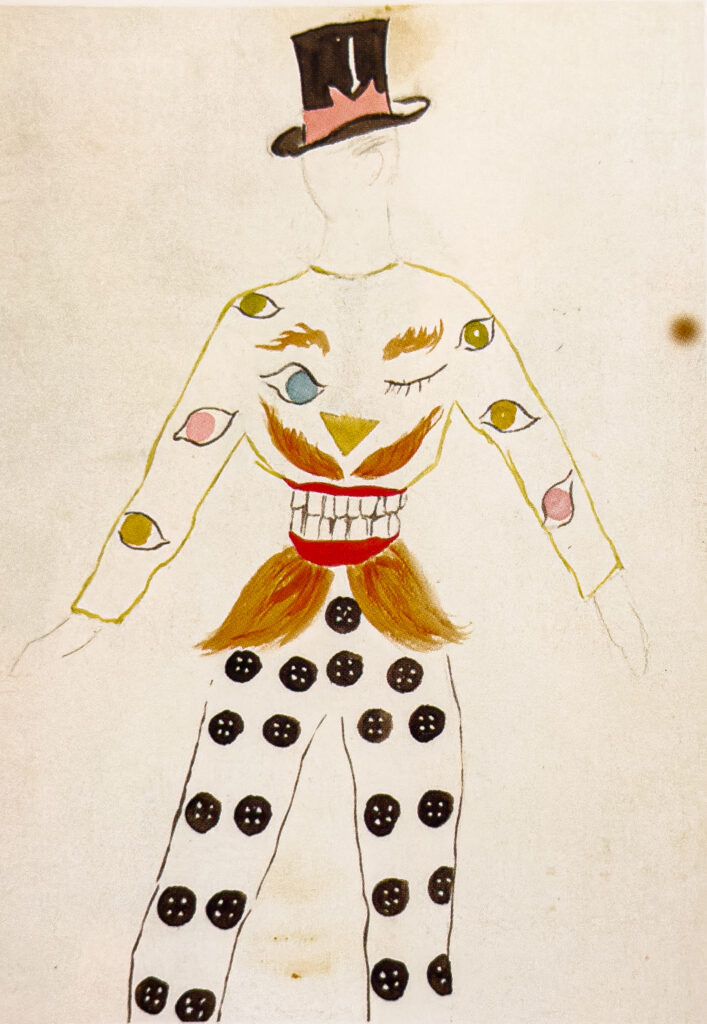
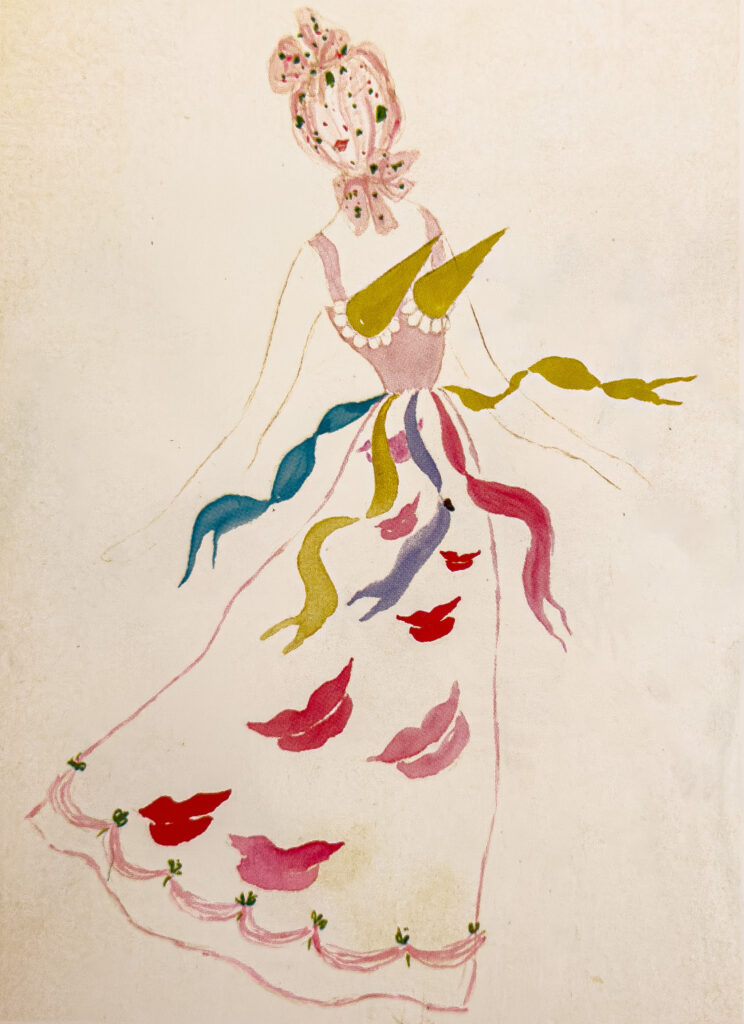
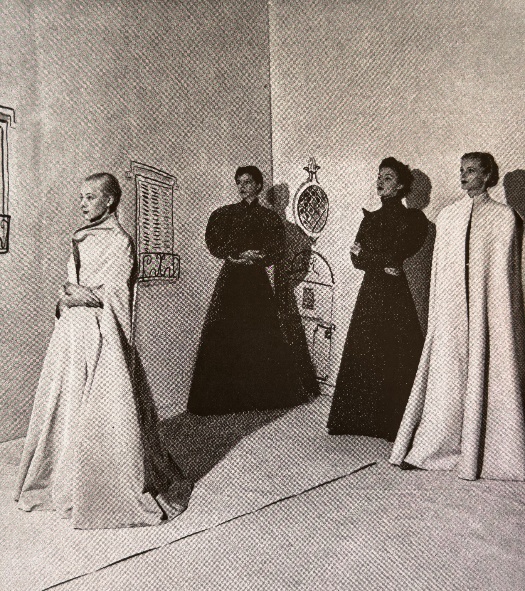
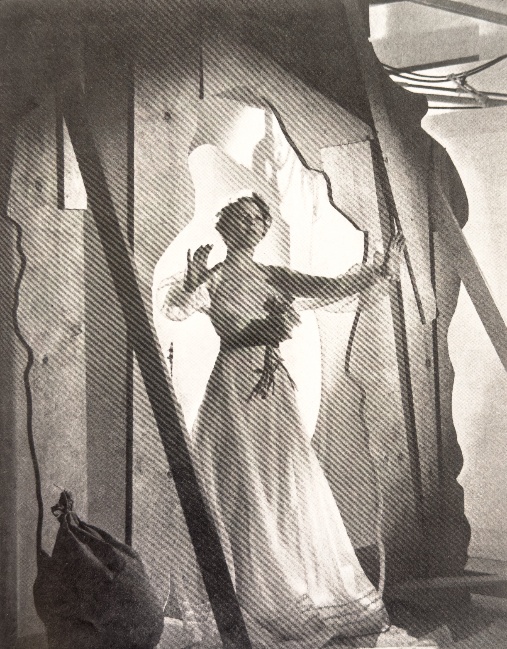
Braguin’s illustrations for Vogue brought a painter’s imagination to the printed page. His Beaux Arts Ball spread turns costume into a playful visual theatre, joining freely drawn figures with inventive shapes. He also designed sets for photographs by Cecil Beaton.
1940s
Illustration & Wartime Service
The Second World War interrupted Braguin’s work in fashion. His abilities as a photographer and linguist led him into service with the Office of Strategic Services, where he undertook photographic reconnaissance. He later returned to New York and resumed his career in illustration and design.
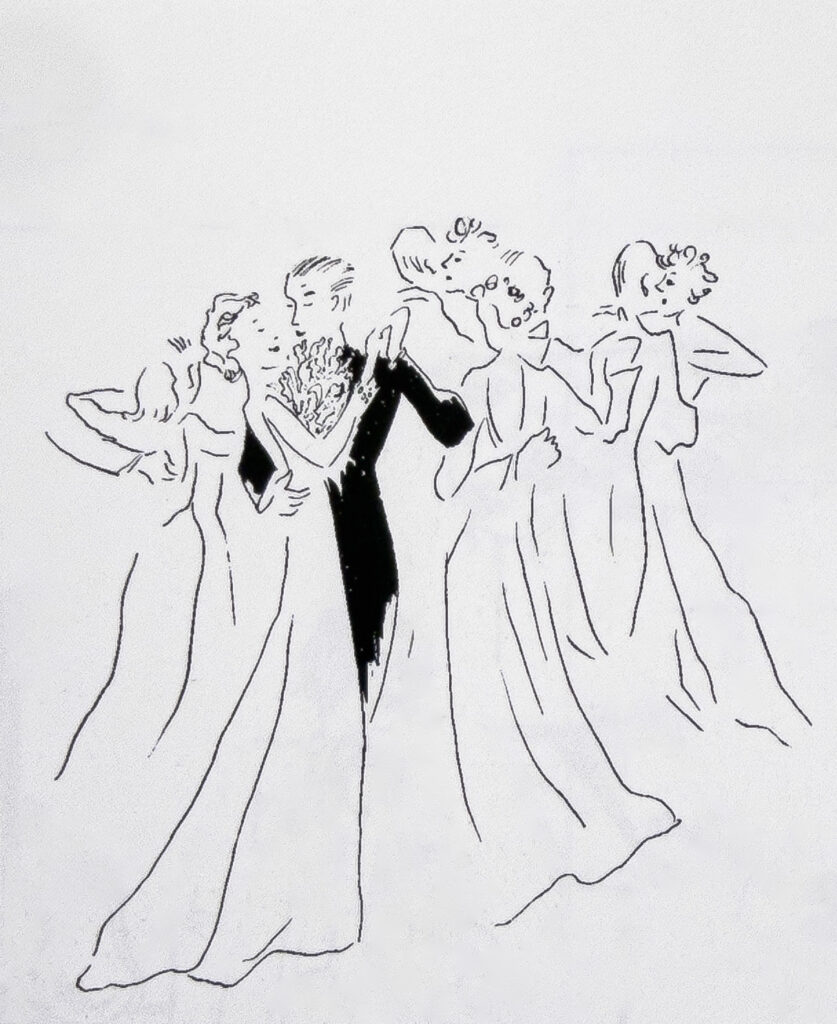
Pen-and-ink illustration for Vogue. Findlay Galleries archive.
1968
Essex
In 1968, Braguin and Janet Chatfield Taylor bought a cottage in Essex, Connecticut. Sailing on the Connecticut River became inseparable from his life in the studio. His experience of the harbor found expression in paintings whose color and open forms suggest movement without describing it literally.
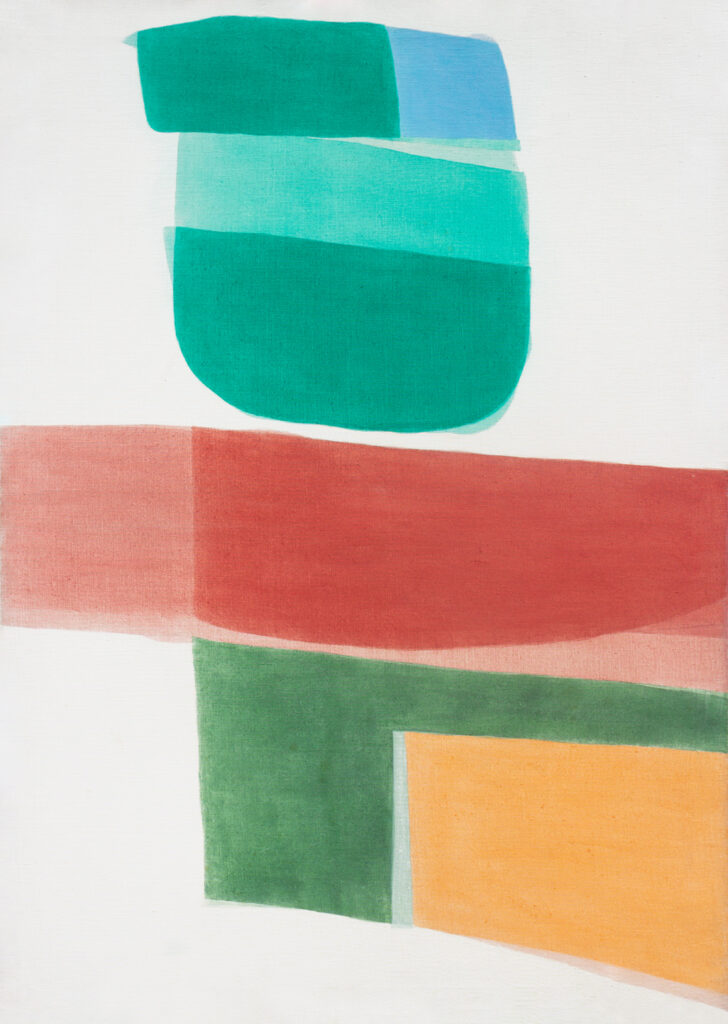
Acrylic on canvas, 30 × 42 in. | FG© 134378.
1971
Poindexter Gallery
A solo exhibition at Poindexter Gallery in New York brought renewed attention to Braguin’s paintings in 1971. The work had developed on its own terms in Essex, with softened forms and an increasingly personal command of color. A second exhibition at Poindexter followed in 1975.
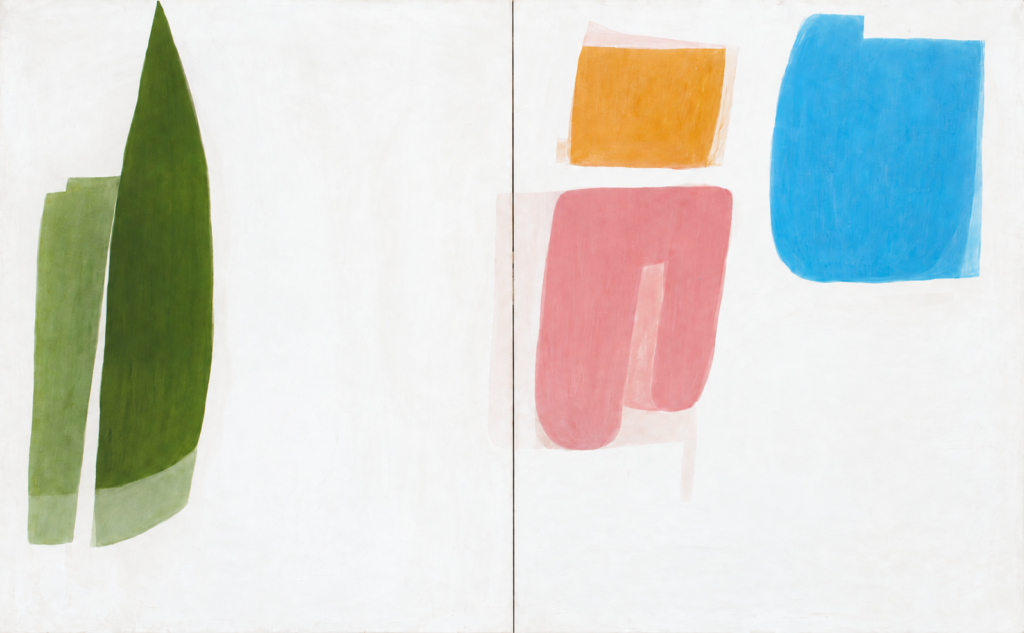
Acrylic on canvas, 42 × 68 in. | FG© 134799.
1991
Yale University Art Gallery
In 1991, Yale University Art Gallery presented Simeon Braguin Paints, an exhibition of paintings and sculpture. It gave institutional recognition to an artist whose mature work had developed largely outside the conventional gallery system. Braguin’s later bequest to Yale extended his support for American art beyond his own lifetime.
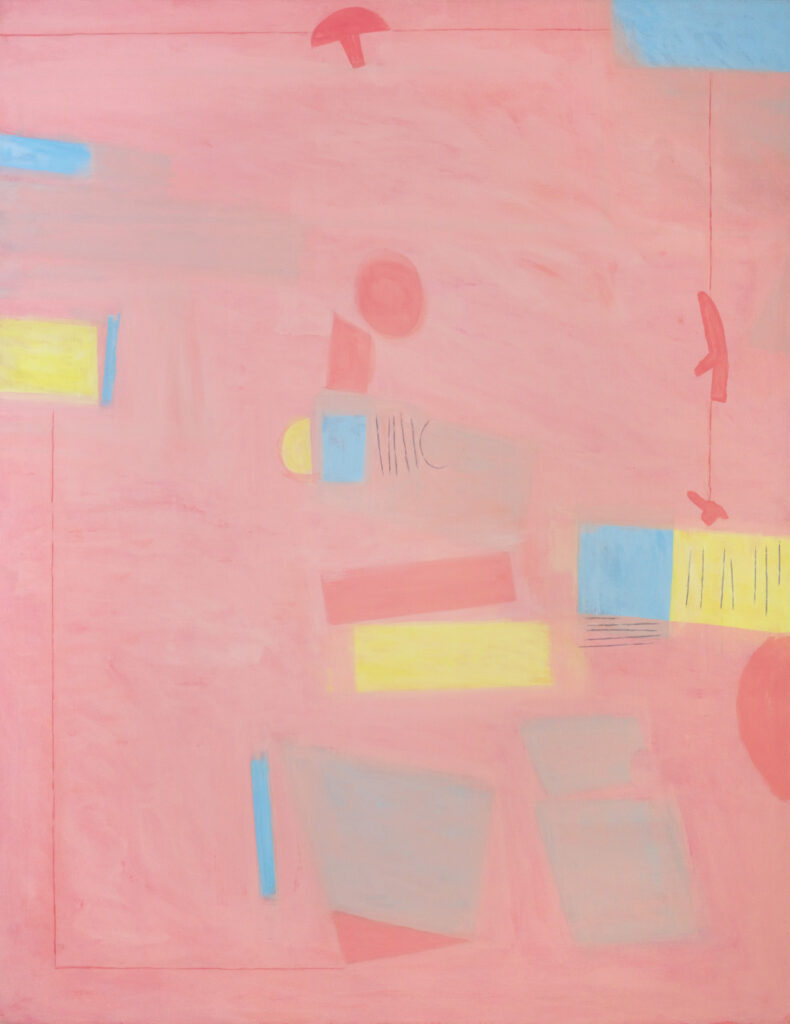
Acrylic on canvas, 64 1/8 × 50 1/4 in. | FG© 134440.
2004
Findlay Galleries
Findlay Galleries began its exclusive representation of the Simeon Braguin Estate in 2004. Through exhibitions and publications, the gallery continues to present the range of his work and the independent course of his painting. Early presentations included a Palm Beach exhibition with Priscilla Heine.
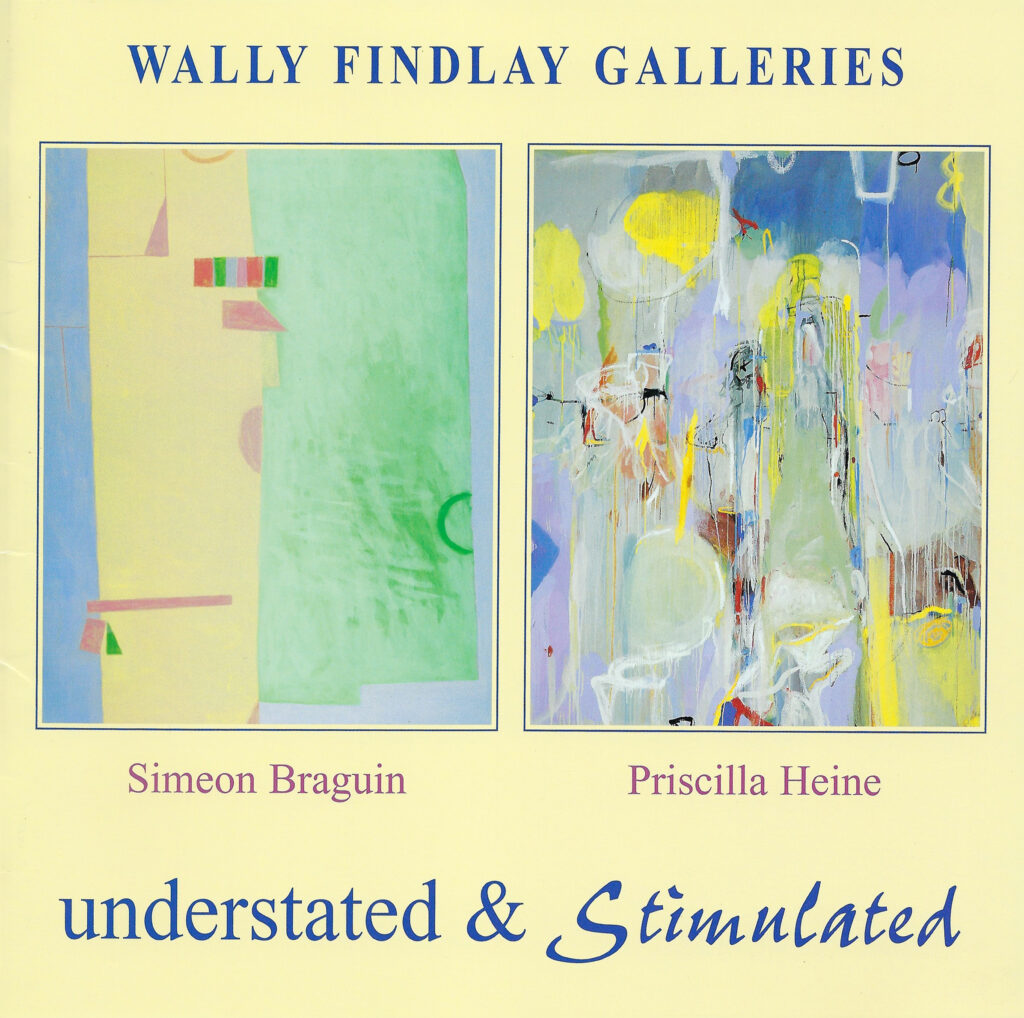
Wally Findlay Galleries, Palm Beach. Catalogue cover featuring Simeon Braguin and Priscilla Heine.
Historical text and archival imagery sourced from The Life and Art of Simeon Braguin by Peter Hastings Falk. © 2003 Institute for Art Research and Documentation, a nonprofit organization.
Exhibitions
Selected Exhibitions
Selected exhibitions tracing Simeon Braguin’s career from early New York presentations through institutional recognition and his later relationship with Findlay Galleries.
First Solo Exhibition
Marie Harriman Gallery, New York, NY
First Biennial Exhibition of Contemporary American Sculpture, Watercolors and Prints
Whitney Museum of American Art, New York, NY
Solo Exhibition
Poindexter Gallery, New York, NY
Simeon Braguin Paints
Yale University Art Gallery, New Haven, CT
Color Fields: Selected Works from the Essex Harbour Series
Wally Findlay Galleries, New York, NY
View exhibition archive
- 1930
Group Exhibition, Daniel Gallery, New York, NY. - 1931
First Solo Exhibition, Marie Harriman Gallery, New York, NY. - 1931
Group Exhibition, Art Students League, New York, NY. - 1931
Group Exhibition, Ferargil Gallery, New York, NY. - 1931
Group Exhibition, L’Élan, New York, NY. - 1932
Group Exhibition, New School for Social Research, New York, NY. - 1933
Solo Exhibition, Marie Harriman Gallery, New York, NY. - 1933–34
First Biennial Exhibition of Contemporary American Sculpture, Watercolors and Prints,
Whitney Museum of American Art, New York, NY. - 1936
Group Exhibition, Seligmann Galleries, New York, NY. - 1971
Solo Exhibition, Poindexter Gallery, New York, NY. - 1975
Solo Exhibition, Poindexter Gallery, New York, NY. - 1991
Simeon Braguin Paints,
Yale University Art Gallery, New Haven, CT. - 2009
Color Fields: Selected Works from the Essex Harbour Series,
Wally Findlay Galleries, New York, NY. - 2010
Solo Exhibition, Wally Findlay Galleries, New York, NY. - 2012
Untitled Decades,
Wally Findlay Galleries, Palm Beach, FL. - 2013
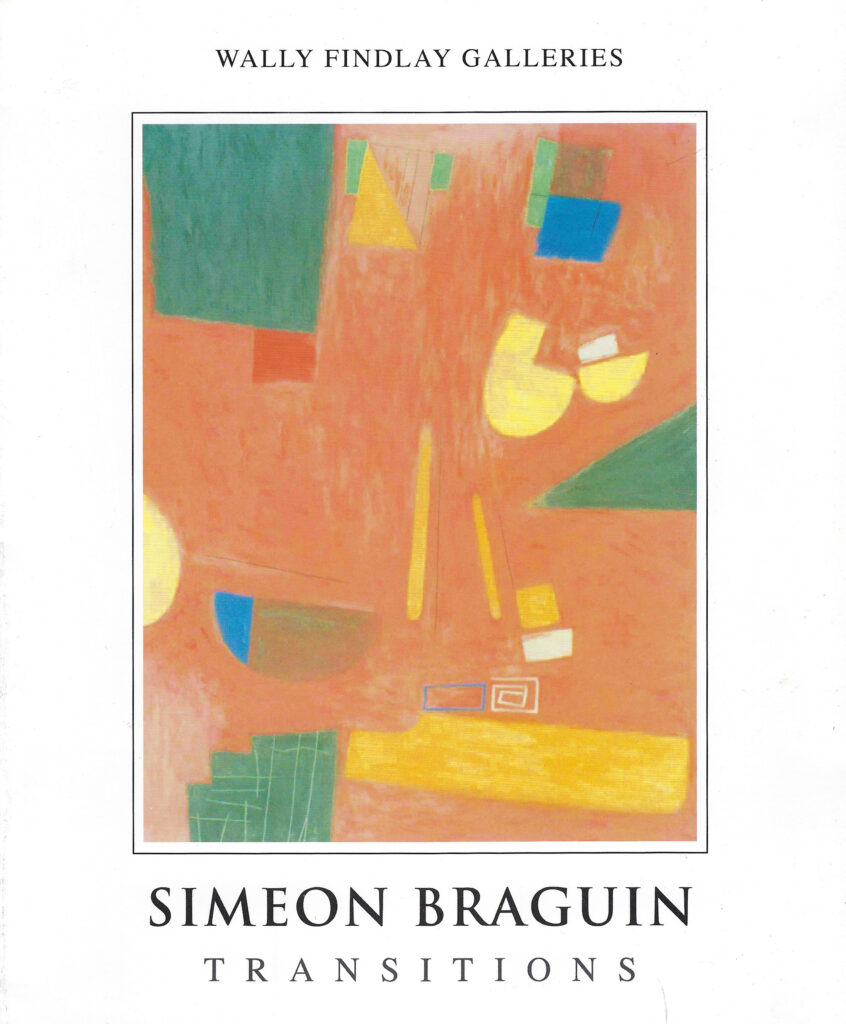
Transitions,
Wally Findlay Galleries, New York, NY. - 2013
Simeon Braguin,
Wally Findlay Galleries, Palm Beach, FL. - 2014
20th Century Colorfield Masters,
Wally Findlay Galleries, Palm Beach, FL. - 2018
As the Artist Sees It,
Findlay Galleries, New York, NY. - 2020
American Abstractionists,
Findlay Galleries, New York, NY. - 2021
Chromatics,
Findlay Galleries. - 2022
All on White,
Findlay Galleries, New York, NY. - 2024
1980 | Essex Harbor Series | 1990,
Findlay Galleries, Palm Beach, FL. - 2024
Summer Discoveries: Abstract Works,
Findlay Galleries, New York, NY. - 2025
A Gentle Vision,
Findlay Galleries, Palm Beach, FL.
Inquiries
Contact the Gallery
New York
32 East 57th Street, 2nd FloorNew York, NY 10022
(212) 421-5390